Limited-time deal: GPT Image 2 from $0.008 per image
Try it now

Infographic / Education

Discover and use high-quality prompt templates to create stunning AI images.

⌘ K
Sort by:

Showing 1–17 of 17 prompts

knowledge graph

knowledge graph

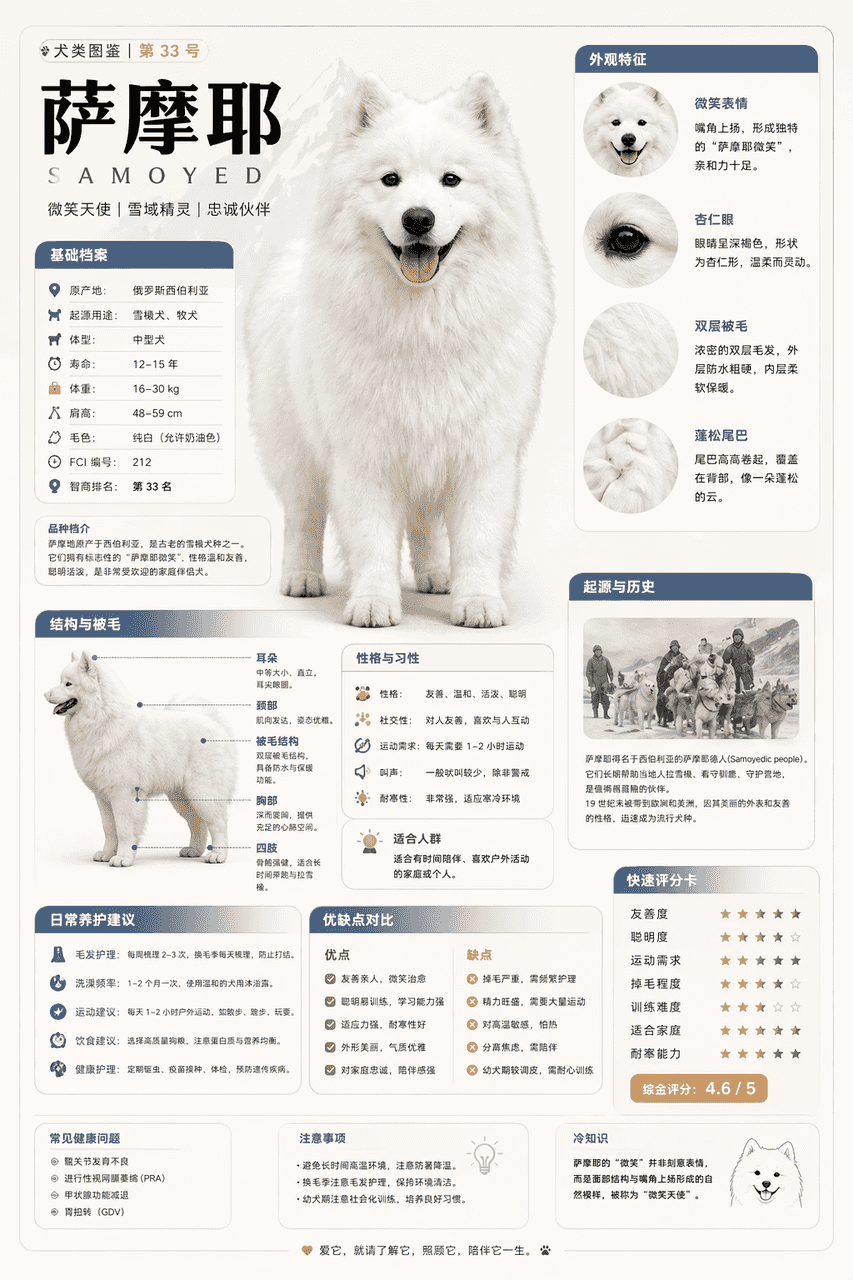
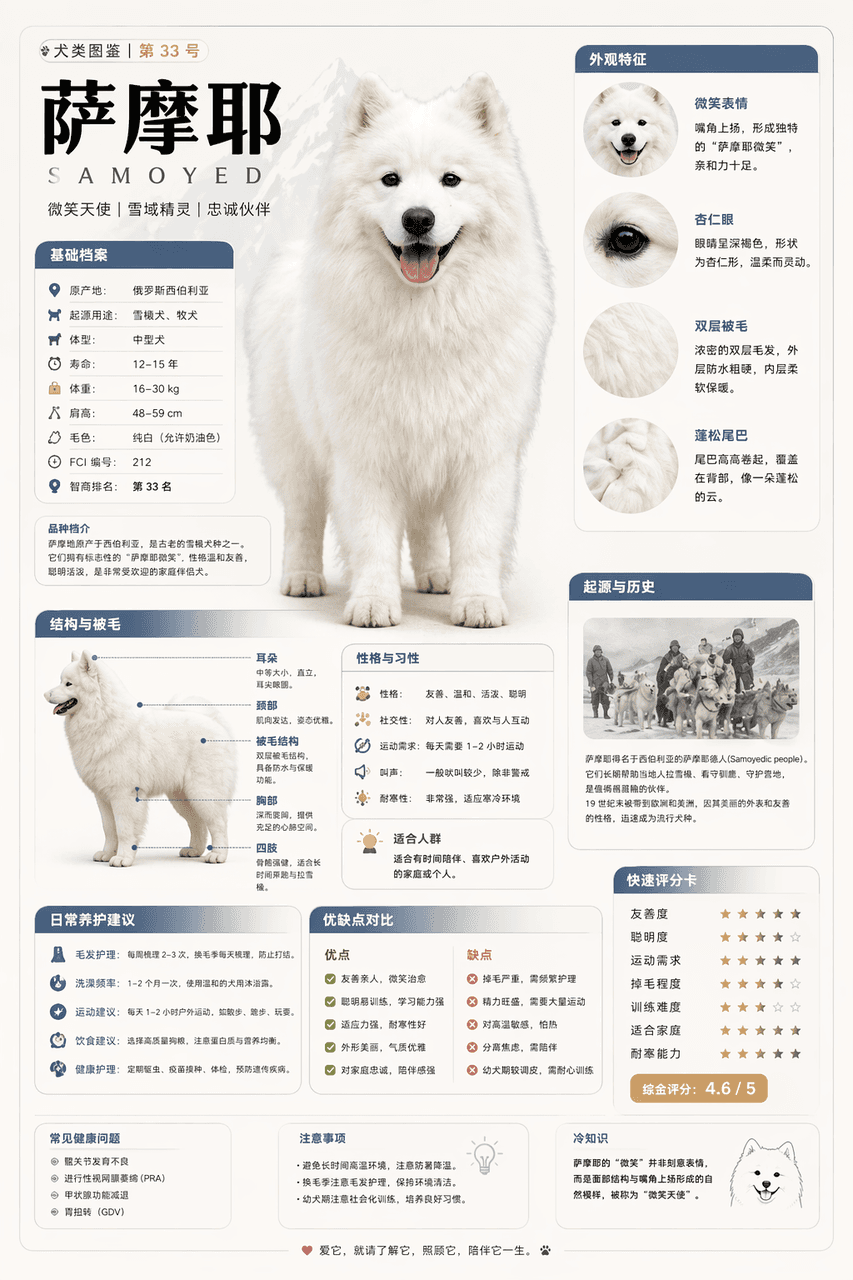
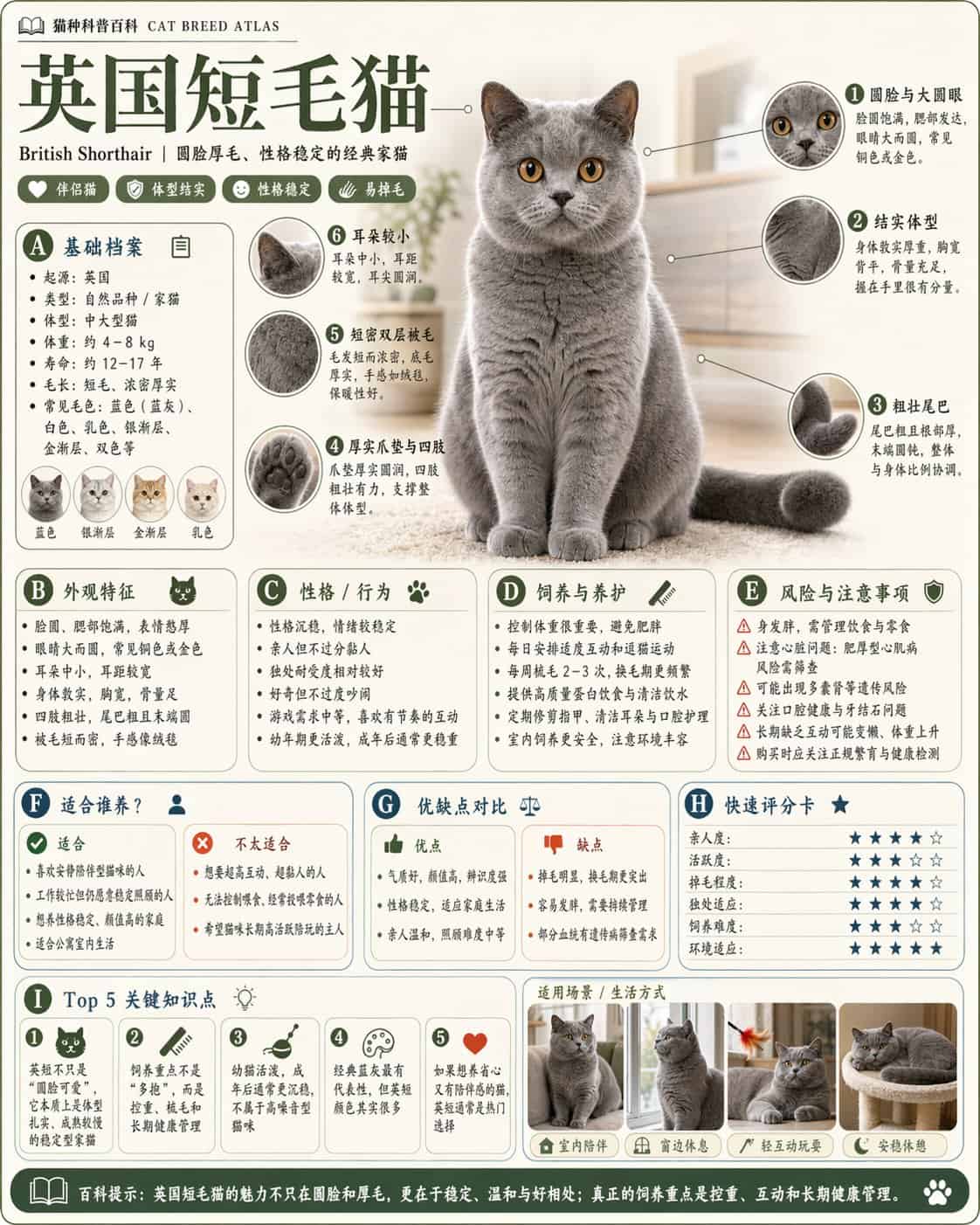
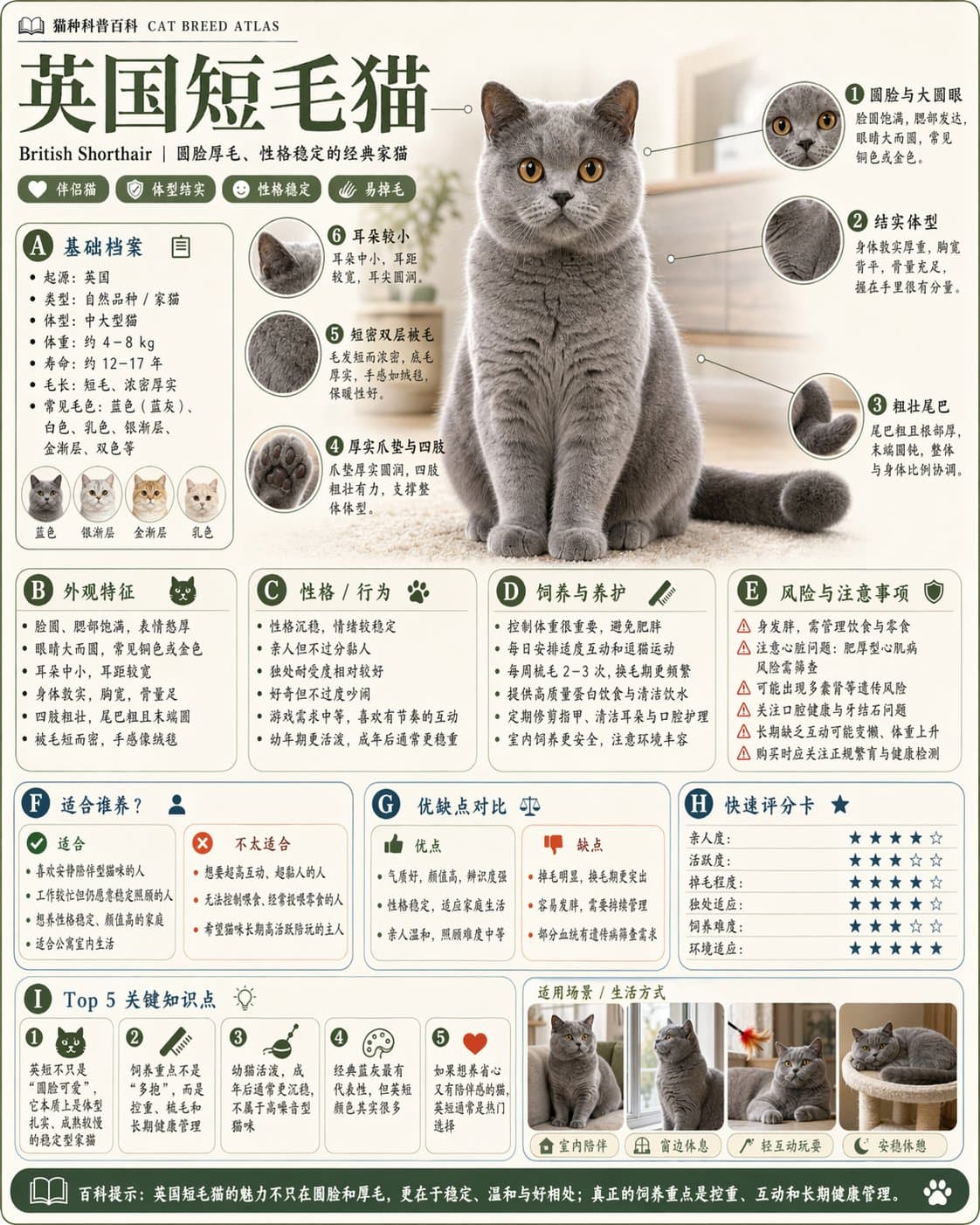
Please generate a high-quality vertical "popular science encyclopedia map" based on [Samoyed]. This picture is not an ordinary poster, nor is it a simple illustration, but a modular science information map that has a "picture book feel, an encyclopedia feel, a sense of information structure, and a sense of collection". The overall style refers to the combination of advanced natural history illustrations, modern encyclopedia pages, lifestyle knowledge cards and social media high-dissemination information graphics. Please make the screen contain: A clear and beautiful theme main vision Several local features enlarge details Multiple rounded corner modular information partitions Clear title hierarchy and key labels Concise but rich encyclopedia content Visual scoring, summary of key points or Top 5 modules The content columns should be automatically adapted according to the theme, giving priority to choosing from these directions and combining them appropriately: Basic files, classification information, appearance characteristics, habits/ecology, formation mechanism/structural composition, growth or use conditions, care or maintenance suggestions, risks and precautions, suitable people or applicable scenarios, comparison of advantages and disadvantages, and quick score card. Visual requirements: Light and clean background, soft colors, light shadows, exquisite small icons, rounded information boxes, neat layout, high information density but not crowded, good reading experience. The whole thing must look like a popular science encyclopedia card that can be truly published, read, collected, and serially produced, rather than an advertising image. Please do not make it into an ordinary commercial poster. It is necessary to highlight the characteristics of "knowledge organization + module information + illustrated display". (Refer to X knowledge diagram)

Cute Picture Book #29

Cute Picture Book #29

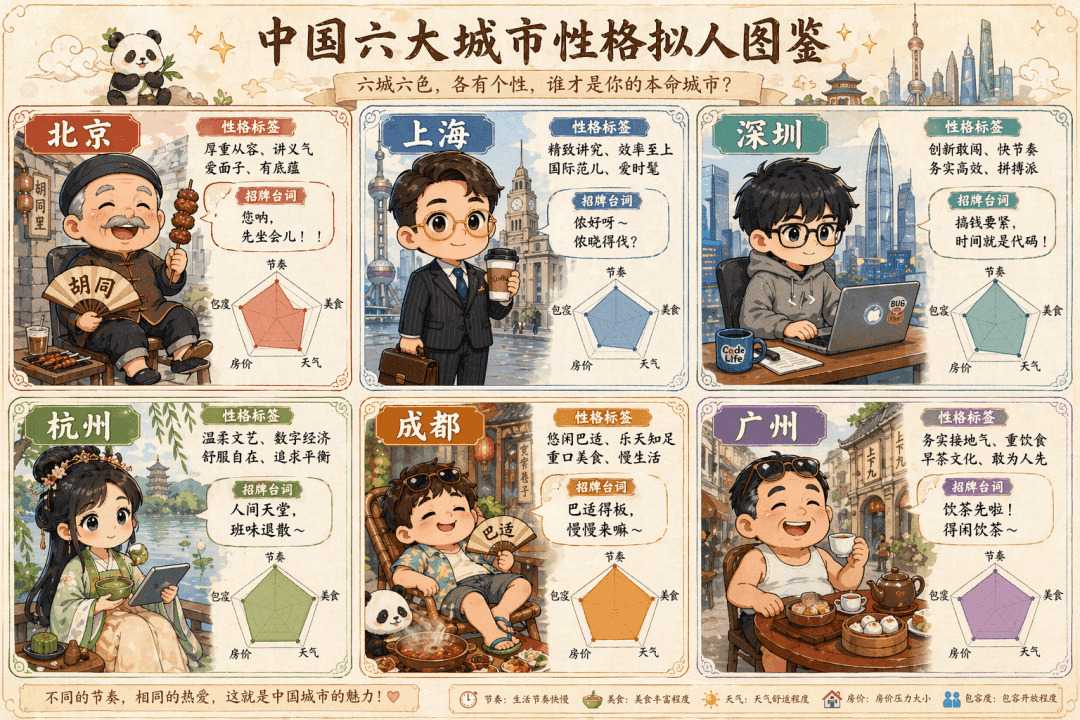
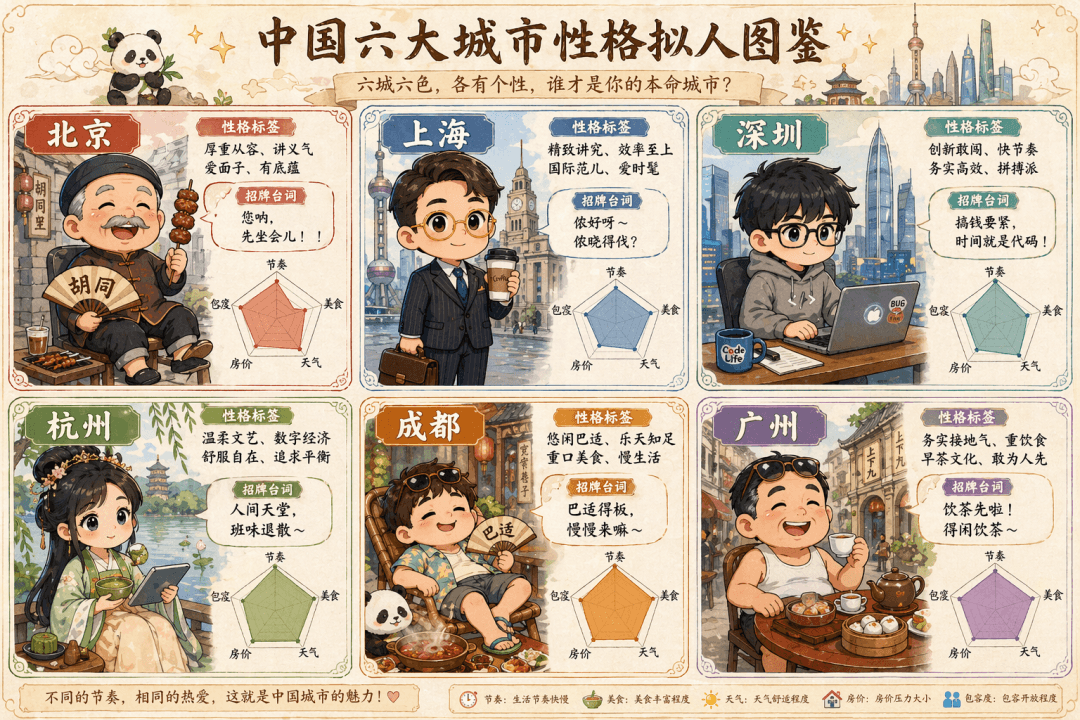
The prompt is to draw a cute hand-painted "Anthropomorphic Illustration of Characters in Six Big Cities in China". The six Q-version villains in the six-square grid represent Beijing (the old man in the alley wearing a Tang suit wearing strings), Shanghai (the elite white-collar worker with gold-rimmed glasses holding a coffee), Shenzhen (the programmer in a sweatshirt holding a notebook), Hangzhou (the girl in Hanfu holding matcha and a tablet), Chengdu (half-lying in shorts and flip-flops around a hot pot), and Guangzhou (Lao Guang drinking morning tea in flip-flops). Each grid is equipped with a personality label, signature lines, and a radar chart (five dimensions: rhythm, food, weather, housing prices, and tolerance), and the whole is like an elf guide.

Cute Picture Book #28

Cute Picture Book #28

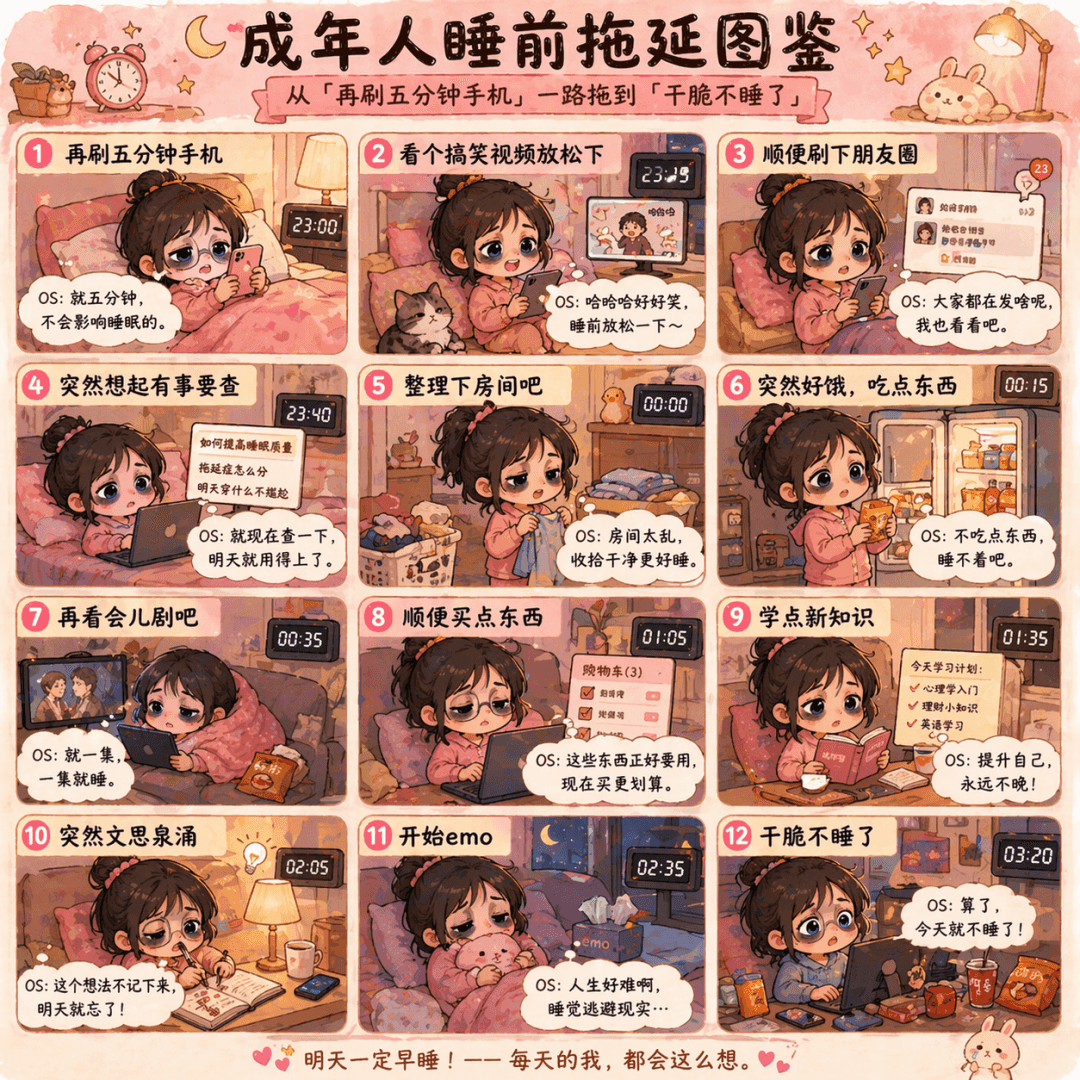
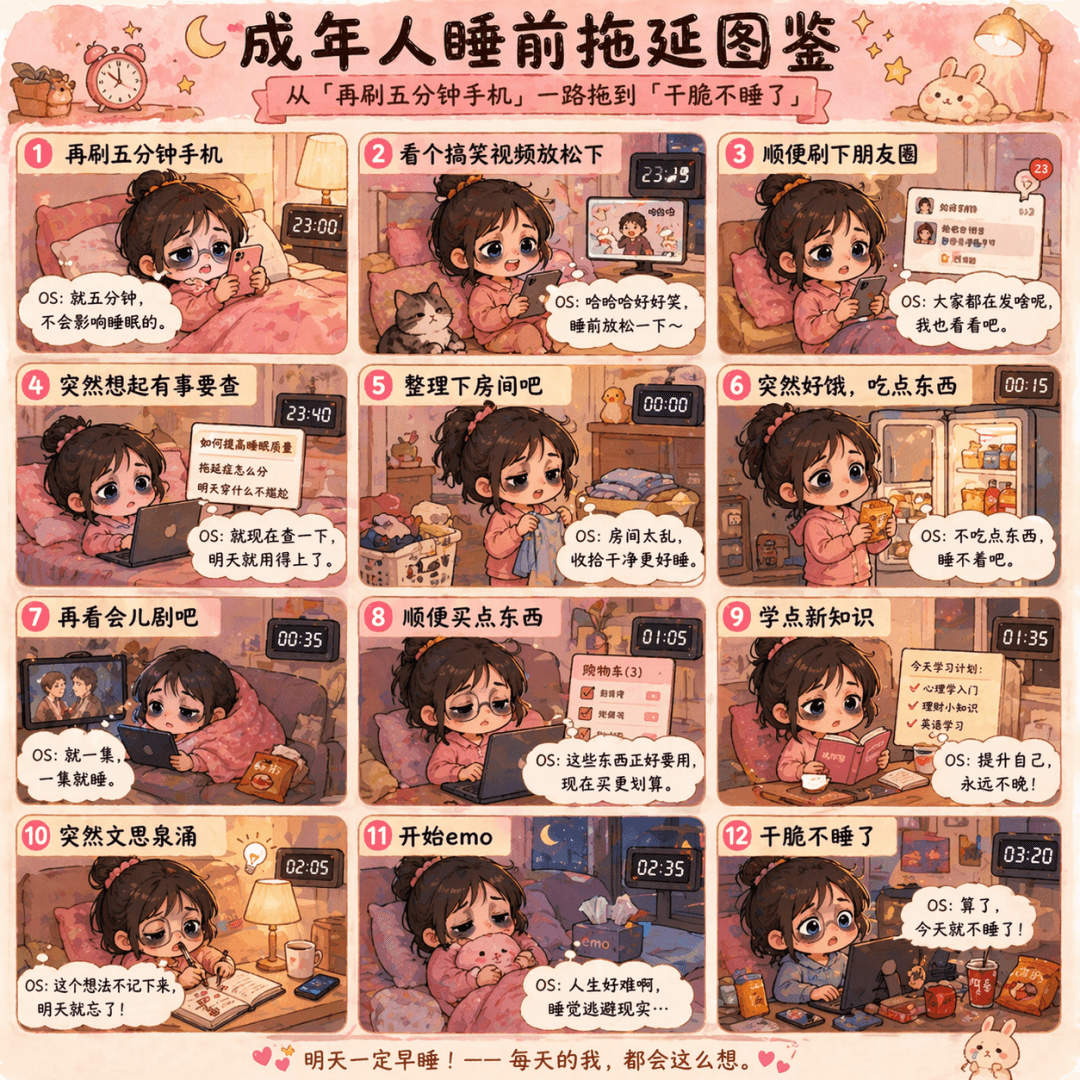
The prompt is to draw a Q-version cartoon of "Bedtime Procrastination Illustrated Guide for Adults", with the zodiac grid dragging from "check the phone for another five minutes" to "don't sleep at all". Each frame has a small black-eyed doll and a heartfelt OS message, in pink and warm yellow colors.

Cute Illustrated Book #27

Cute Illustrated Book #27

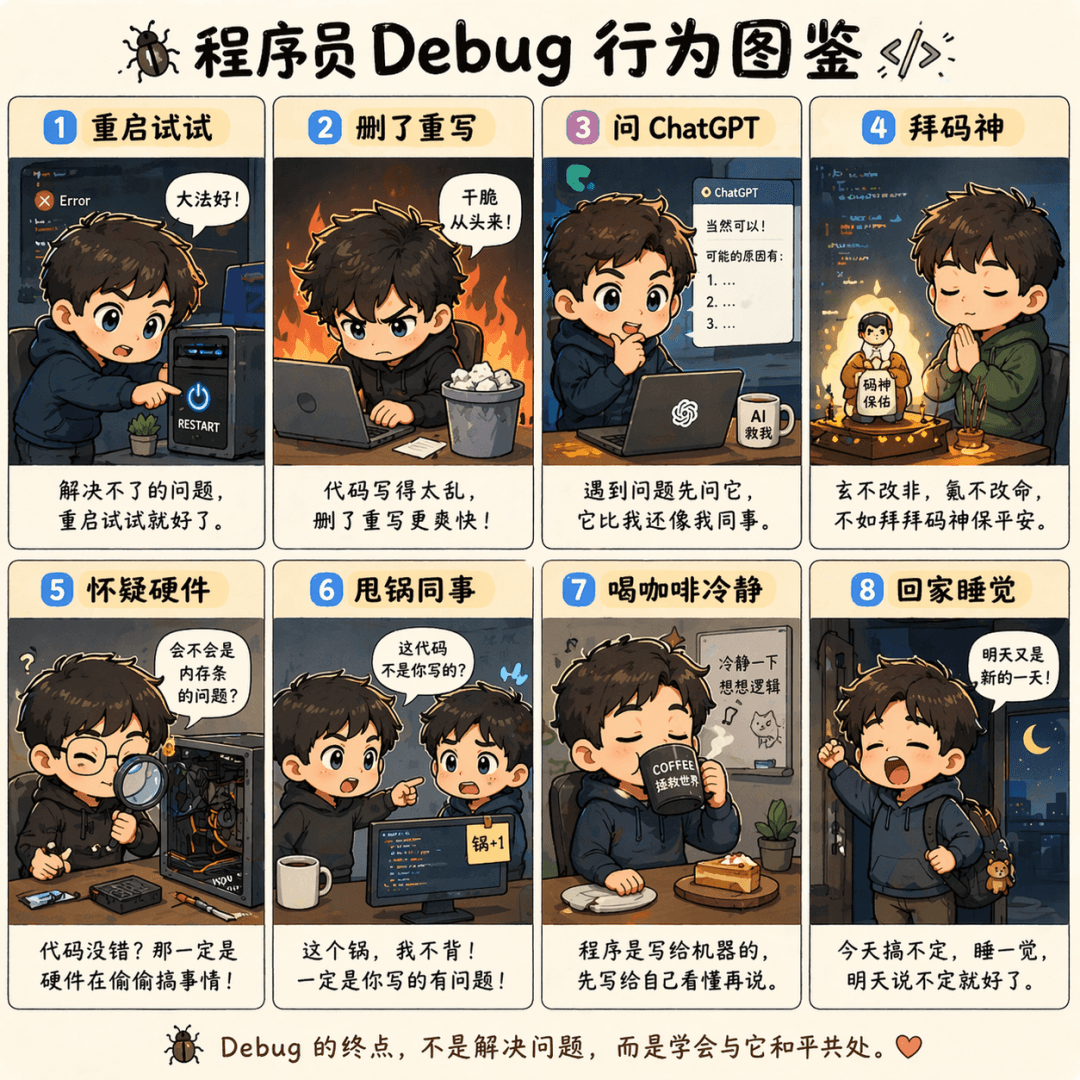
The prompt is to draw an eight-square Q version illustration of "Programmer Debug Behavior Illustration". A situation in each cell includes "Restart and try", "Delete and rewrite", "Ask ChatGPT", "Worship the code god", "Doubt the hardware", "Dump the colleague", "Drink coffee to calm down" and "Go home and sleep". Each cell is equipped with a line of complaining text.

Cute Picture Book #26

Cute Picture Book #26

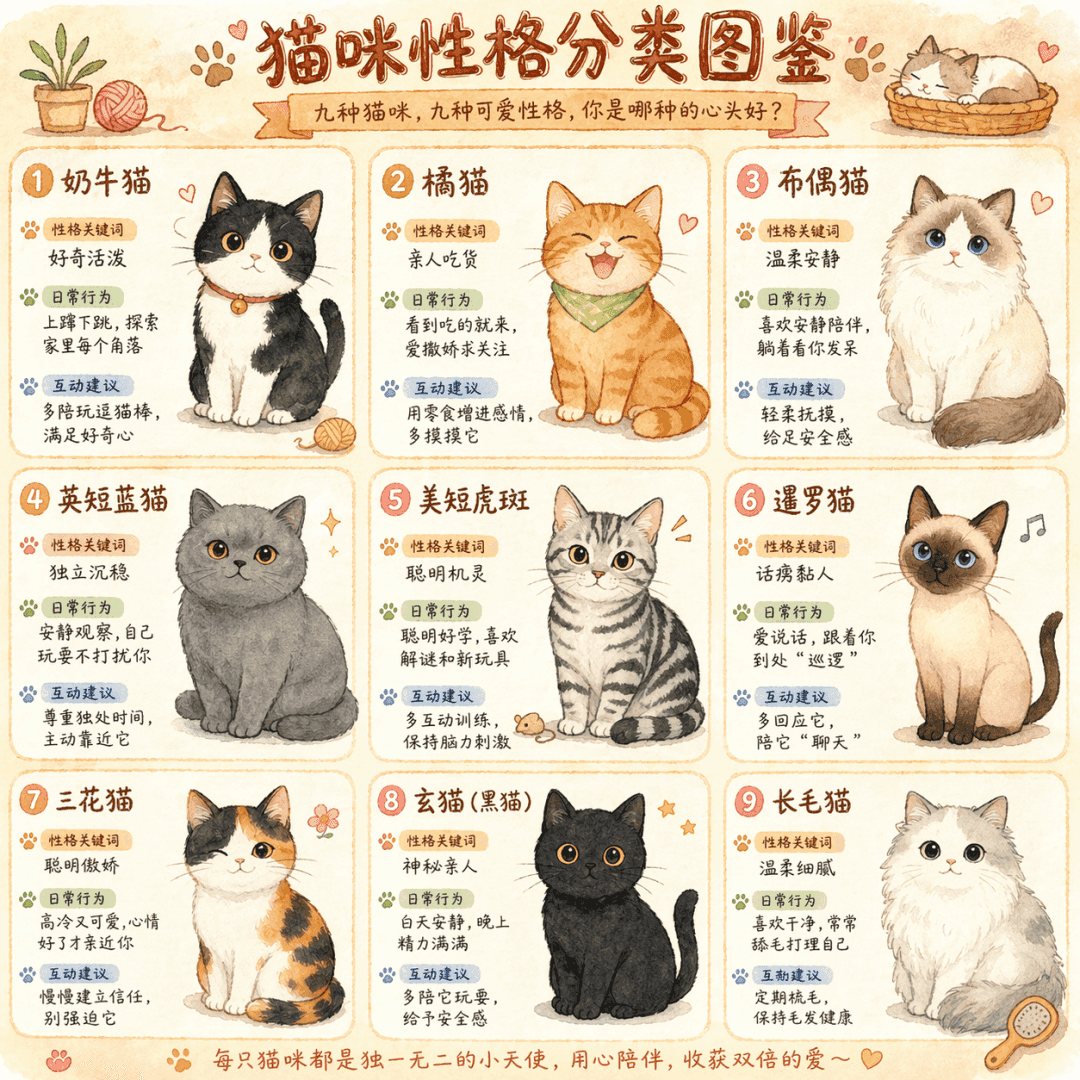
The prompt is to draw a cute hand-drawn infographic called "Cat Personality Classification Illustration", with nine different colors of cats in a nine-square grid. Each box is equipped with a personality keyword, daily behavior description, and interactive suggestions, in a warm watercolor style.

Cute Picture Book #25

Cute Picture Book #25

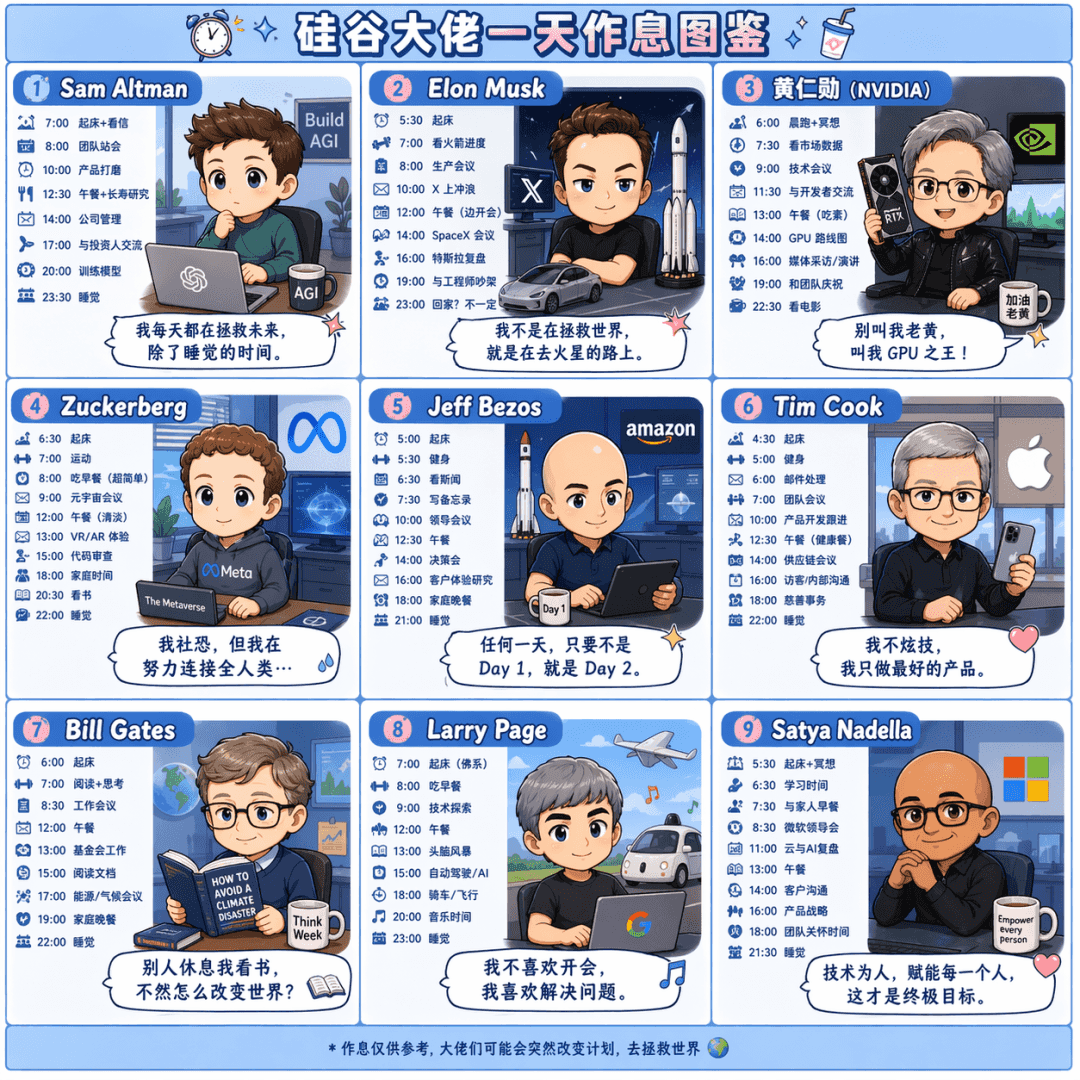
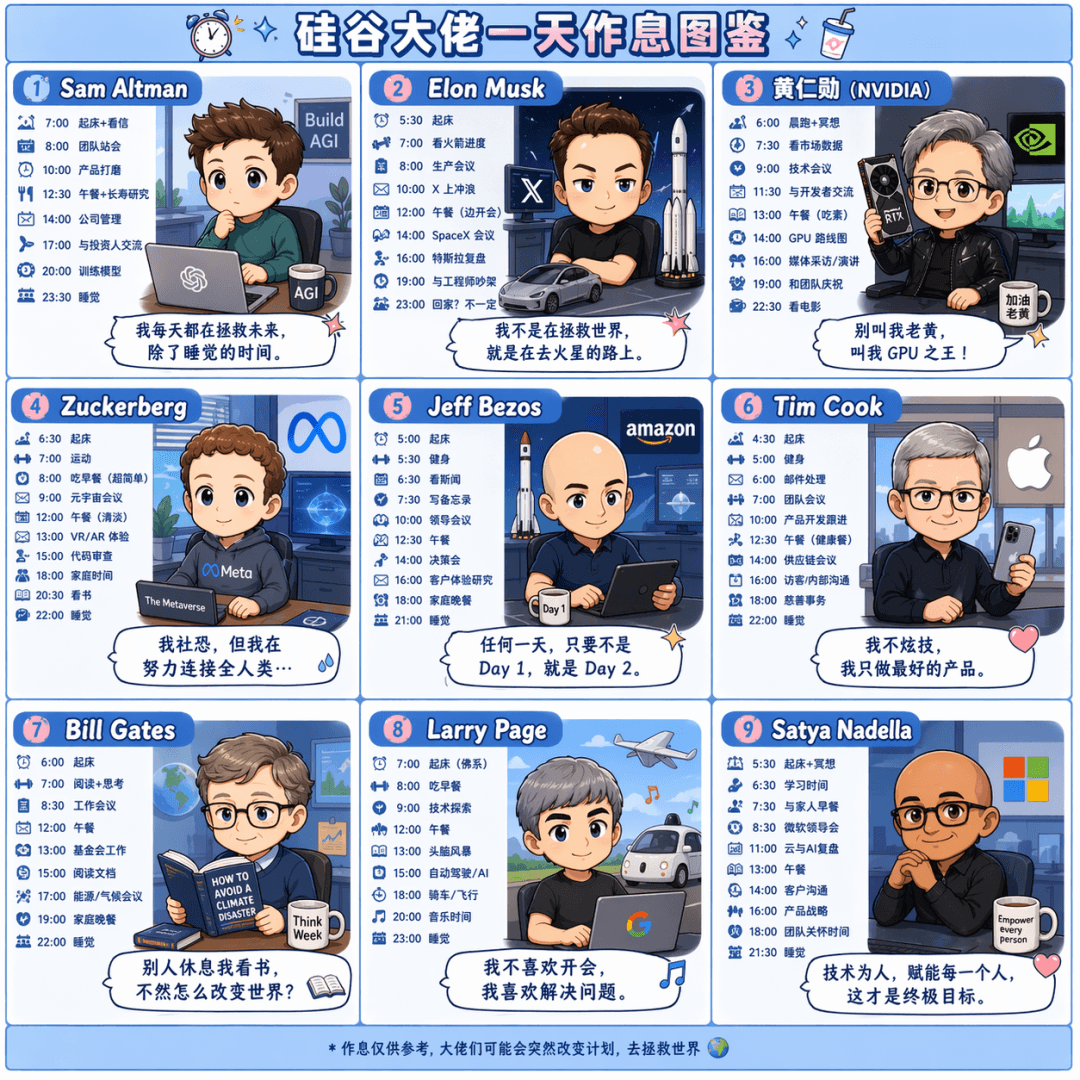
The prompt is to draw a Q-version cartoon nine-square grid called "A Day's Workbook of Silicon Valley Bosses". Draw the daily schedules of Sam Altman, Elon Musk, Jen-Hsun Huang, Zuckerberg, Jeff Bezos, Tim Cook, Bill Gates, Larry Page, and Satya Nadella respectively. Each box is equipped with a time and a comment dialog box, in pink and blue colors.

Strategy long picture #2

Strategy long picture #2

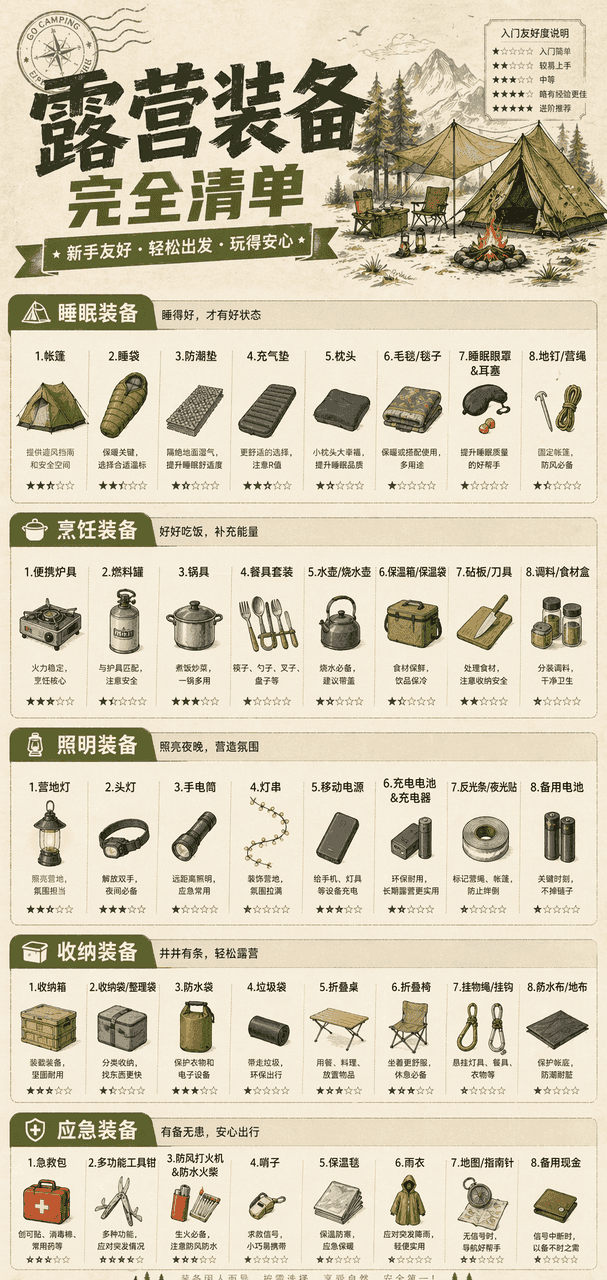
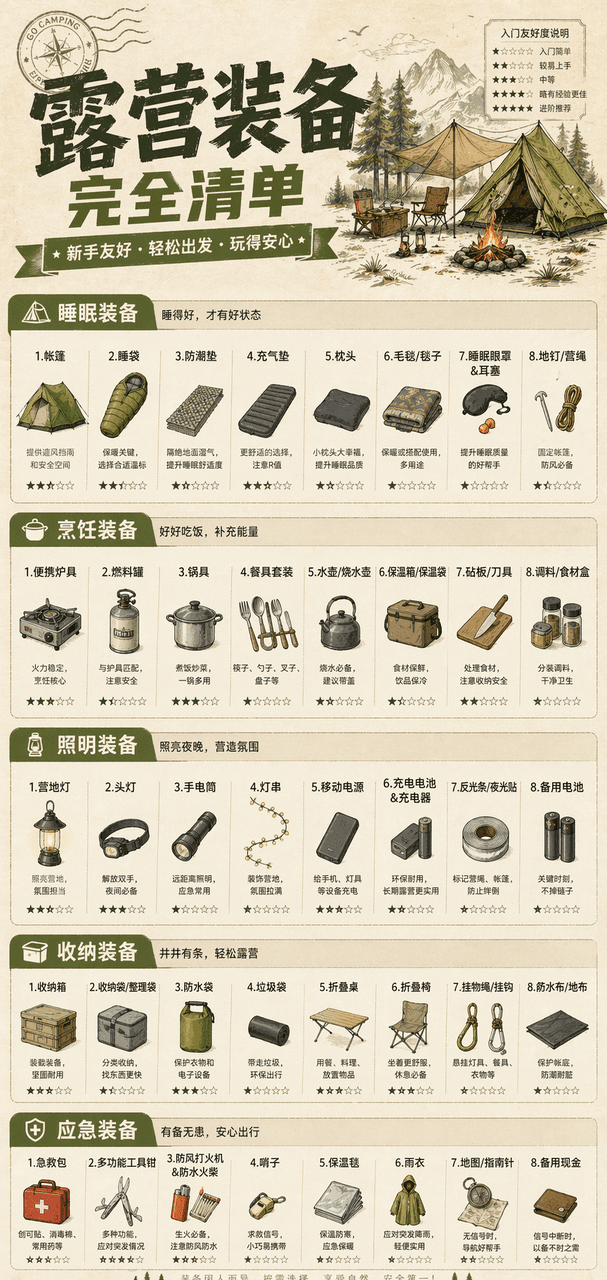
Draw a vertical "Complete List of Camping Equipment" infographic, divided into five modules: sleeping, cooking, lighting, storage, and emergency. Each module lists seven to eight specific pieces of equipment, with small icons and entry-friendliness stars. Khaki green main color, paper texture background.

Landmark Technical Annotation Information Tour

Landmark Technical Annotation Information Tour

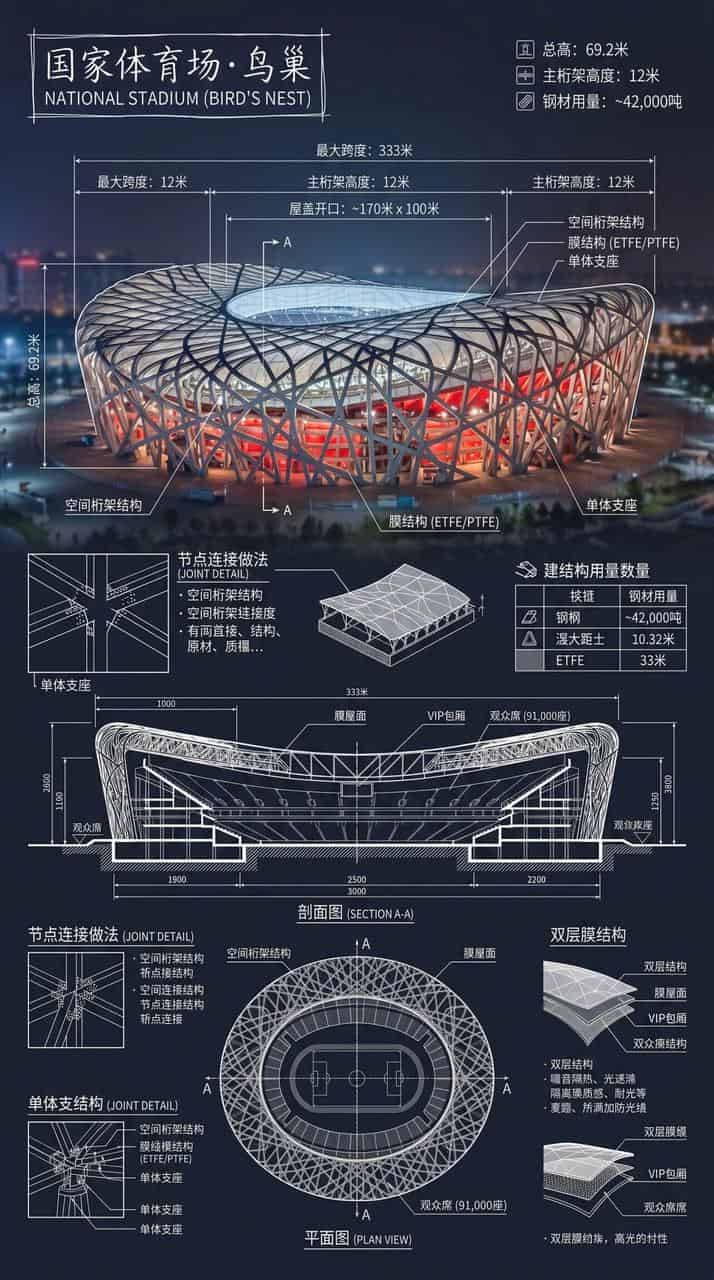
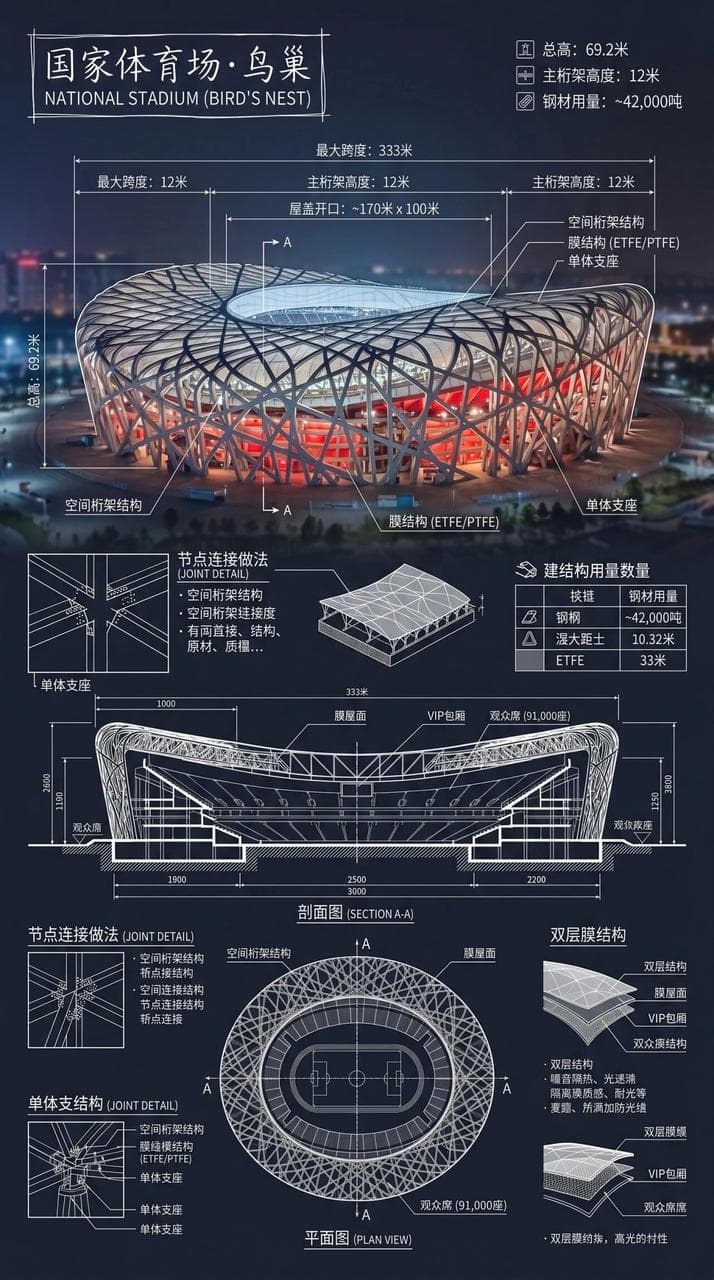
Create an infographic of the National Stadium·Bird's Nest. Combine real photos of landmarks with white technical note overlays and write the building name in a hand-drawn box in the corner. The picture is superimposed with complex and clear white technical annotations, showing key structural data, important measurements, material quantities, detailing methods, and including sections, plans, and significant architectural and engineering features, and integrated into a complete overview long picture. The white lines are detailed and clear, the real environment is visible, the vertical composition is professional, rational and readable.

Teaching Illustrated Posters

Teaching Illustrated Posters

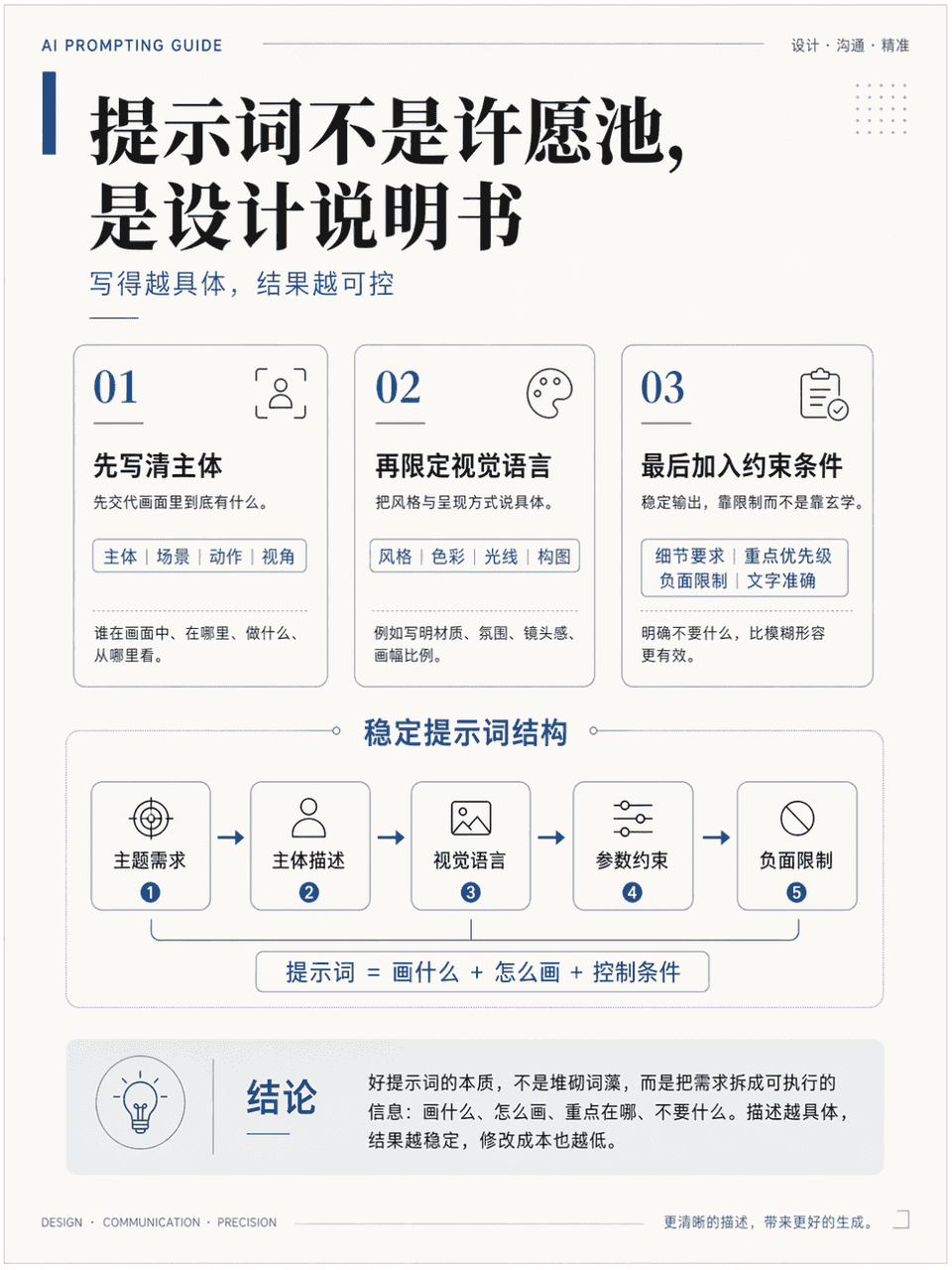
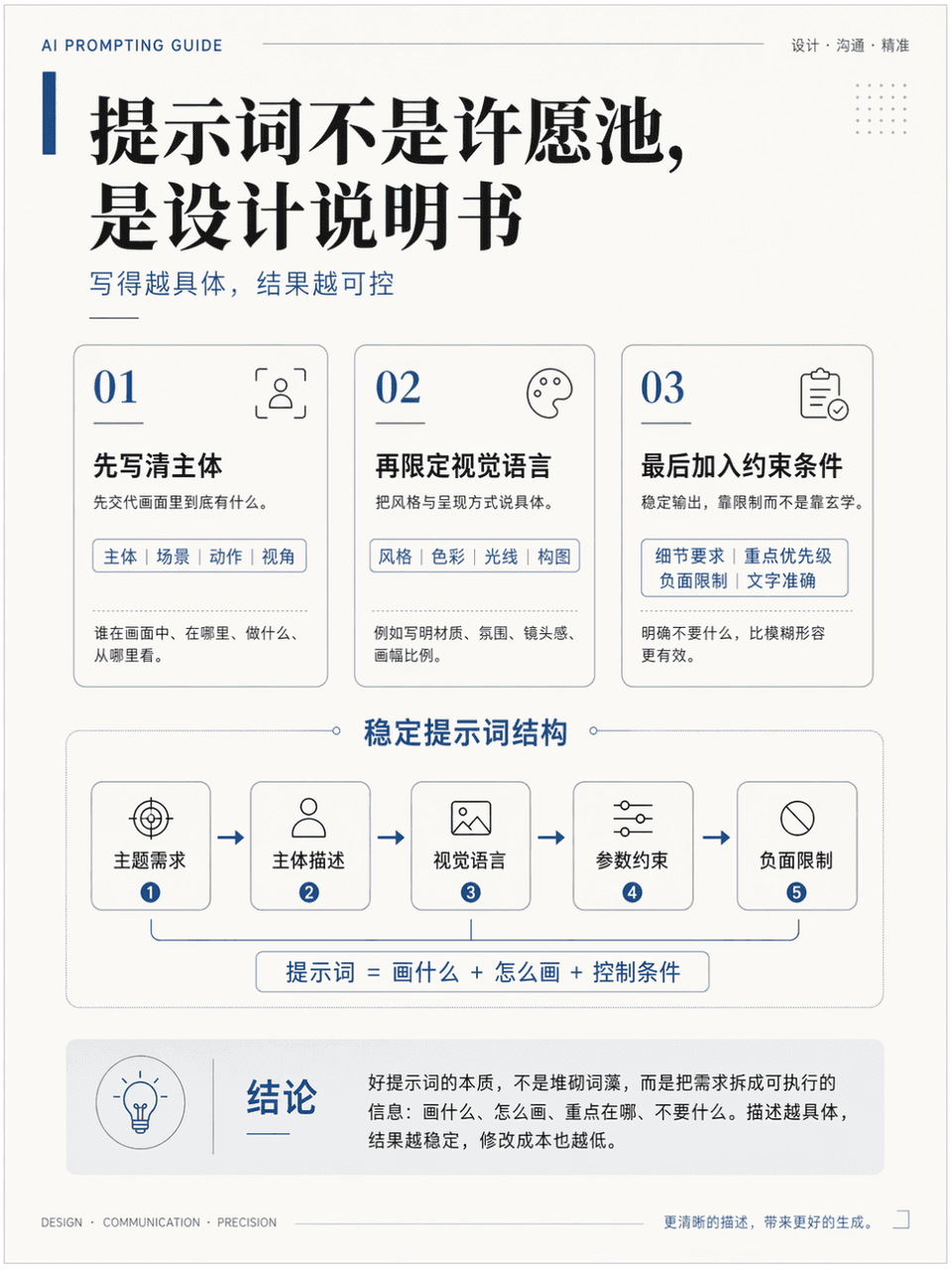
The frame size is 3:4, and a vertical teaching illustration poster is generated to explain the knowledge point "How to write more stable AI drawing prompts". It needs to include a title, 3 key modules, 1 core diagram, and 1 conclusion area. The title is "The prompt is not a wishing well, it is a design instruction". It looks like a high-quality course handout page. It is professional, clean, and academic. It also has a sense of advanced design. The Chinese language is accurate, the hierarchy is clear, the layout is restrained, and there is sufficient white space.

Technology infographic

Technology infographic

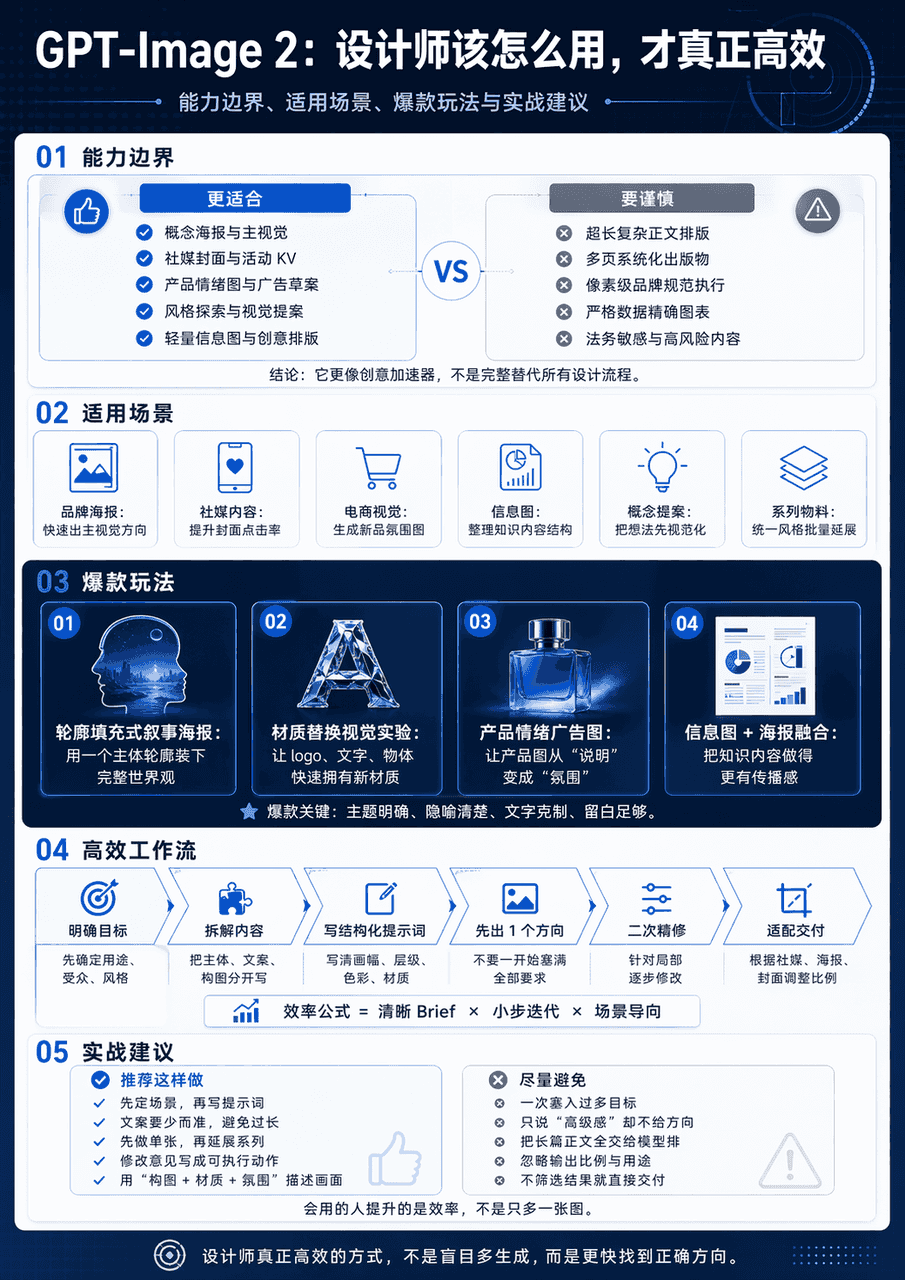
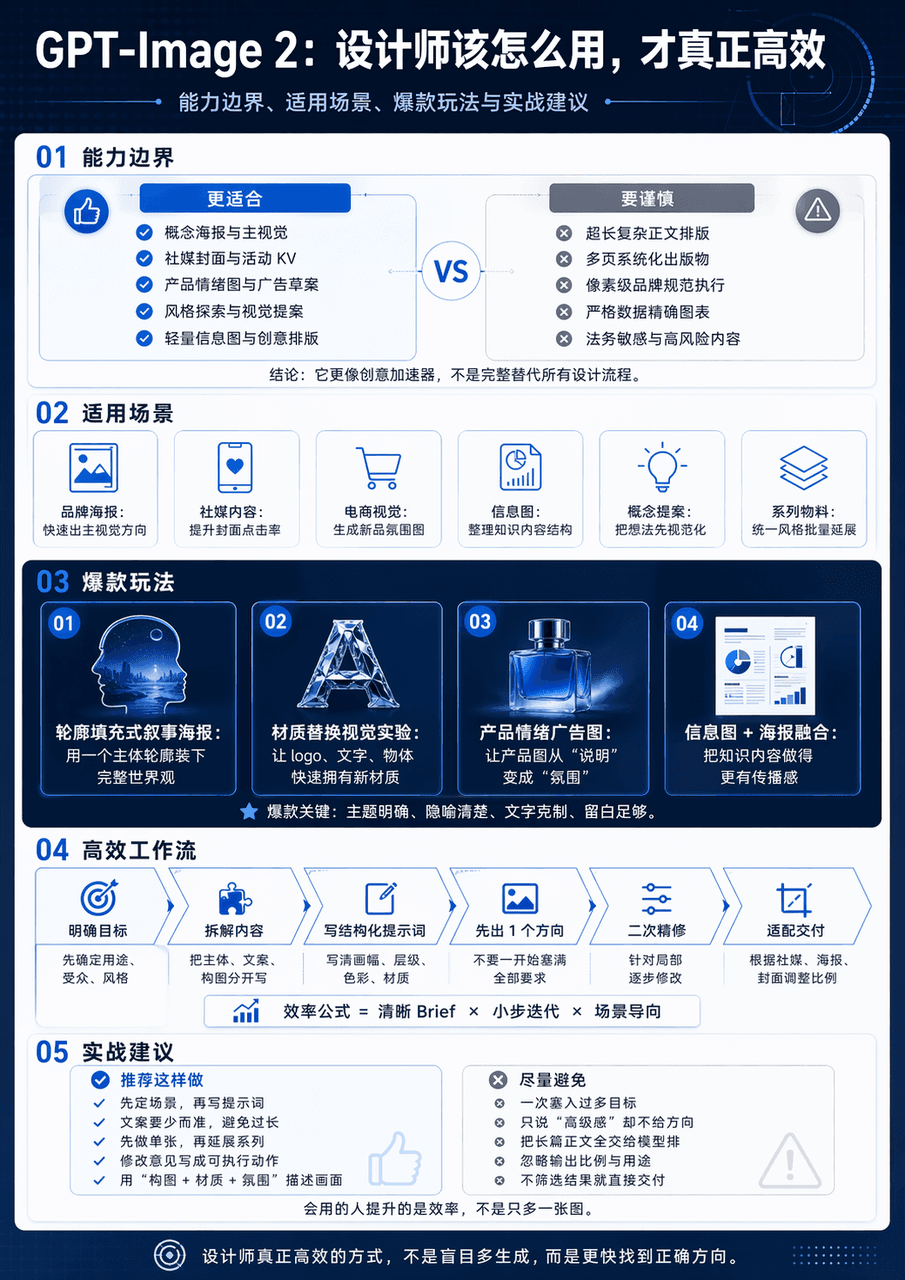
Generate a vertical science and technology information map with the theme of GPT-Image 2 Design Application Guide. The whole map is divided into 5 modules. The big title "GPT-Image 2: How should designers use it to be truly efficient" is set at the top. The subtitles are capability boundaries, applicable scenarios, popular gameplay and practical suggestions. The middle diagram adopts the form of minimalist interface card + process arrow + comparison structure chart. The information level is clear and the visual center is clear.

"Illustrated Tools for Street Shoe Repair Shops"

"Illustrated Tools for Street Shoe Repair Shops"

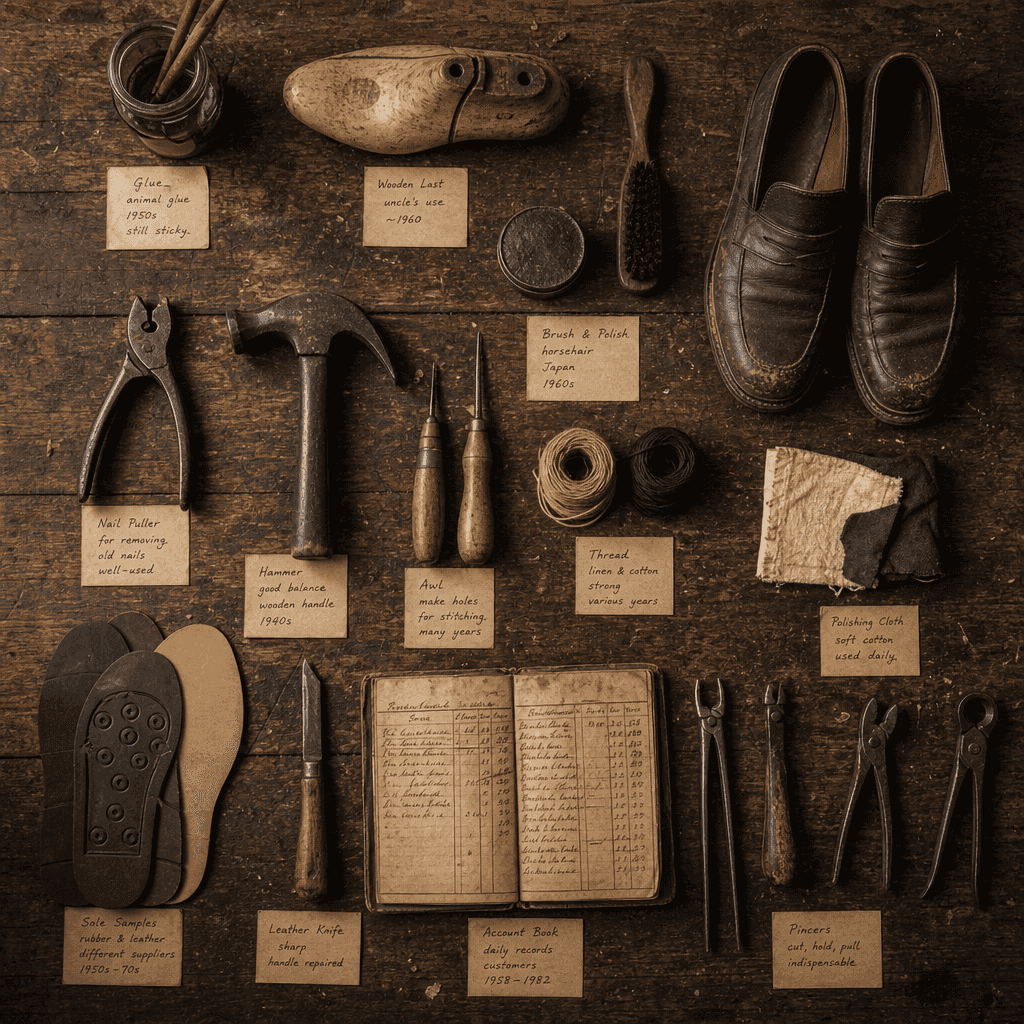
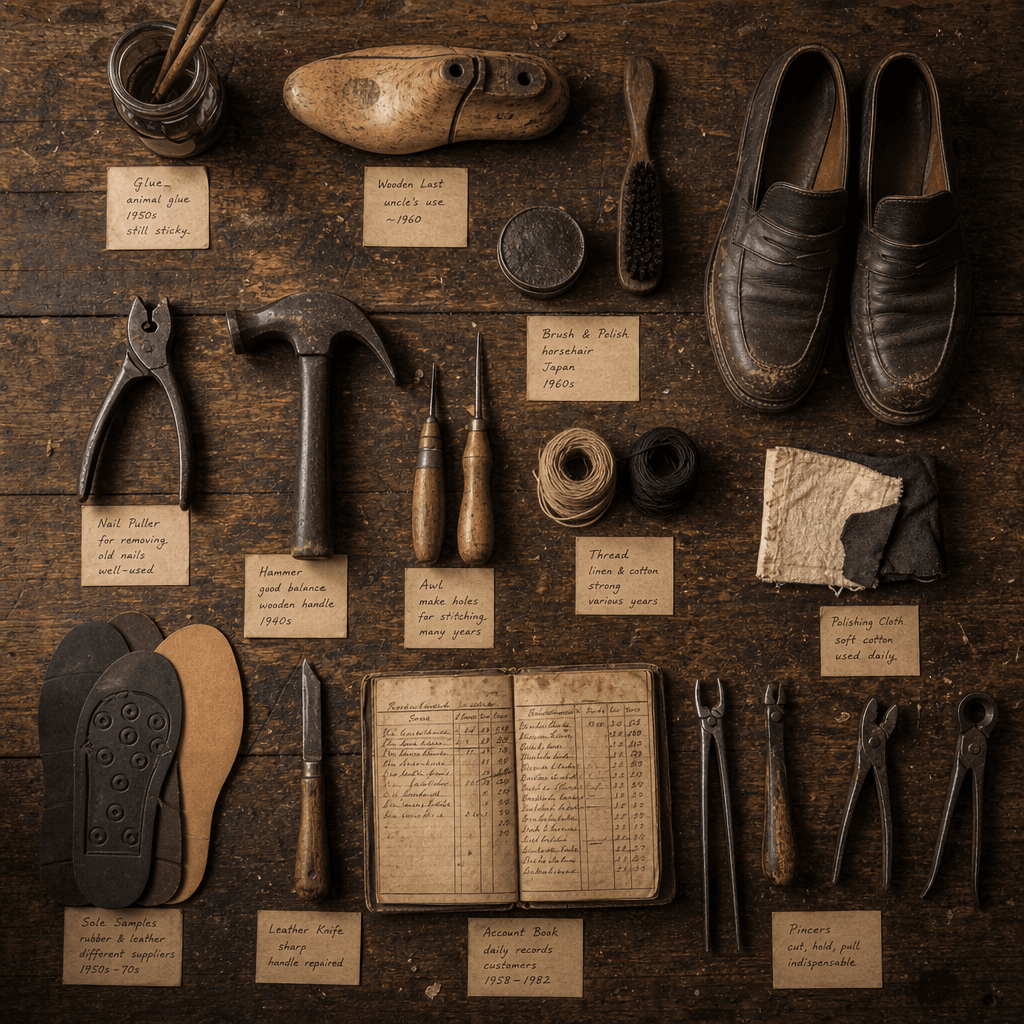
"Illustrated Tools of a Street Shoe Repair Shop" combines craft anthropology with still life photography. The main picture is an overhead shot of an old craftsman's workbench. Shoe lasts, pliers, needlework, glue, polishing cloth, shoe sole samples, and account books are presented like specimens. Each tool is accompanied by a small handwritten note describing its traces of use and age. The ratio is 4:5.

Jiangnan Garden Night Tour Guide Book

Jiangnan Garden Night Tour Guide Book

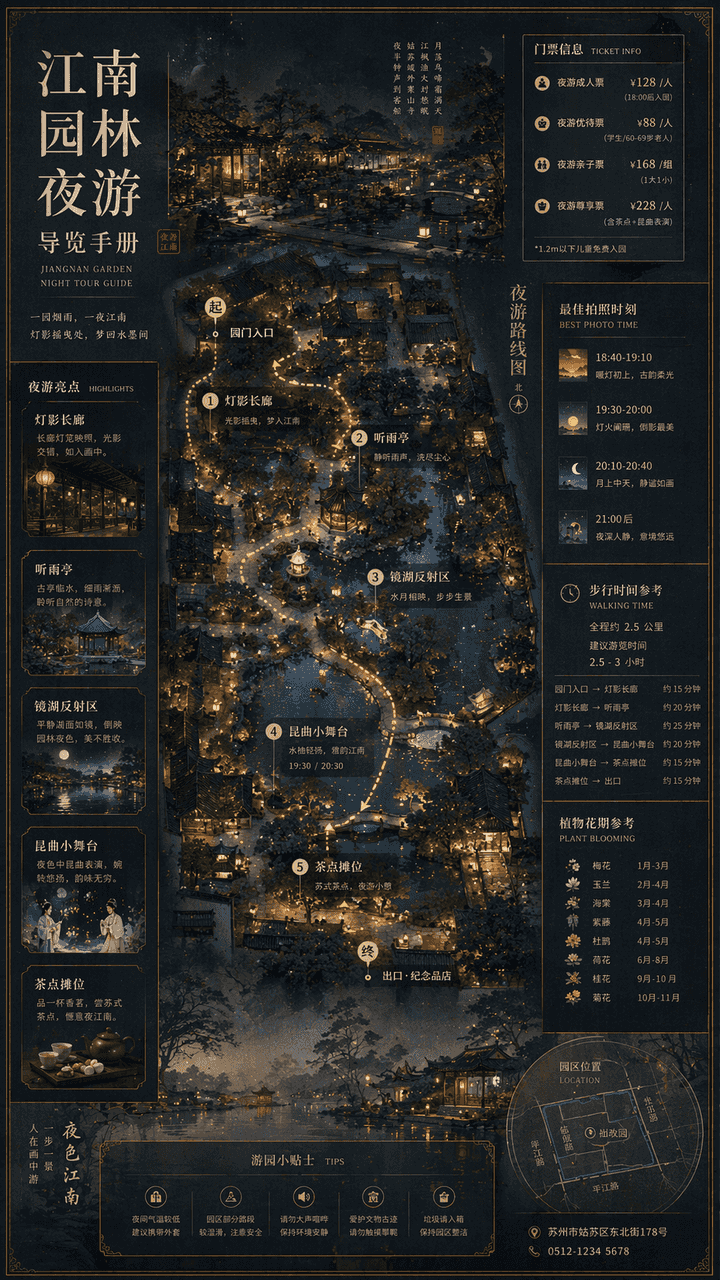
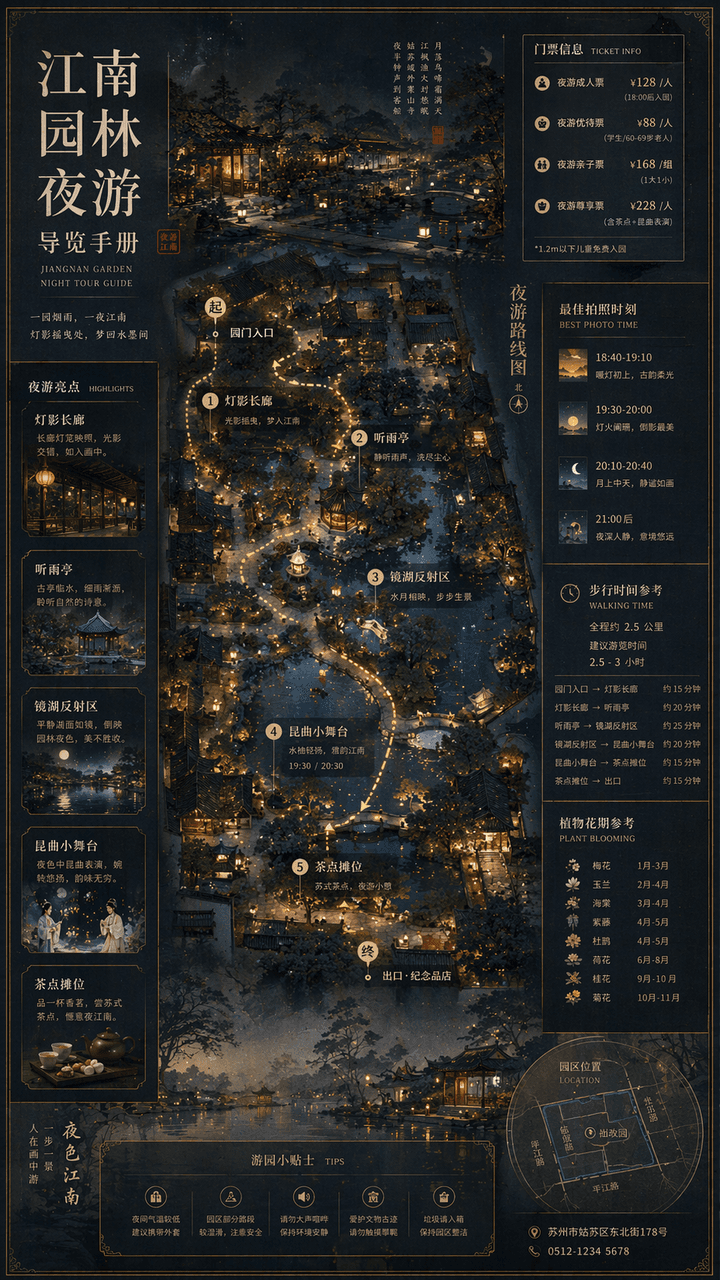
"Jiangnan Garden Night Tour Guide Manual" combines traditional landscape paintings with modern cultural tourism map systems. The main screen is an overhead view of the garden plus a partial perspective view, marking the night tour route, lantern spots, listening to the rain pavilion, mirror lake reflection area, Kunqu opera performance small stage and refreshment stalls. The sidebar includes ticket levels, best photo moments, walking time, and plant flowering periods. The font is a combination of Song Dynasty and modern fine black, and the overall elegant and precise ratio is 9:16.

Kitchen SOP diagram at Antarctic research station

Kitchen SOP diagram at Antarctic research station

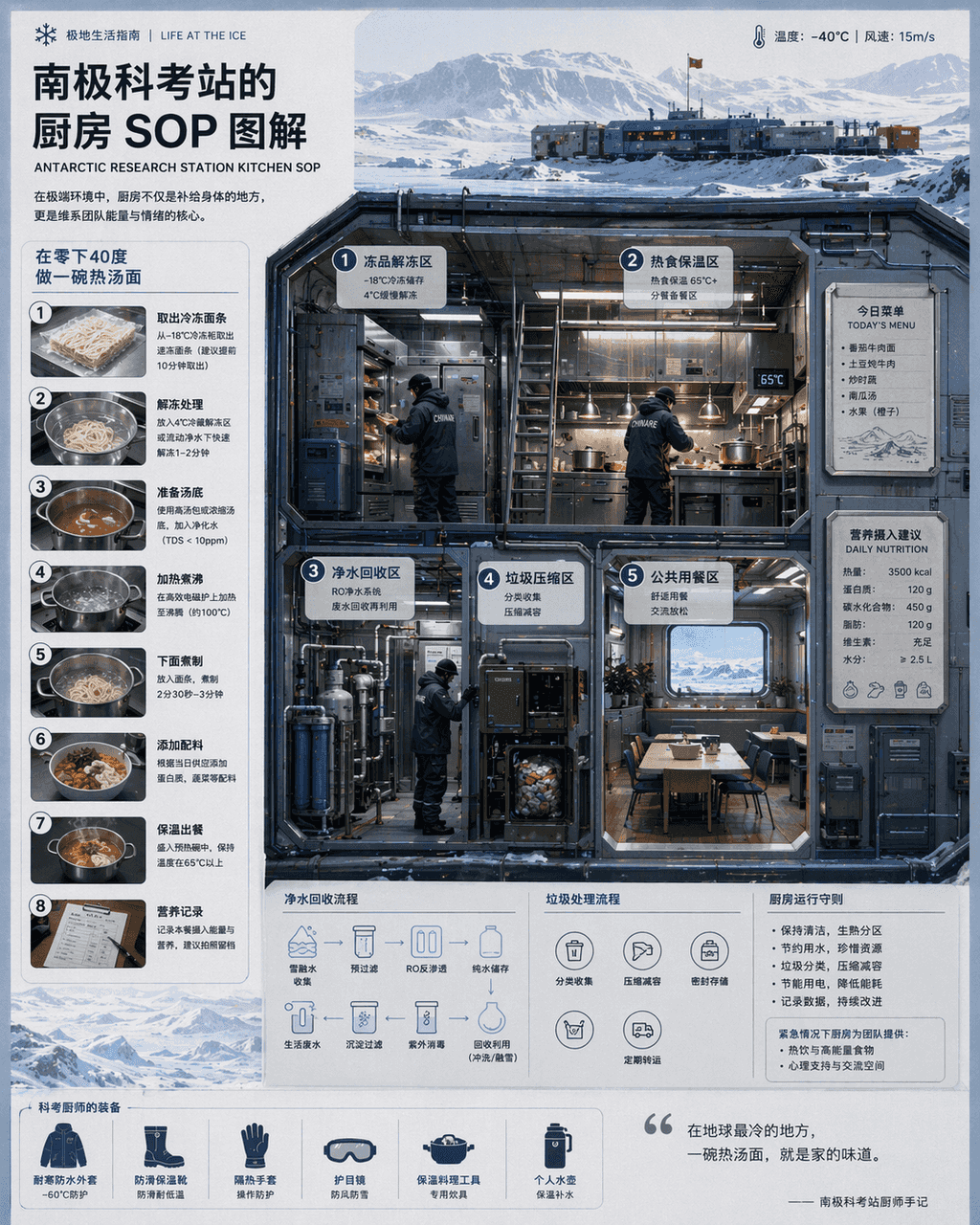
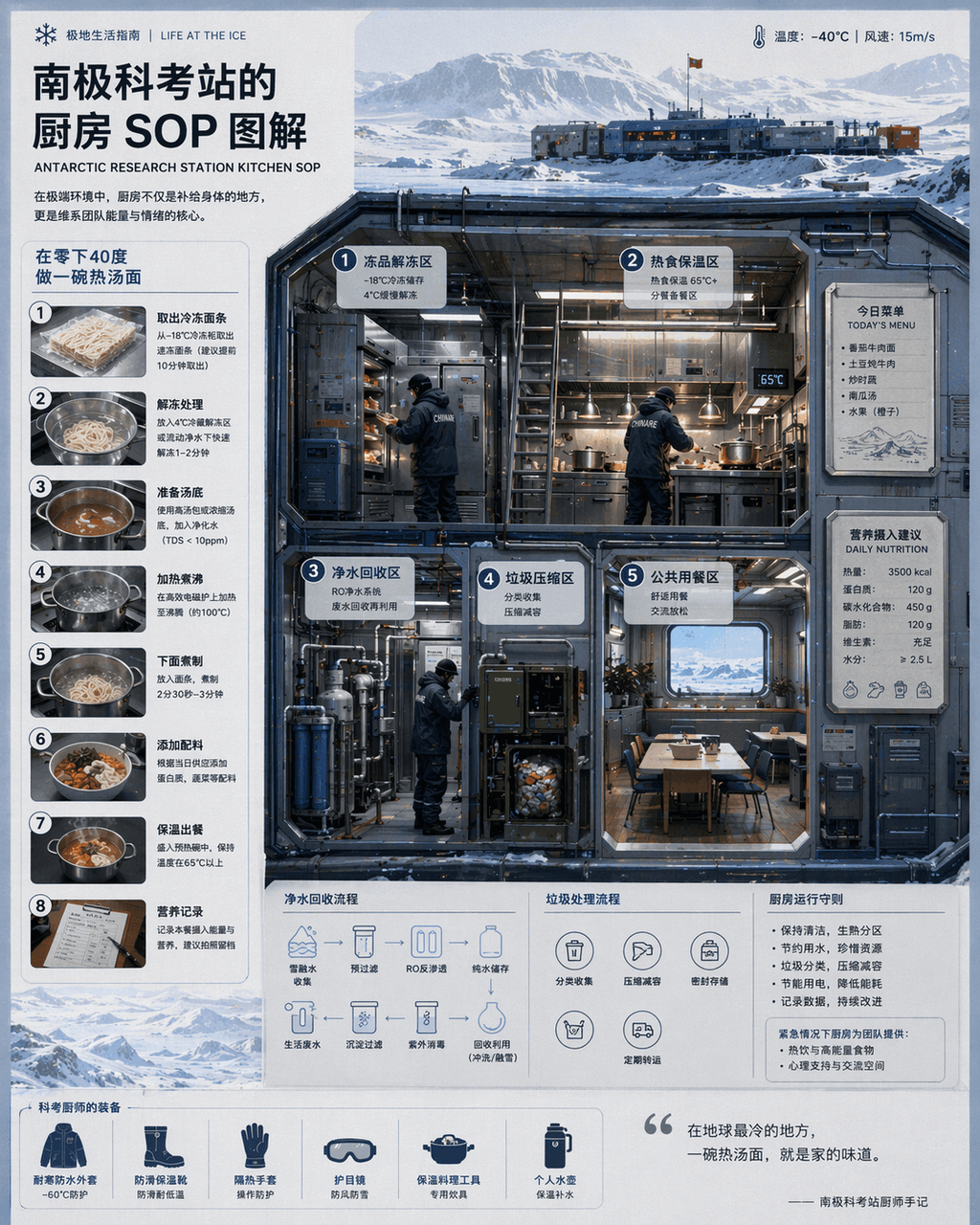
“Kitchen SOP at Antarctic Research Station "Illustration" combines scientific illustrations with catering flow charts. The main screen is a cross-section of a cold-resistant kitchen, with partitions indicating thawing of frozen products, hot food insulation, purified water recycling, garbage compression, and public dining areas. The chef wears a heavy scientific examination uniform. There is a magnetically attached today's menu and nutritional intake recommendations on the wall. A numbered step-by-step diagram on the left explains "making a bowl of hot noodle soup at minus 40 degrees." The visual style is clean and professional, and the information density is high, like a National Geographic special issue insert, with a ratio of 4:5.

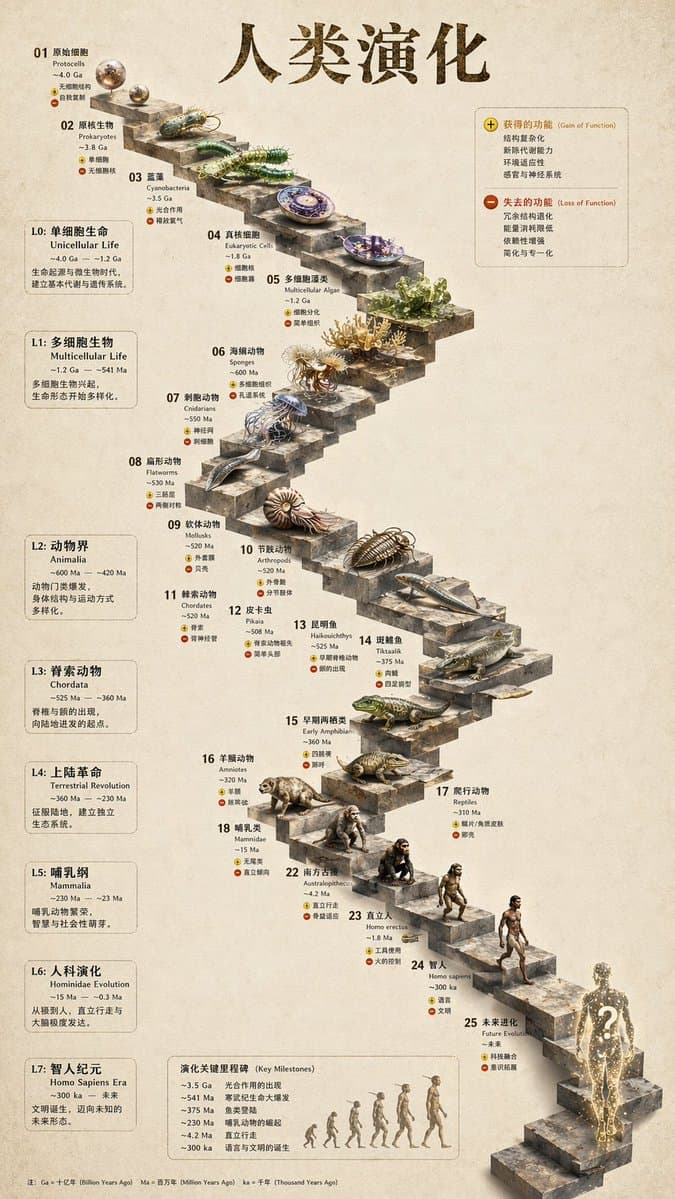
3D Stone Staircase Evolution Infographic

3D Stone Staircase Evolution Infographic

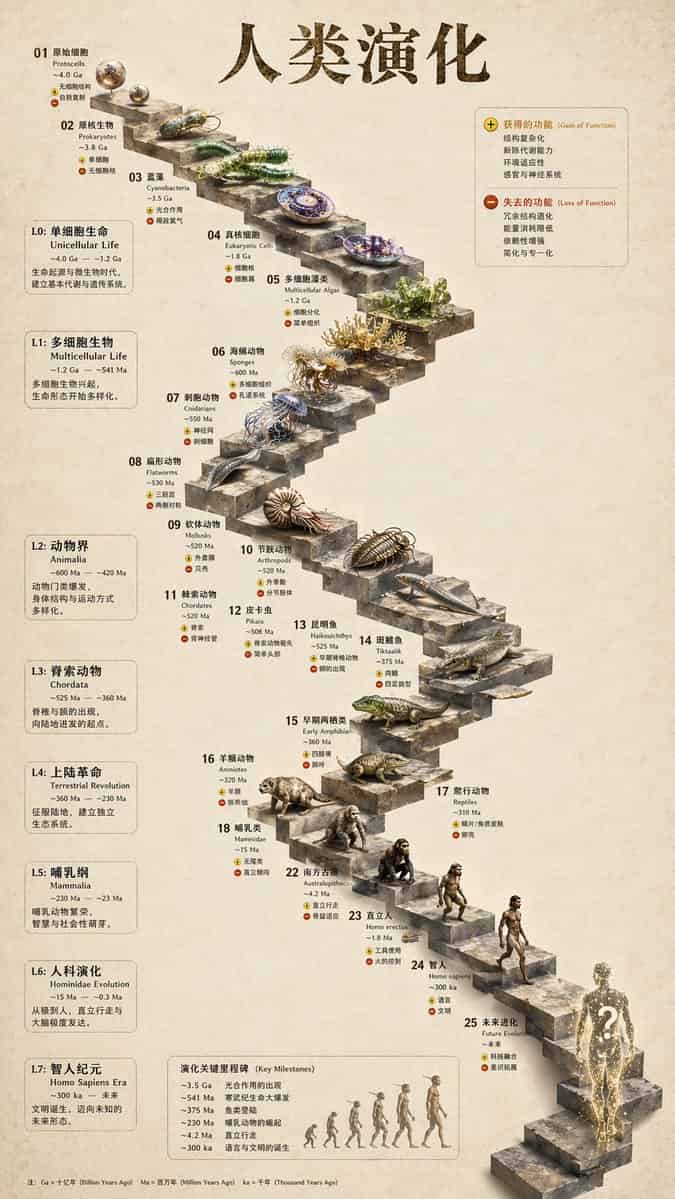
{ "type": "evolutionary timeline infographic", "instruction": "Using REFERENCE_0 as a structural base, transform the flat vector design into a highly realistic 3D infographic. Replace the smooth ramps with distinct stone steps and upgrade all organisms to photorealistic 3D models.", "style": { "background": "{argument name=\"background style\" default=\"vintage textured parchment paper\"}", "staircase": "{argument name=\"staircase material\" default=\"realistic textured stone blocks\"}", "subjects": "{argument name=\"organism style\" default=\"highly detailed photorealistic 3D renders\"}" }, "layout": { "main_title": "{argument name=\"main title\" default=\"人类演化\"}", "sections": [ { "position": "left sidebar", "count": 8, "labels": ["L0: Single-celled life", "L1: Multicellular organisms", "L2: Animalia", "L3: Chordata", "L4: Terrestrial Revolution", "L5: Mammalia", "L6: Hominin Evolution", "L7: Era of Homo sapiens"] }, { "position": "top right", "title": "Function gained / function lost", "description": "Legend with plus and minus icons" }, { "position": "bottom center", "title": "Key milestones in evolution", "count": 6, "description": "Timeline with a silhouette graphic of 6 figures showing ape-to-human evolution" } ], "centerpiece": { "description": "Winding stone staircase with 25 numbered steps featuring specific organisms.", "count": 25, "notable_elements": [ "Step 07: Jellyfish", "Step 09: Ammonite", "Step 10: Trilobite", "Step 24: Walking human", "Step 25: {argument name=\"future evolution concept\" default=\"glowing cosmic silhouette with a question mark\"}" ] } } }

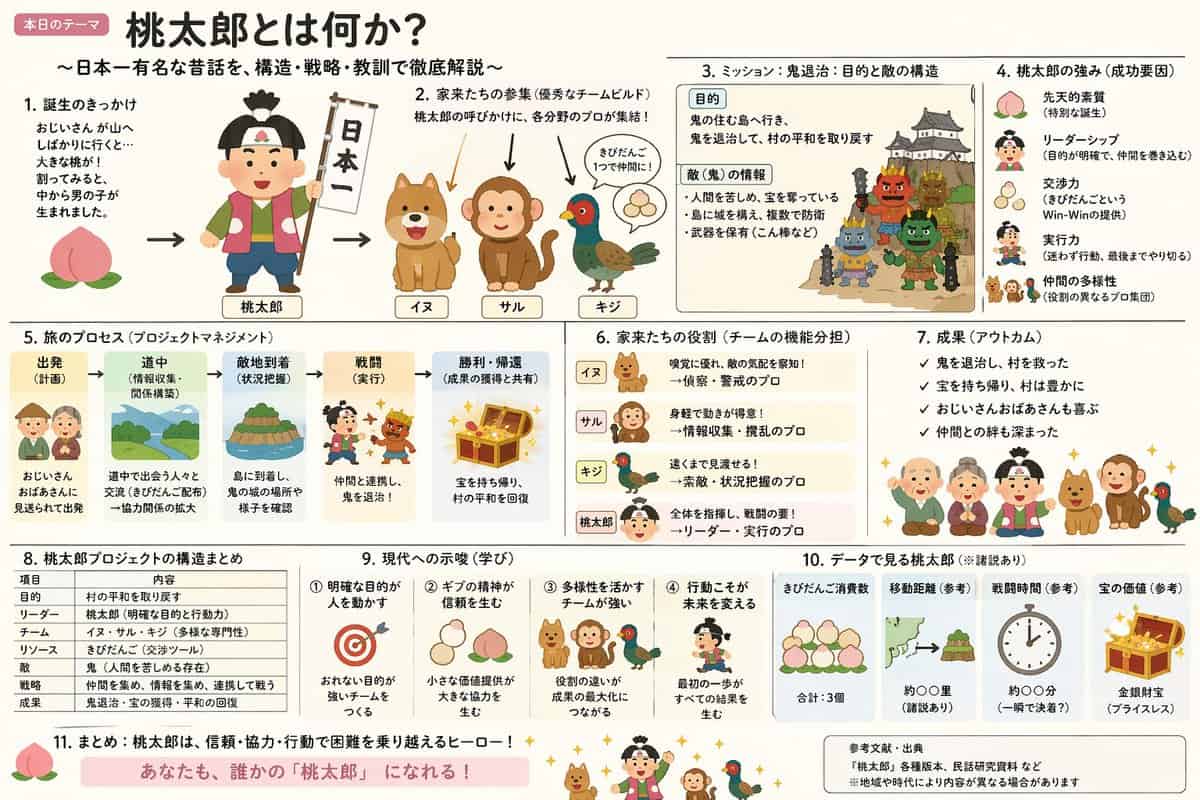
Momotaro Explainer Slide in Hybrid Style

Momotaro Explainer Slide in Hybrid Style

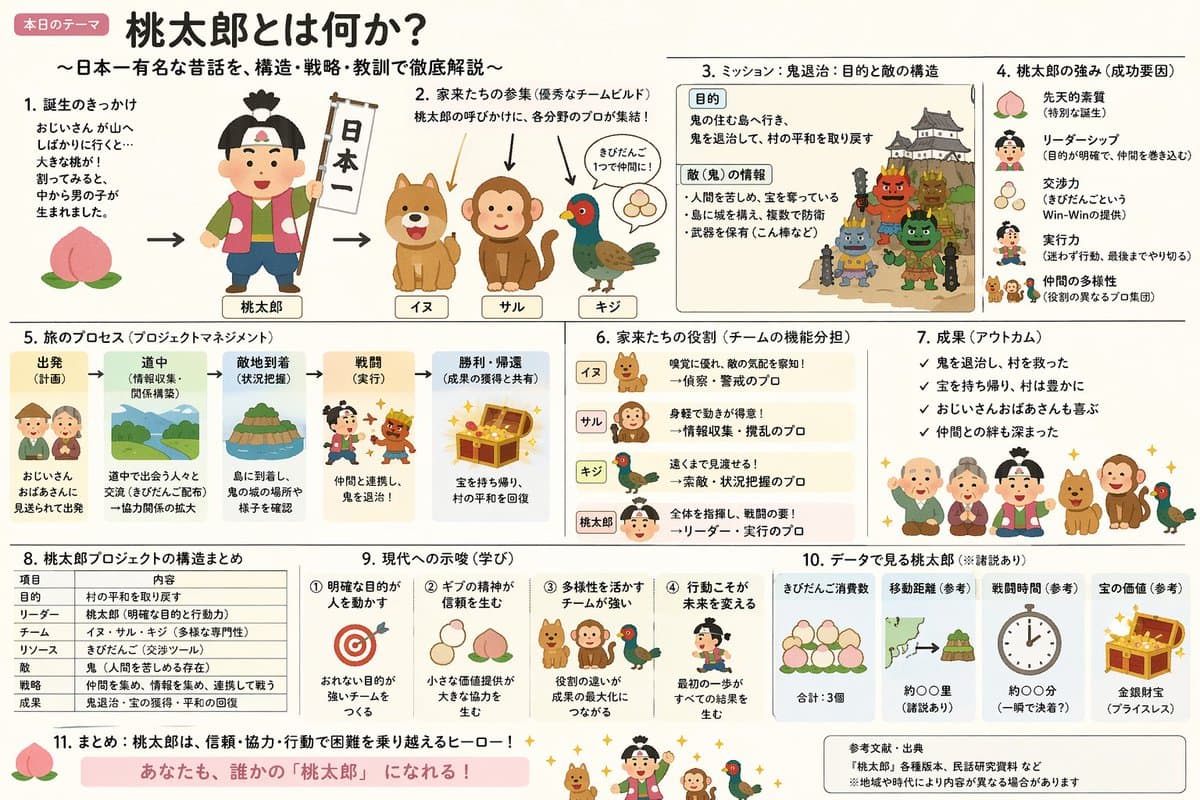
Create an explanatory slide ({argument name="format" default="ponchi-e diagram"}) for {argument name="theme" default="Momotaro"} that fuses the gentle atmosphere of "Irasutoya" with the overwhelming information density of "Kasumigaseki slides".

Cinematic Infographic Concept Poster

Cinematic Infographic Concept Poster

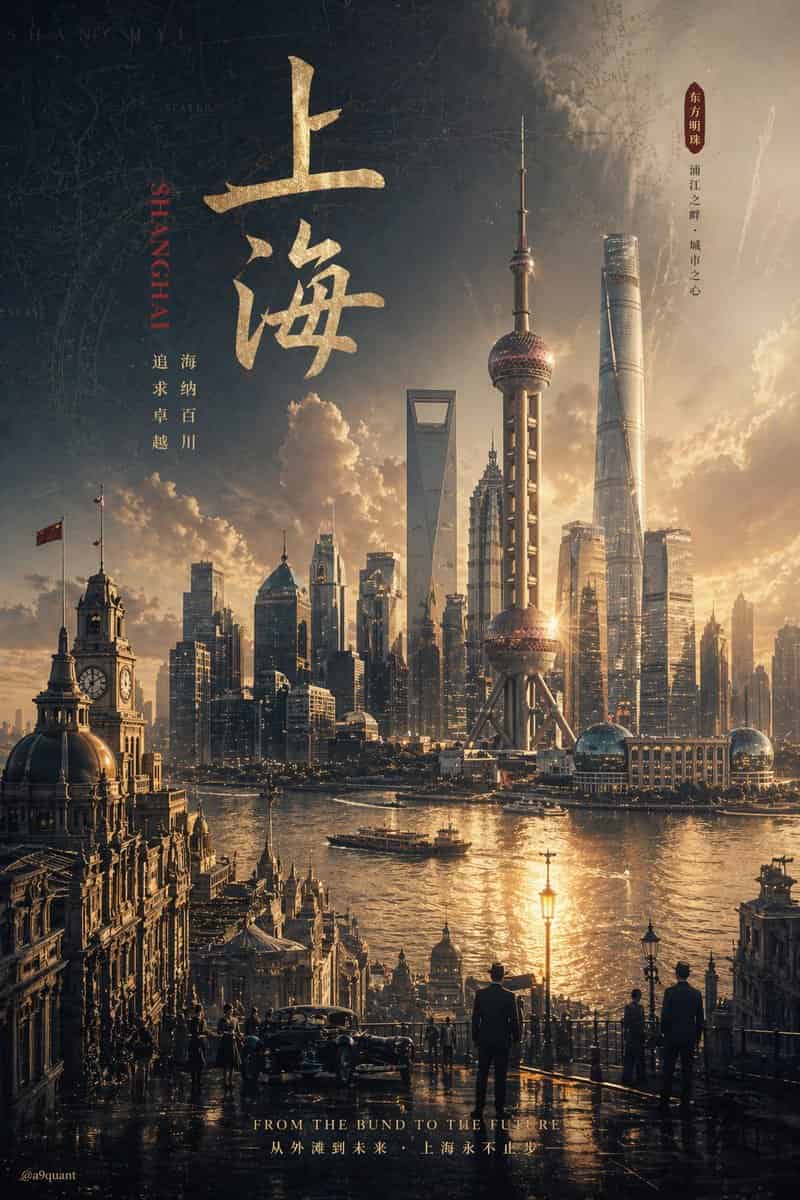
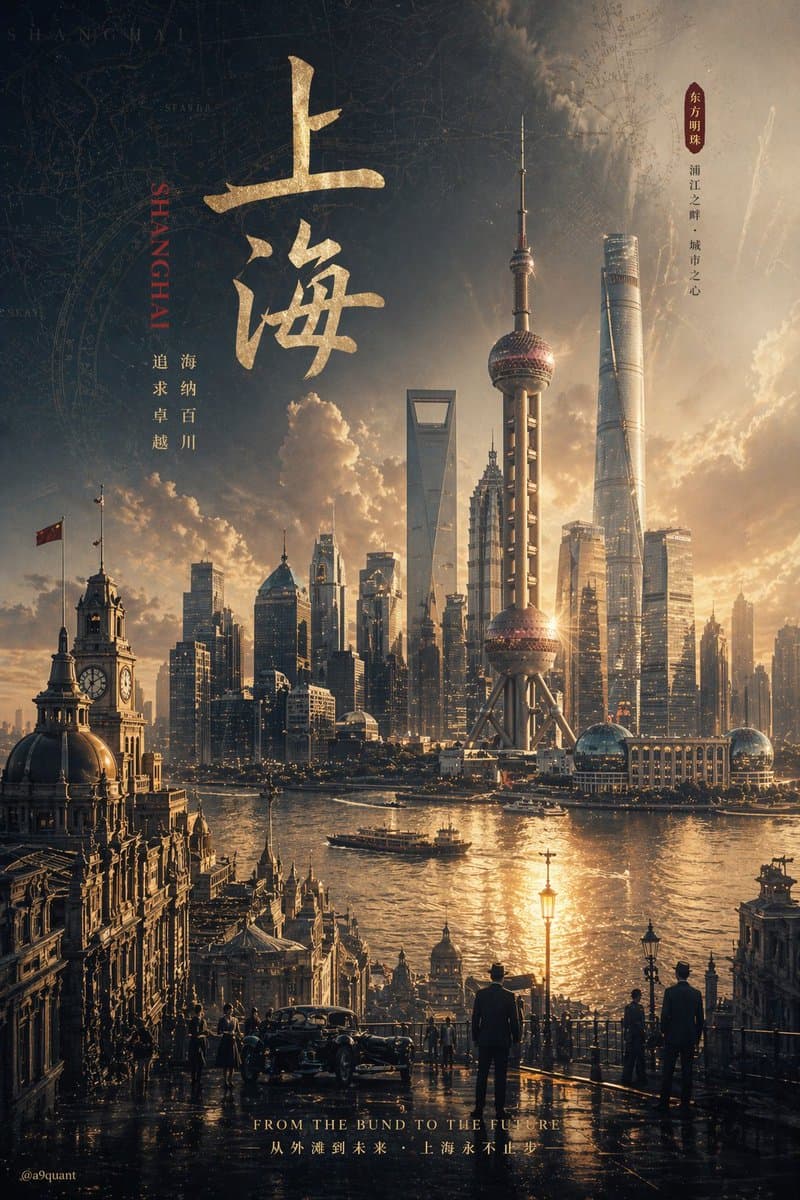
Please automatically generate a top-level concept poster/infographic movie poster based on the [theme]. The only input variables are: 【Topic】:__Ranking of Emperors in Chinese History_ The AI is required to automatically deduce and uniformly design all the following visual systems based on this theme, without any additional specification from me: - Core subject (can automatically determine which characters, products, buildings, utensils, symbols, scenes or abstract images are more suitable) - Bottom support structure - Floating symbols or spiritual symbols above - Scene wrapping elements - Metaphor system - Color levels - Material comparison - Light and shadow logic - Title, subtitle, auxiliary copy - Expression of brand sense and high-end sense The final image must be: A stunning, precise, unified, cinematic, ultra-detailed concept poster that can be used for high-end printing. 【General style】 Hyper-realistic 3D commercial CGI rendering, integrating cinematic lighting, luxury visual language, futuristic concept design and epic composition. The picture must have a "single main visual core" and cannot be cluttered, look like a collage, or look like an ordinary e-commerce poster. [Automatic derivation rules] The AI must automatically determine the most appropriate one based on the [topic]: 1. Core visual metaphors 2. Subject type and posture 3. Support structure form 4. Suspended element form 5. Scene shell and space atmosphere 6. Main color, secondary color, accent color 7. Material combination 8. Text temperament and layout style For example: - If the theme is biased toward power, order, capital, and rule, it will automatically bias toward thrones, crowns, machinery, temples, red curtains, metals, and power structures. - If the theme favors technology, AI, chips, and the future, it will automatically favor mechanical structures, energy cores, light beams, dark metals, and holograms. - If the theme favors luxury goods, high-end, scarcity, and collection, it will automatically favor jewelry, mirror materials, black gold systems, exhibition stands, and museum-style lighting. - If the theme focuses on people, IP, and characters, the characters will automatically be the main visual core, and the corresponding world view and symbolic system will be automatically matched. - If the theme is city, civilization, epic, or destiny, it will automatically transform into a grand narrative space structure and ritual scene. 【Composition Rules】 - Absolutely high-end feel - Strong central order and overall unity - Allows for epic compositions that are symmetrical or close to the central axis - The visual gravity is clear and a clear hierarchy is formed from top to bottom. - The negative space at the edge is clean, restrained and breathable - Meaningless decoration is not allowed, style pollution is not allowed, and multiple systems are not allowed to fight with each other. 【Visual quality】 - Super high details - Volumetric light clarity - Realistic materials - Reflection, refraction, shadow, fog, natural depth of field - Every element is aesthetically controlled by an industrial-grade visual director - Overall reaching the level of high-end brand campaign key visual / luxury invitation poster / conceptual editorial poster 【Typesetting system】 - Overall 90% visual, 10% text - AI automatically generates the most matching main title and subtitle based on the [topic] - The title must be concise, sharp and powerful - The copywriting is distributed in a safe negative space and does not overwhelm the main body. - If the theme is more suitable for Chinese, Chinese titles will be generated first; if the theme is more suitable for English, English titles will be automatically generated; Chinese and English can also be combined, but they must be unified and advanced - The text must be as short and accurate as possible, do not pile up words [Signature requirements] Naturally add the author's signature in the bottom corner of the screen: @a9quant The signature should be small, but clear, refined, and high-end, not overwhelming, just like the official author's signature in top visual works. [Output requirements]

Science Encyclopedia Infographic

Science Encyclopedia Infographic

Please generate a high-quality vertical "popular science encyclopedia map" based on the [theme]. This picture is not an ordinary poster, nor is it a simple illustration, but a modular science information map that has a "picture book feel, an encyclopedia feel, a sense of information structure, and a sense of collection". The overall style refers to the combination of advanced natural history illustrations, modern encyclopedia pages, lifestyle knowledge cards and social media high-dissemination information graphics. Please make the screen contain: - A clear and beautiful theme main vision - Enlarged details of some local features - Multiple rounded corner modular information partitions - Clear title hierarchy and key labels - Concise but rich encyclopedia content - Visual scoring, summary of key points or Top 5 modules Please automatically adapt the content columns according to the theme, giving priority to choosing from these directions and combining them appropriately: Basic files, classification information, appearance characteristics, habits/ecology, formation mechanism/structural composition, growth or use conditions, care or maintenance suggestions, risks and precautions, suitable people or applicable scenarios, comparison of advantages and disadvantages, and quick score card. Visual requirements: Light and clean background, soft colors, light shadows, exquisite small icons, rounded information boxes, neat layout, high information density but not crowded, good reading experience. The whole thing must be like a popular science encyclopedia card that can be truly published, read, collected, and serially produced, rather than an advertising image. Please do not make it into an ordinary commercial poster. It is necessary to highlight the characteristics of "knowledge organization + module information + illustrated display".