
İnfografik / Eğitim
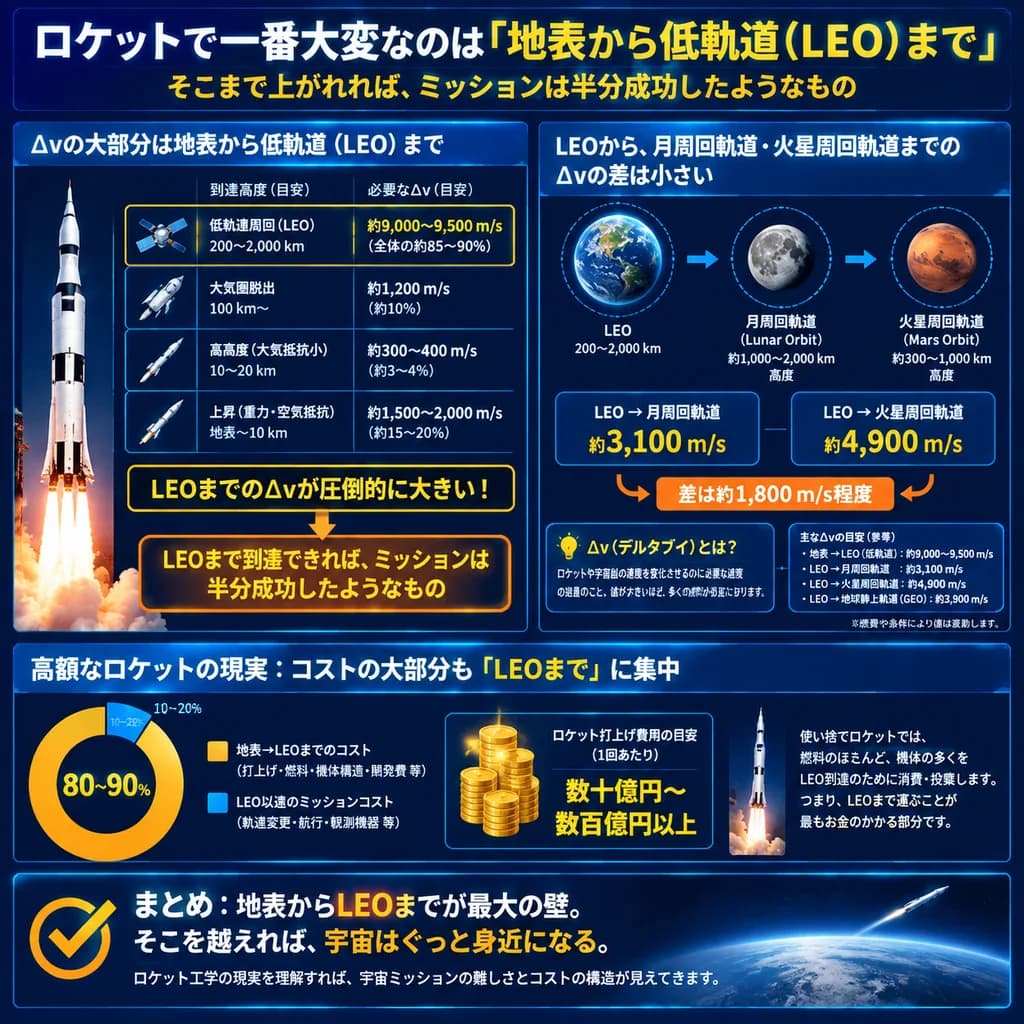
Japonca Roket Delta-V İnfografiği
Alçak Dünya yörüngesine ulaşmak için gereken delta-v ve fırlatma maliyetlerini açıklayan Japonca havacılık infografiği oluşturur. Başlıkları, yörünge verilerini ve renkleri uyarlayın.
infografikroket mühendisliğidelta-vuzay bilimijaponca tipografihavacılık ve uzaydiyagram
İstem
{
  "type": "Japanese rocket engineering infographic",
  "format": "single square educational infographic, 1:1 aspect ratio",
  "theme": "explain that the hardest part of a rocket mission is getting from Earth's surface to low Earth orbit, based on basic rocket engineering",
  "language": "Japanese",
  "visual_style": "dark navy space-tech infographic with bright blue section headers, yellow-orange highlights, crisp white Japanese typography, clean engineering diagrams, realistic 3D rocket and celestial body renders, high contrast, polished social media explainer layout",
  "headline": "[ロケットで一番大変なのは「地表から低軌道(LEO)まで」]",
  "subtitle": "[そこまで上がれれば、ミッションは半分成功したようなもの]",
  "canvas": {
    "background": "[deep navy blue] gradient with subtle coordinate grid lines and orbital atmosphere glow",
    "border": "thin electric blue outline around the full infographic",
    "layout": "top headline, two large upper panels side by side, a wide middle cost breakdown panel, and a bottom summary banner"
  },
  "layout": {
    "sections": [
      {
        "title": "Δvの大部分は地表から低軌道(LEO)まで",
        "position": "upper left",
        "content_type": "vertical altitude and delta-v comparison chart with rocket launch illustration",
        "main_visual": "large white-and-black multistage rocket lifting off at far left with bright orange exhaust flame and smoke plume",
        "chart_columns": [
          "到達高度(目安)",
          "必要なΔv(目安)"
        ],
        "altitude_stages": [
          {
            "label": "低軌道周回(LEO)",
            "altitude": "200〜2,000 km",
            "delta_v": "約9,000〜9,500 m/s(全体の約85〜90%)",
            "icon": "small satellite"
          },
          {
            "label": "大気圏脱出",
            "altitude": "100 km〜",
            "delta_v": "約1,200 m/s(約10%)",
            "icon": "small angled rocket"
          },
          {
            "label": "高高度(大気抵抗小)",
            "altitude": "10〜20 km",
            "delta_v": "約300〜400 m/s(約3〜4%)",
            "icon": "small rocket"
          },
          {
            "label": "上昇(重力・空気抵抗)",
            "altitude": "地表〜10 km",
            "delta_v": "約1,500〜2,000 m/s(約15〜20%)",
            "icon": "small rocket nose-up"
          }
        ],
        "callouts": [
          {
            "text": "LEOまでのΔvが圧倒的に大きい!",
            "style": "yellow headline inside bordered dark box"
          },
          {
            "text": "LEOまで到達できれば、ミッションは半分成功したようなもの",
            "style": "larger orange bordered box with downward arrow"
          }
        ]
      },
      {
        "title": "LEOから、月周回軌道・火星周回軌道までのΔvの差は小さい",
        "position": "upper right",
        "content_type": "space trajectory comparison diagram and delta-v table",
        "celestial_bodies": [
          {
            "label": "LEO",
            "description": "Earth with glowing blue atmosphere rim, dotted circular orbit, label 200〜2,000 km"
          },
          {
            "label": "月周回軌道(Lunar Orbit)",
            "description": "gray cratered Moon in dotted orbit, label 約1,000〜2,000 km 高度"
          },
          {
            "label": "火星周回軌道(Mars Orbit)",
            "description": "detailed rust-orange Mars in dotted orbit, label 約300〜1,000 km 高度"
          }
        ],
        "trajectory_arrows": [
          "Earth/LEO to Moon",
          "Moon to Mars"
        ],
        "comparison_boxes": [
          {
            "label": "LEO → 月周回軌道",
            "value": "約3,100 m/s"
          },
          {
            "label": "LEO → 火星周回軌道",
            "value": "約4,900 m/s"
          }
        ],
        "highlight": "差は約1,800 m/s程度",
        "definition_box": {
          "title": "Δv(デルタブイ)とは?",
          "text": "ロケットや宇宙船の速度を変化させるのに必要な速度の総量のこと。値が大きいほど、多くの燃料が必要になります。",
          "icon": "light bulb"
        },
        "reference_list": [
          "地表 → LEO(低軌道): 約9,000〜9,500 m/s",
          "LEO → 月周回軌道: 約3,100 m/s",
          "LEO → 火星周回軌道: 約4,900 m/s",
          "LEO → 地球静止軌道(GEO): 約3,900 m/s"
        ],
        "footnote": "※燃費や条件により値は変動します。"
      },
      {
        "title": "高額なロケットの現実:コストの大部分も「LEOまで」に集中",
        "position": "middle full width",
        "content_type": "cost breakdown panel",
        "subcomponents": [
          {
            "type": "donut chart",
            "label": "80〜90%",
            "secondary_label": "10〜20%",
            "colors": "yellow and electric blue"
          },
          {
            "type": "legend",
            "items": [
              "地表→LEOまでのコスト(打上げ・燃料・機体構造・開発費 等)",
              "LEO以遠のミッションコスト(軌道変更・航行・観測機器 等)"
            ]
          },
          {
            "type": "coin stack illustration",
            "label": "ロケット打上げ費用の目安(1回あたり)",
            "value": "数十億円〜数百億円以上"
          },
          {
            "type": "small rocket launch icon and text",
            "text": "使い捨てロケットでは、燃料のほとんど、機体の多くをLEO到達のために消費・投棄します。つまり、LEOまで運ぶことが最もお金のかかる部分です。"
          }
        ]
      },
      {
        "title": "まとめ:地表からLEOまでが最大の壁。そこを越えれば、宇宙はぐっと身近になる。",
        "position": "bottom full width",
        "content_type": "summary banner",
        "icon": "large yellow checkmark badge in circle at left",
        "background_visual": "curved Earth horizon and small rocket silhouette trail at right",
        "body_text": "ロケット工学の現実を理解すれば、宇宙ミッションの難しさとコストの構造が見えてきます。"
      }
    ]
  },
  "typography": {
    "headline": "large bold white Japanese sans-serif with highlighted LEO phrase",
    "subtitle": "bold yellow Japanese sans-serif",
    "body": "compact clean legible white Japanese text",
    "numbers": "large bold white and yellow numerals for delta-v values"
  },
  "color_palette": {
    "primary_background": "[deep navy blue]",
    "accent": "[golden yellow-orange]",
    "secondary": "electric blue",
    "text": "pure white"
  },
  "rendering_instructions": "Create a crisp, highly legible, structured Japanese technical infographic. Keep all text labels sharp and readable, align layout modules precisely, render 3D space elements with realistic surface textures and lighting, and maintain an organized modern aerospace dashboard aesthetic."
}Neleri özelleştirebilirsiniz
Oluşturmadan önce istemin bu kısımlarını kendi konunuz veya metninizle değiştirin.
[ロケットで一番大変なのは「地表から低軌道(LEO)まで」]yer tutucu[そこまで上がれれば、ミッションは半分成功したようなもの]yer tutucu[deep navy blue]yer tutucu[golden yellow-orange]yer tutucu
İstem ayrıntıları
- Kategori
- İnfografik / Eğitim
- Model
- GPT IMAGE 2
- Görsel başına maliyet
- 1K: 43 kredi · 2K: 86 kredi · 4K: 143 kredi
- En boy oranı
- 1:1
- Eklenme