Create a softly resolved 1980s nighttime portrait at an old roadside petrol station. Give the entire image the appearance of a slightly faded color photograph: warm, dim lighting, muted colors, softly merged fine details, and deep brown-black shadows. Keep the atmosphere intimate and casually rebellious.
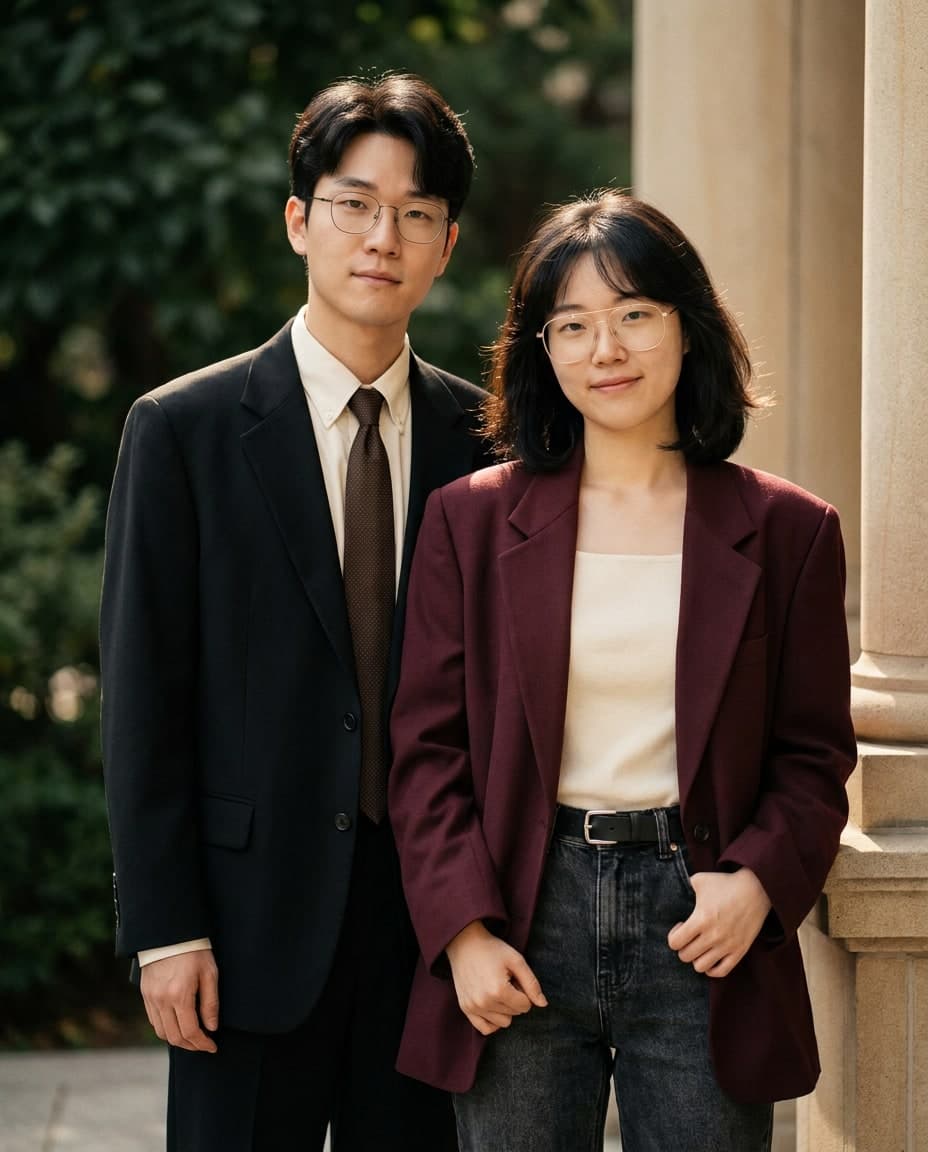
Use the person in the uploaded portrait as the sole identity reference. Preserve their recognizable facial features, face shape, skin tone, age, hair color, natural body proportions, and gender presentation. Preserve any existing facial hair. Give their original hairstyle a little relaxed, tousled 1980s volume without forcing a different hair length.
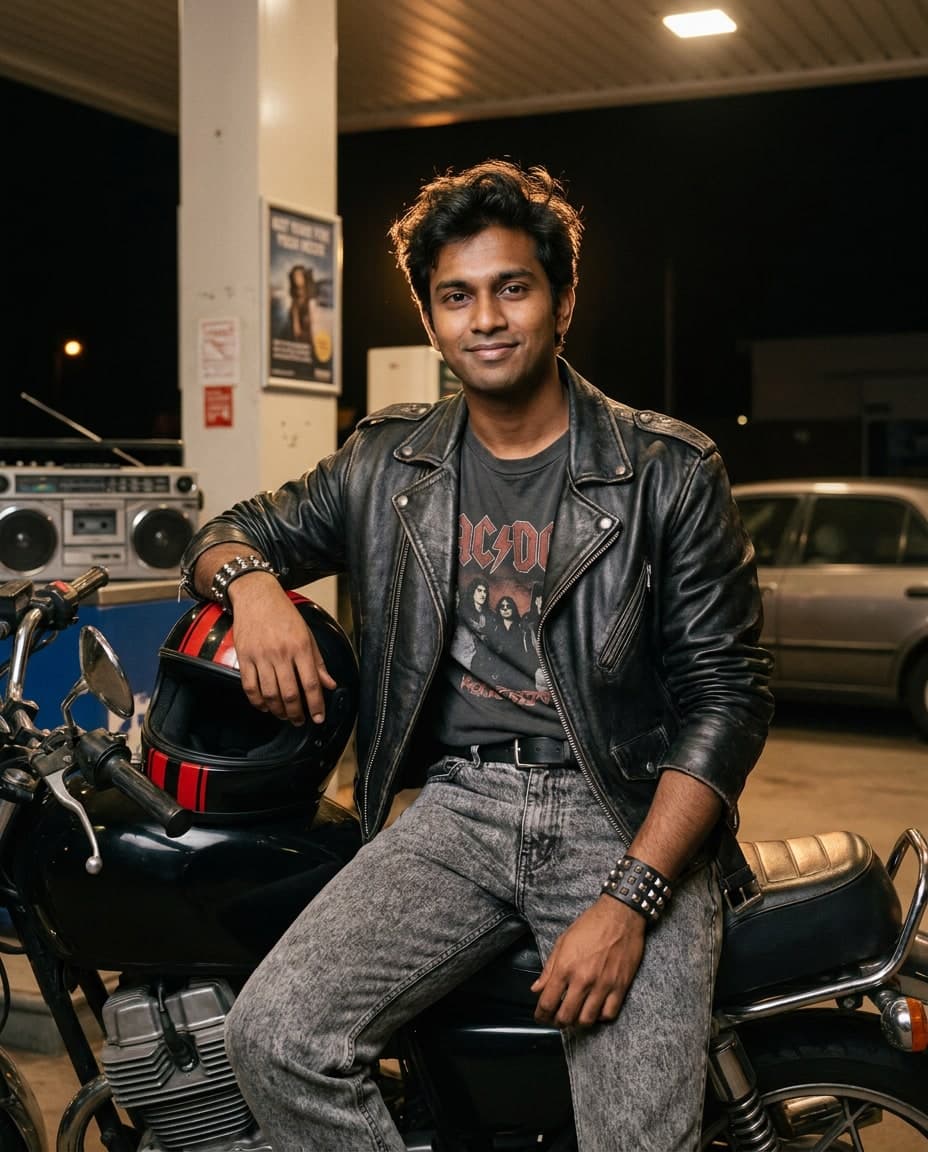
The person sits casually sideways on a parked black motorcycle, with their torso turned toward the camera. Their posture is relaxed and slightly asymmetrical. On the left side of the image, one forearm rests across a black motorcycle helmet positioned securely on the motorcycle's fuel tank. The elbow bends naturally, and the hand hangs loosely over the helmet's near side with relaxed fingers. Their other hand rests near the thigh. They look toward the camera with a small, confident half-smile.
The helmet is glossy black with two narrow red horizontal stripes wrapping around its lower section. It catches a few subdued reflections from the station lights. Show enough of the motorcycle below and beside the person to establish the seat, dark tank, and a little chrome hardware, while keeping the portrait dominant.
Dress the person in a worn black leather biker jacket with broad lapels, silver snap fasteners, an off-center metal zipper, and naturally creased sleeves pushed slightly up the forearms. The jacket is open over a faded charcoal rock-band T-shirt. The shirt has an aged red graphic heading and a muted multicolored illustration, with the lettering indistinct rather than clearly readable. Pair it with high-waisted gray acid-wash jeans, a wide black belt with a rectangular silver buckle, and a black leather wristband with small metal studs on the wrist near the helmet. Adapt the clothing to the person's original build.
Place the scene beneath the canopy of a modest, older petrol station after dark. A beige rectangular support column stands behind the person on the right. In the upper-right background, a partly cropped illuminated petrol-station sign gives off muted cream-yellow light. Farther back on the right, the front corner of an older beige or silver sedan is visible, including a square headlamp, part of the grille, and the hood. Keep the car softly resolved and secondary.
In the left background, place a silver-and-black portable cassette boombox on a low shelf or counter. Above it, a faded rock poster hangs at a slight angle, with dark illustrated figures and aged paper edges. The interior beyond these objects is mostly dark. Keep the location compact, ordinary, and believable, with a few worn metal surfaces and no busy crowd.
Light the person with soft, warm illumination from the station canopy and a small amount of near-camera fill. The face is gently visible, with natural shadows beneath the chin and around the hair. Warm highlights catch the hair, jacket folds, helmet, and belt buckle. Preserve substantial darkness in the background. The station sign and distant headlamp provide small points of light without overpowering the portrait.
Use the color and exposure of an older nighttime color print. Whites lean toward aged cream, denim shifts toward muted gray-blue, red graphics look worn, and black leather falls into warm brown or olive-tinted shadows. Keep skin tones warm but subdued. Highlights on the leather and helmet are irregular and softly spread, with limited detail in the darkest areas.
Apply moderate optical softness across the face, clothing, motorcycle, and environment. Individual hair strands, skin pores, printed graphics, and denim weave merge gently. Add fine irregular grain, slightly uneven exposure, and mild glow around the background lights. The photograph feels softly printed, a little murky, and visibly dated while retaining the person's facial likeness. Avoid modern digital sharpening, glossy beauty retouching, HDR, vivid neon lighting, heavy fog, scratches, and VHS interference.
Adapt the composition naturally to the selected output aspect ratio. Frame the person from the complete head to approximately mid-thigh. Keep the resting forearm, helmet, belt, and part of the motorcycle visible. Retain the boombox and poster at the left and the station column and car at the right. Keep the person prominent without requiring a full view of the motorcycle.
Fill every canvas edge with the actual scene. No template title, readable lettering, logo, watermark, camera interface, reserved text area, outer graphic frame, rounded card, white margins, or black bars.
1980smotorcycleleather jacket