
UI / UX 設計
昭和風家庭相簿介面化設計
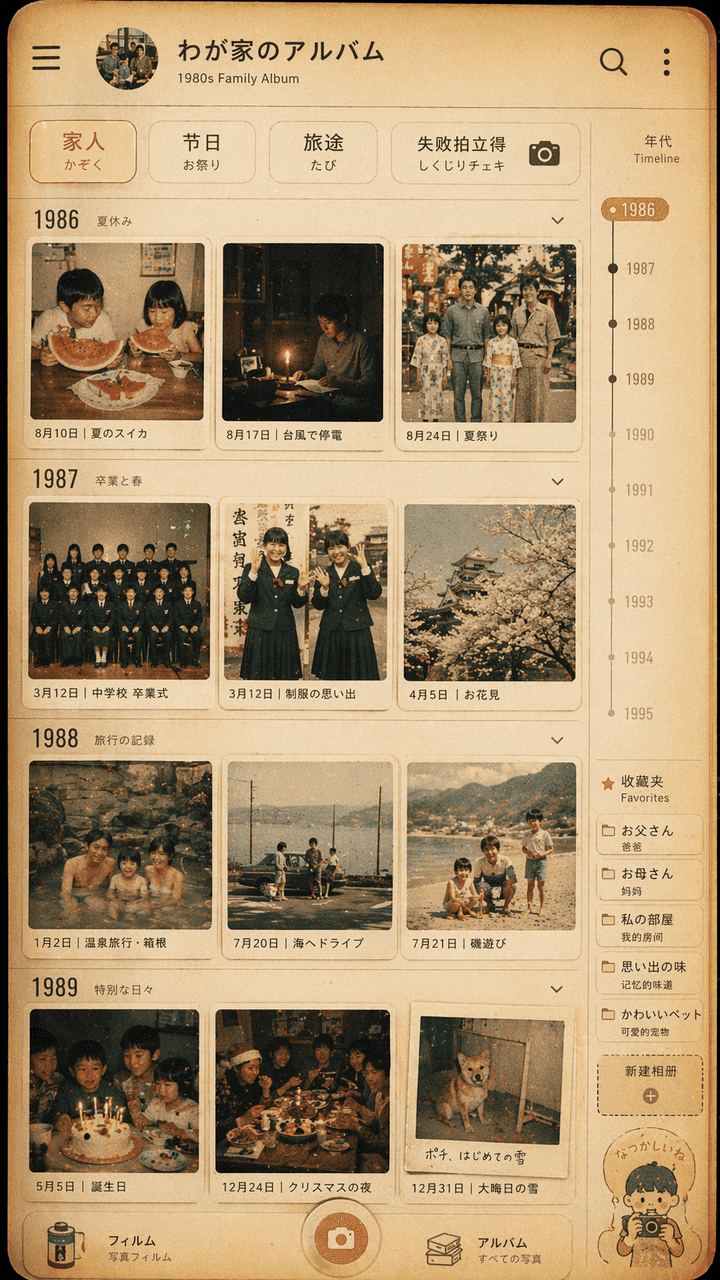
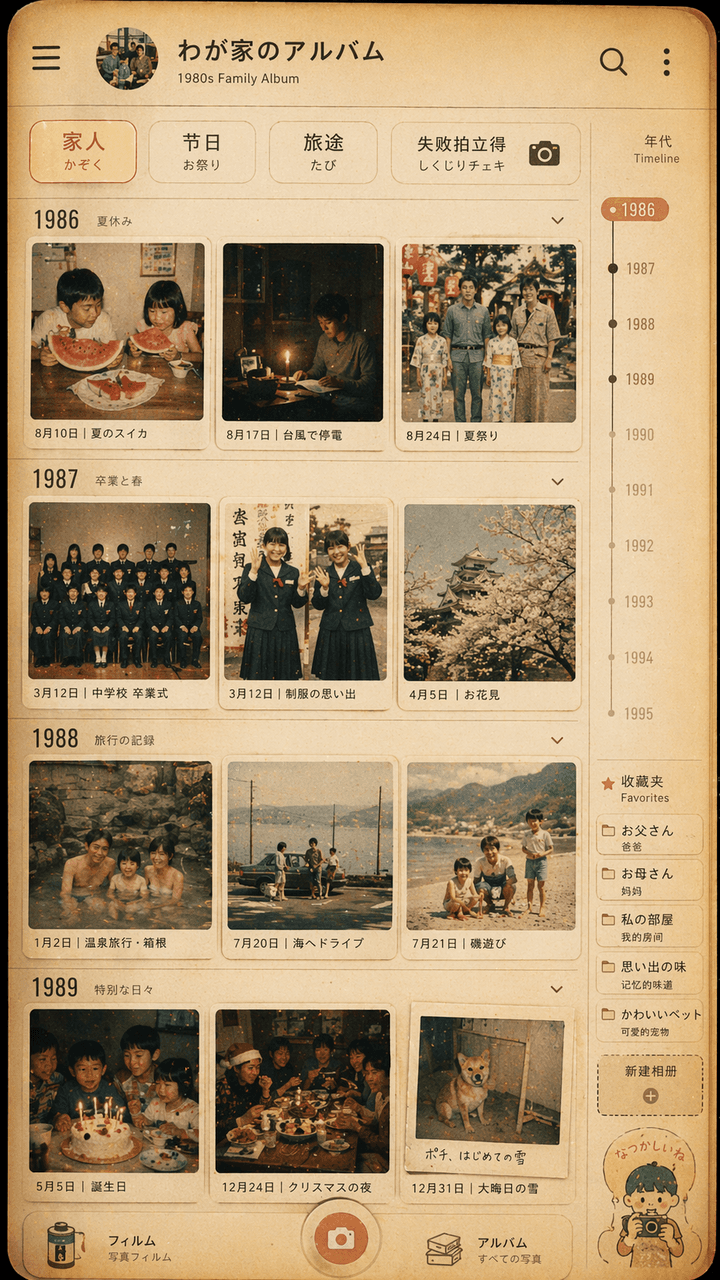
“昭和風家庭相簿介面化設計”,復古照片牆與現代相簿 App UI 融合,畫面模擬一個照片管理應用的時間軸頁面,但每張縮圖都是 20 世紀 80 年代日本家庭日常:夏日西瓜、颱風停電、校服畢業照、溫泉旅行、聖誕飯桌,頂部篩選器寫“家人/節日/旅途/失敗拍立得”,右側有年份刻度和收藏夾標籤,整體色彩偏膠片暖黃與輕微褪色,畫面既像真實手機介面,又像溫柔的家庭記憶展陳,比例 9:16。
來源:image2官方推荐完整版出图提示词合集!复制即用
提示詞
“昭和風家庭相簿介面化設計”,復古照片牆與現代相簿 App UI 融合,畫面模擬一個照片管理應用的時間軸頁面,但每張縮圖都是 20 世紀 80 年代日本家庭日常:夏日西瓜、颱風停電、校服畢業照、溫泉旅行、聖誕飯桌,頂部篩選器寫“家人/節日/旅途/失敗拍立得”,右側有年份刻度和收藏夾標籤,整體色彩偏膠片暖黃與輕微褪色,畫面既像真實手機介面,又像溫柔的家庭記憶展陳,比例 9:16。
如何使用此提示
1
看完整提示
在生成之前閱讀完整的 昭和風家庭相簿介面化設計 提示並確定主題、風格、相機、燈光和構圖要求。
2
自訂變數
將括號或參數式佔位符替換為您的產品、角色、品牌、場景、調色板或寬高比要求。
3
生成並迭代
開啟 https://www.gptimagehub.com/zh-TW/generate?promptId=cmogxipx300gzxt5gbicukrta,產生圖像,然後根據需要使用更具體的主題、文字、佈局或負面約束來最佳化提示。
提示常見問題解答
昭和風家庭相簿介面化設計 提示符號最適合用來做什麼?
此提示最適用於您需要可重複使用結構、詳細視覺方向和一致輸出品質的 ui / ux 設計 影像。
我可以在生成之前編輯提示嗎?
是的。完整的提示文字在此頁面上可見,因此您可以在生成之前更改主題、產品名稱、顏色、構圖、相機術語、長寬比和樣式註釋。
出現此提示時我應該使用哪種型號?
使用提示元資料中顯示的模型作為預設起點。如果另一個影像模型支援相同的寬高比和指令風格,您可以調整提示並比較結果。