
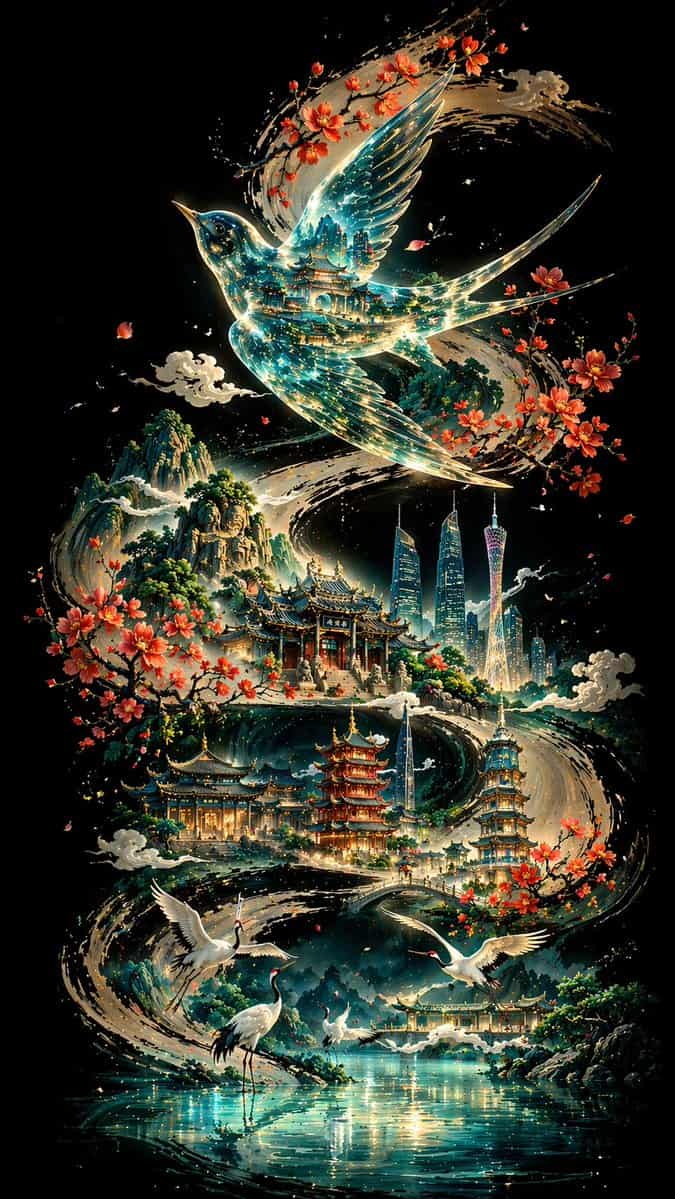
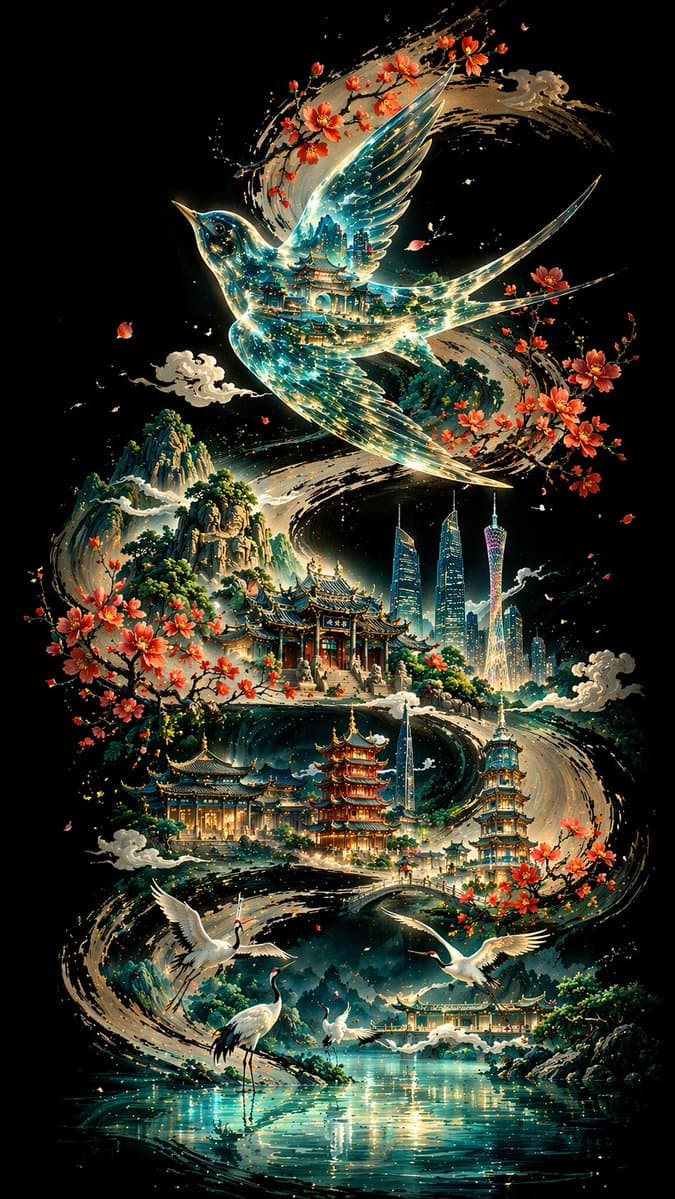
Ink-Curve Guangzhou Aesthetics Poster
With a deep background of pure black, a thick and powerful S-shaped curve of ink calligraphy meanders from one end of the picture to the other, forming the visual skeleton and narrative line of the entire picture. Above…
Prompt
With a deep background of pure black, a thick and powerful S-shaped curve of ink calligraphy meanders from one end of the picture to the other, forming the visual skeleton and narrative line of the entire picture. Above the curve is a transparent thrush, with the overlapping shadows of traditional buildings and blue-green light flow reflected inside; Guangzhou landmarks and classical architectural sequences are scattered along the curve, with white cranes and lakes in the foreground, and cascading mountains in the distance. The overall design adopts non-linear perspective, dominated by cold colors and embellishments with warm colors. It blends oriental aesthetics with modern imagery, and is rendered in 8K ultra-high definition with a ratio of 9:16.
How to use this prompt
Read the complete Ink-Curve Guangzhou Aesthetics Poster prompt and identify the subject, style, camera, lighting, and composition requirements before generating.
Replace bracketed or argument-style placeholders with your product, character, brand, scene, color palette, or aspect ratio requirements.
Open https://www.gptimagehub.com/generate?promptId=cmogwt3ay002pzpdylv1w56np, generate the image, then refine the prompt with more specific subject, text, layout, or negative constraints if needed.
Prompt FAQ
What is the Ink-Curve Guangzhou Aesthetics Poster prompt best used for?
This prompt is best used for poster & illustration images where you want a reusable structure, detailed visual direction, and consistent output quality.
Can I edit the prompt before generating?
Yes. The full prompt text is visible on this page so you can change subjects, product names, colors, composition, camera terms, aspect ratio, and style notes before generation.
Which model should I use with this prompt?
Use the model shown in the prompt metadata as the default starting point. If another image model supports the same aspect ratio and instruction style, you can adapt the prompt and compare results.