
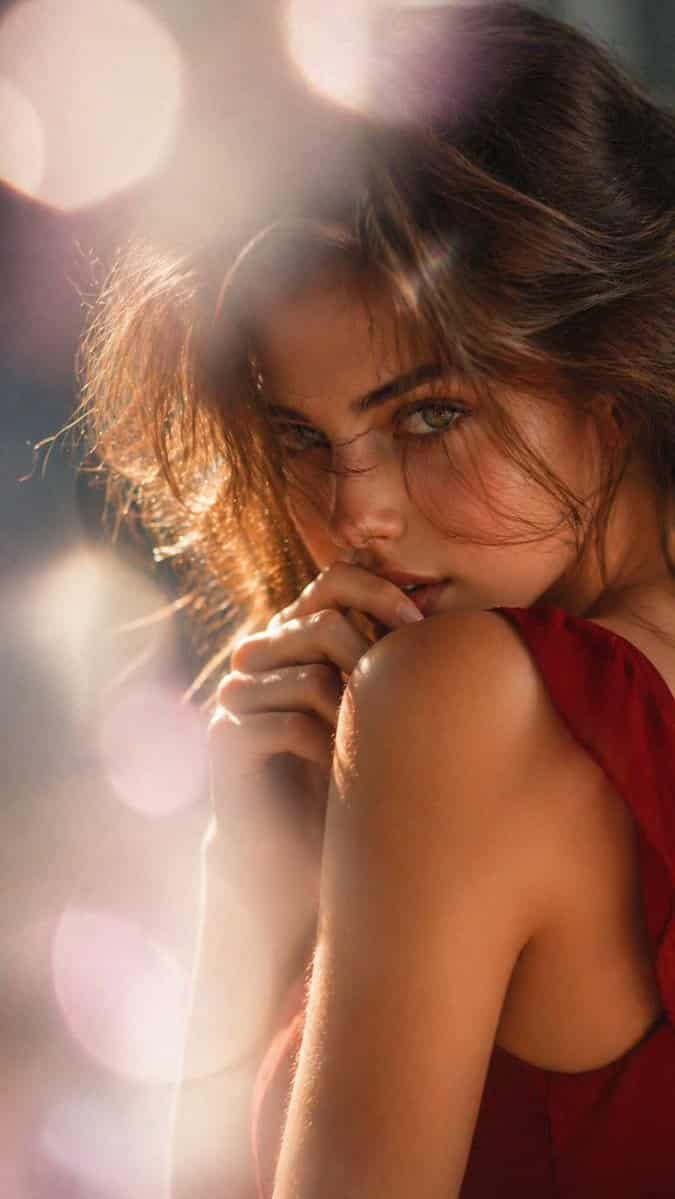
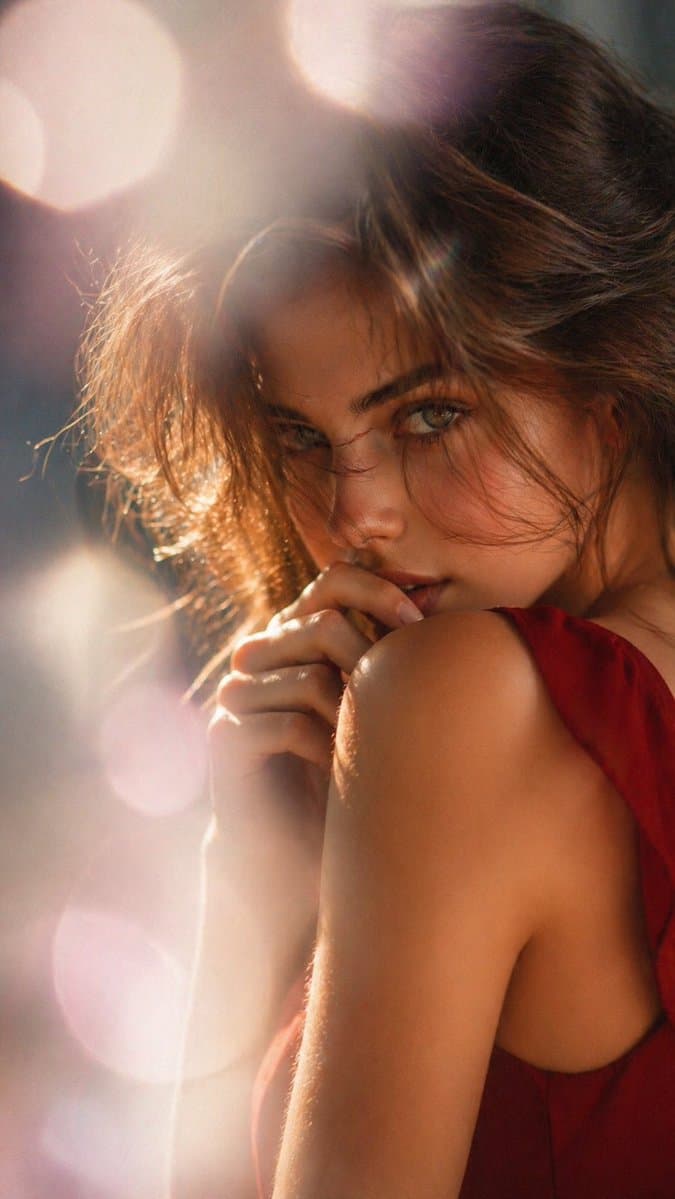
Dreamy Backlit Editorial Portrait
A cinematic soft-focus portrait of a woman from behind and slightly in profile, framed from the upper torso up in a vertical composition. She has {argument name="hair color" default="dark brown"} hair styled in a loose…
Prompt
A cinematic soft-focus portrait of a woman from behind and slightly in profile, framed from the upper torso up in a vertical composition. She has {argument name="hair color" default="dark brown"} hair styled in a loose messy updo with wispy strands catching the light. Her face is mostly hidden by her pose and hair, with only a small portion of one cheek visible. She wears a {argument name="dress color" default="deep red"} sleeveless dress with an open back or low-cut side, emphasizing her bare shoulder and upper back. One hand is raised delicately near her neck or shoulder, fingers relaxed. Use strong warm backlighting and rim light, with glowing golden highlights around the hair and skin, dreamy lens flare, and large circular bokeh in the blurred background. The image should feel intimate, elegant, and slightly sensual, like a high-end fashion or beauty editorial, with shallow depth of field, creamy blur, warm amber and rose tones, and a soft cinematic glow.
How to use this prompt
Read the complete Dreamy Backlit Editorial Portrait prompt and identify the subject, style, camera, lighting, and composition requirements before generating.
Replace bracketed or argument-style placeholders with your product, character, brand, scene, color palette, or aspect ratio requirements.
Open https://www.gptimagehub.com/generate?promptId=cmogwygeb009vzpdyrvpsnhgr, generate the image, then refine the prompt with more specific subject, text, layout, or negative constraints if needed.
Prompt FAQ
What is the Dreamy Backlit Editorial Portrait prompt best used for?
This prompt is best used for portrait & photography images where you want a reusable structure, detailed visual direction, and consistent output quality.
Can I edit the prompt before generating?
Yes. The full prompt text is visible on this page so you can change subjects, product names, colors, composition, camera terms, aspect ratio, and style notes before generation.
Which model should I use with this prompt?
Use the model shown in the prompt metadata as the default starting point. If another image model supports the same aspect ratio and instruction style, you can adapt the prompt and compare results.