
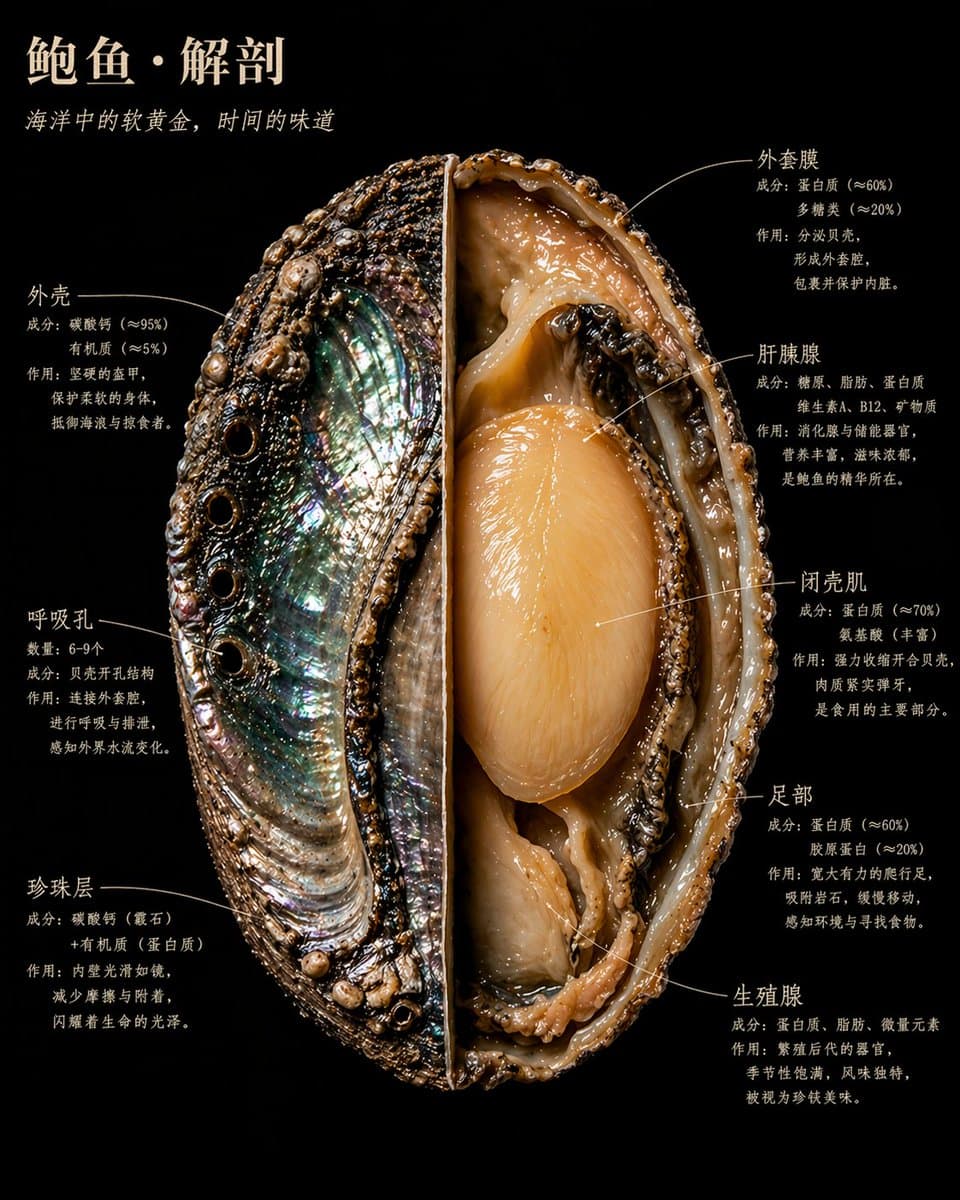
Naturalistischer Lebensmittel-Proben-Querschnitt
GPT Image 2 naturalistisches Lebensmittel-Proben-Querschnitt-Beispiel
Prompt
Eine Lebensmittelprobe, seziert und präsentiert wie eine naturalistische Museums-Entdeckung. Die eine Hälfte bewahrt die äußere Oberfläche mit ihrer natürlichen Textur und Farbe; die andere Hälfte ist bis zum Kern aufgeschnitten und offenbart die innere Struktur in scharfen Details. Der Hintergrund ist rein schwarzer Samt. Das Lebensmittel schwebt im Rahmen wie etwas Kostbares und Gefährliches. Kommentierte Etiketten schmiegen sich an die strukturellen Ränder in handgeschriebener Serif-Typografie, niemals schwebend. Jede Anmerkung hat drei Zeilen: Strukturname, Zusammensetzungsdaten und eine laiensprachliche Erklärung. Haupttitel in warmen, elfenbeinfarbenen Großbuchstaben oben links. Gesamtästhetik: Audubon-Naturillustration trifft auf Caravaggio-Beleuchtung trifft auf die schönste wissenschaftliche Fotografie, die je gemacht wurde. 4K-Präzision, Specimen Lighting, extreme innere Details. Realistischer Stil, kein Diagramm, kein Cartoon. Jedes Material hat eine echte physikalische Textur: rau, glatt, nass, trocken, dicht, porös.
Beispielbilder
Mit unserem integrierten Bildwerkzeug erstellte Beispiele für Bildaufbau und Stil.
Anwendungshinweise
Diese Anwendungshinweise sind derzeit auf Englisch verfügbar.
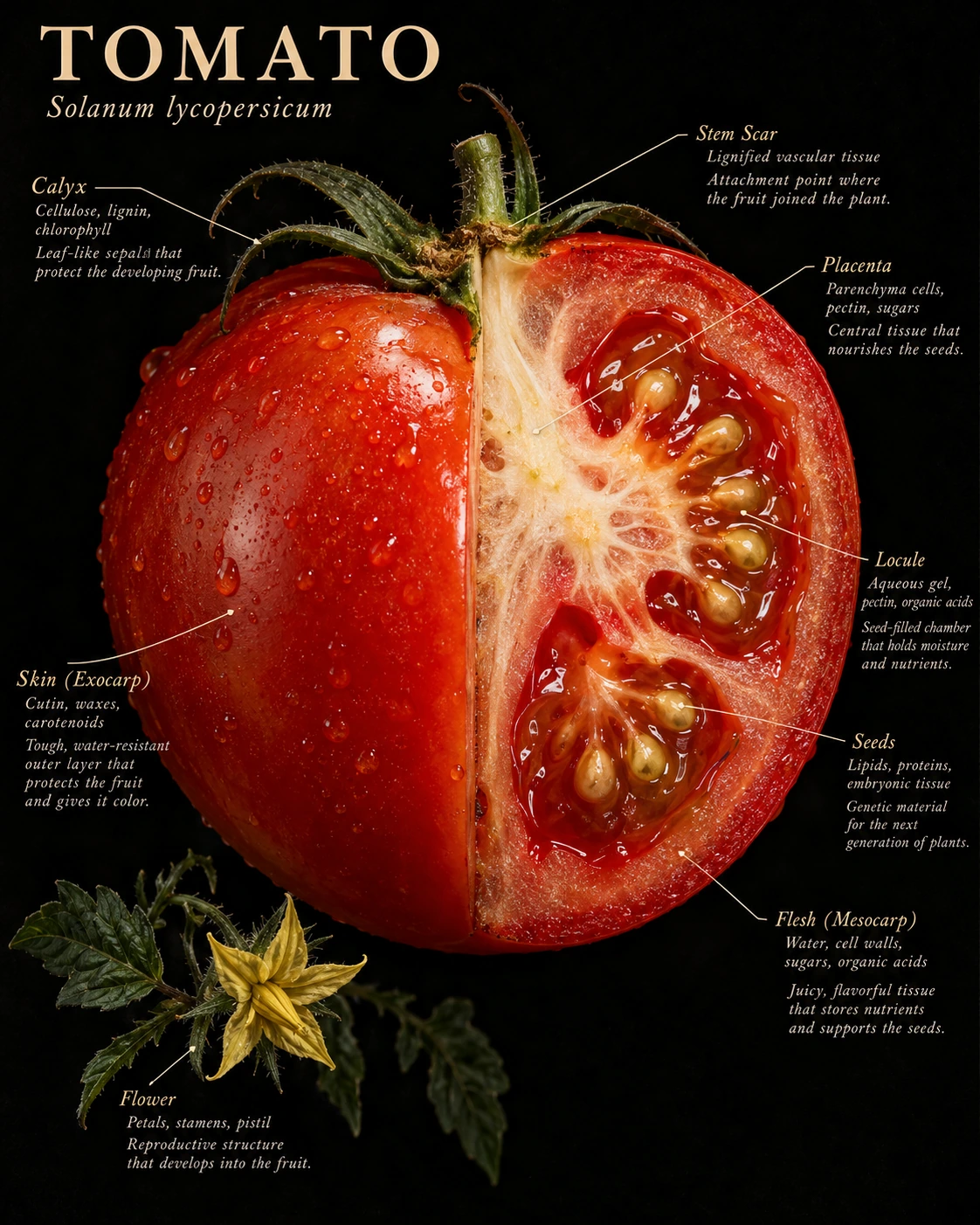
A museum-like food portrait combining a natural exterior and a detailed cut surface against black. The specimen's texture and the annotation layout share the same visual importance.
When to use
Food editorial concepts, ingredient storytelling, and natural-history-inspired packaging visuals. It works best with one specimen whose internal structure is visibly different from its skin.
What the existing example shows
The example features a large tomato, with intact red skin on one side and exposed seed cavities on the other, plus ivory labels around the edge. The image is illustrative rather than a verified anatomical plate.
Suggested setup
- Aspect ratio
- 4:5 · Keep the specimen large and central with a narrow ring of space for labels. Use one directional light so the wet cut surface separates from the dark background.
- Reference images
- Recommended when anatomy matters. Supply a clear real cross-section so the desired skin, flesh, seeds, and core are unambiguous.
What to customize
- SpecimenA ripe green kiwifruit
- Choose one food and specify both the outer texture and the features visible on its cut surface.
- LabelsSkin, flesh, seeds, and core
- Use a few short labels with anchored leader lines. Supply numerical composition data separately if it is required.
- Light and backgroundSoft upper-left specimen light on black velvet
- Preserve detail in dark skin and avoid letting bright wet highlights erase the interior structure.
View a complete adaptation
Kiwifruit naturalist specimen
A complete fruit substitution with qualitative labels and no invented nutritional measurements.
This adaptation has not been generated. The existing image belongs to the original illustration record.
Create a 4:5 vertical naturalist specimen photograph of one ripe green kiwifruit floating against a pure black velvet background. Show the left half with intact brown fuzzy skin and the right half as a clean longitudinal cut, revealing translucent green flesh, small dark seeds, and a pale central core. Use precise, realistic textures and a soft upper-left light that catches moisture without blowing out detail. Place the warm-ivory title "KIWIFRUIT" at the upper left. Add only four small ivory labels: "Skin", "Flesh", "Seeds", and "Core", each connected to the correct visible structure by a fine short leader line. Leave space between labels and avoid crossing lines. No nutritional percentages, invented measurements, extra fruit, or diagram-style flat shading.
Troubleshooting
- The cut surface is attractive but anatomically inconsistent
- Use a real cross-section reference and check each labeled structure; simplify to a few visible parts instead of generating hidden anatomy.
- Annotations float without clear targets
- Limit the label count, require short leader lines, and place the labels around the specimen rather than over its interior.
Editorial notes and generation record
AI-assisted editorial analysis of the source prompt and existing illustration. Settings are starting suggestions; the new adaptation is not a model test.
The existing illustration was generated with the built-in image tool. Its provider model is not disclosed. Actual image size: 1122 × 1402.
Original illustration input
Create one finished image illustrating this image prompt.
Aspect ratio: 4:5.
A food specimen dissected and displayed like a museum naturalist discovery. One half preserves the outer surface with its natural texture and color; the other half is cut to the core, revealing the internal structure in sharp detail. The background is pure black velvet. The food floats in the frame like something precious and dangerous. Annotated labels hug the structural edges in handwritten serif typography, never floating. Each annotation has three lines: structure name, composition data, and a plain-language explanation. Main title in warm ivory uppercase at the top-left. Overall aesthetic: Audubon naturalist illustration meets Caravaggio lighting meets the most beautiful scientific photography ever made. 4K precision, specimen lighting, extreme internal detail. Realistic style, not diagram, not cartoon. Every material has true physical texture: rough, smooth, wet, dry, dense, porous.
Selected food specimen for this example: a ripe tomato.
Prompt-Details
- Kategorie
- Infografik / Bildung
- Modell
- GPT IMAGE 2
- Kosten pro Bild
- 1K: 43 Credits · 2K: 86 Credits · 4K: 143 Credits
- Seitenverhältnis
- 4:5
- Ersteller
- @GeekCatX
- Hinzugefügt
- Aktualisiert