
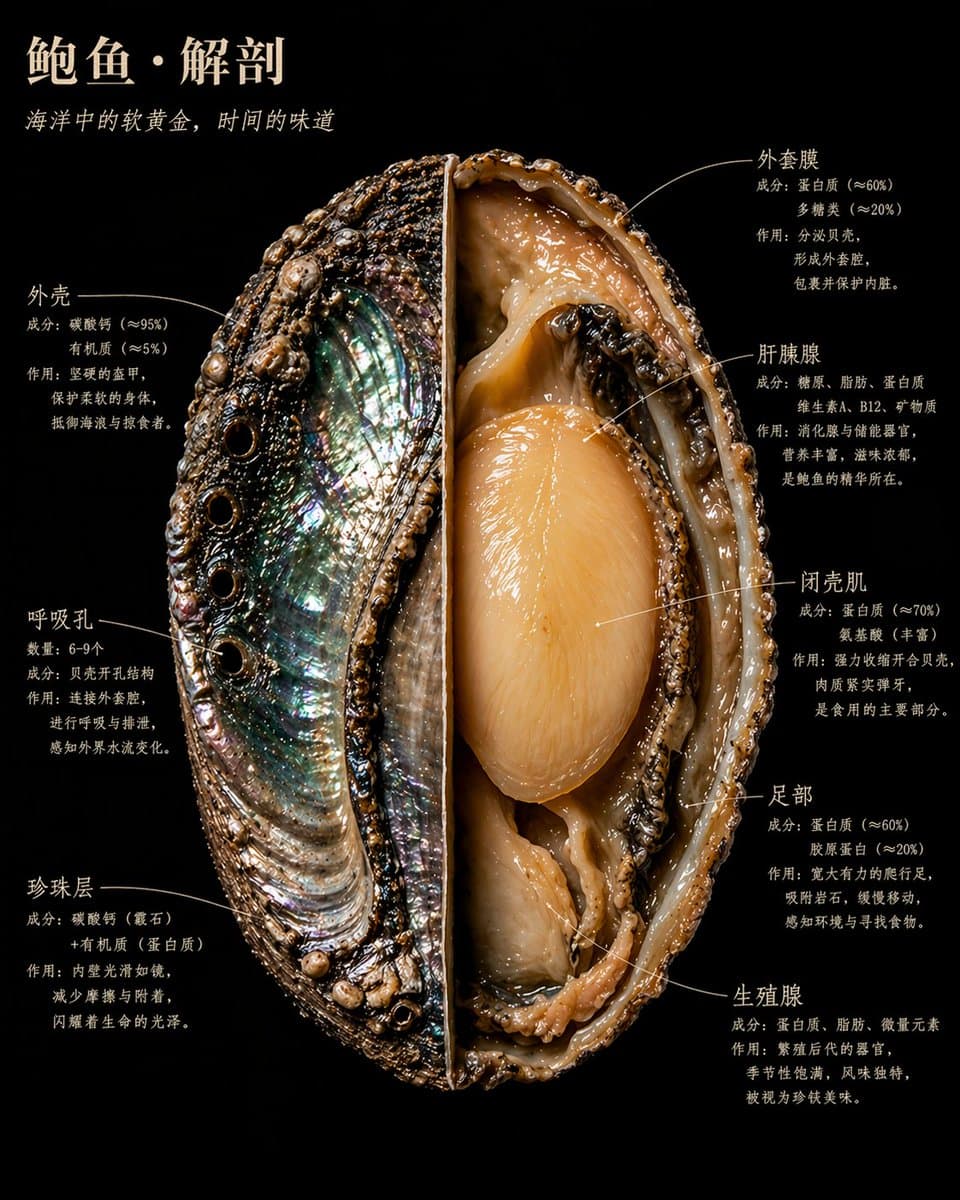
नेचुरलिस्ट फूड स्पेसिमेन क्रॉस सेक्शन
GPT Image 2 नेचुरलिस्ट फूड स्पेसिमेन क्रॉस-सेक्शन सैंपल
प्रॉम्प्ट
एक फूड स्पेसिमेन जिसे किसी म्यूज़ियम की नेचुरलिस्ट डिस्कवरी की तरह काटा और प्रदर्शित किया गया है। एक आधा हिस्सा अपने प्राकृतिक टेक्सचर और रंग के साथ बाहरी सतह को सुरक्षित रखता है; दूसरा आधा हिस्सा बिल्कुल कोर (केंद्र) तक कटा हुआ है, जो स्पष्ट विवरण में आंतरिक संरचना को प्रकट करता है। बैकग्राउंड शुद्ध ब्लैक वेलवेट (काली मखमल) है। खाना फ्रेम में किसी कीमती और खतरनाक चीज़ की तरह तैरता है। एनोटेटेड लेबल्स हस्तलिखित सेरिफ (serif) टाइपोग्राफी में संरचनात्मक किनारों से लगे हुए हैं, कभी तैरते नहीं। प्रत्येक एनोटेशन में तीन पंक्तियाँ हैं: संरचना का नाम, कंपोज़िशन डेटा, और एक सरल भाषा में स्पष्टीकरण। मुख्य शीर्षक ऊपर-बाईं ओर वार्म आइवरी (warm ivory) अपरकेस (uppercase) में है। ओवरऑल एस्थेटिक: Audubon नेचुरलिस्ट इलस्ट्रेशन, Caravaggio लाइटिंग और अब तक की सबसे खूबसूरत साइंटिफिक फोटोग्राफी का संगम। 4K प्रिसिजन, स्पेसिमेन लाइटिंग, अत्यधिक आंतरिक विवरण। रियलिस्टिक स्टाइल, कोई डायग्राम नहीं, कोई कार्टून नहीं। हर मटीरियल में असली भौतिक टेक्सचर (physical texture) है: खुरदरा, चिकना, गीला, सूखा, घना, छिद्रपूर्ण।
उदाहरण चित्र
अंतर्निहित छवि टूल से बनाए गए रचना और शैली के उदाहरण।
उपयोग गाइड
यह उपयोग गाइड फिलहाल अंग्रेज़ी में उपलब्ध है।
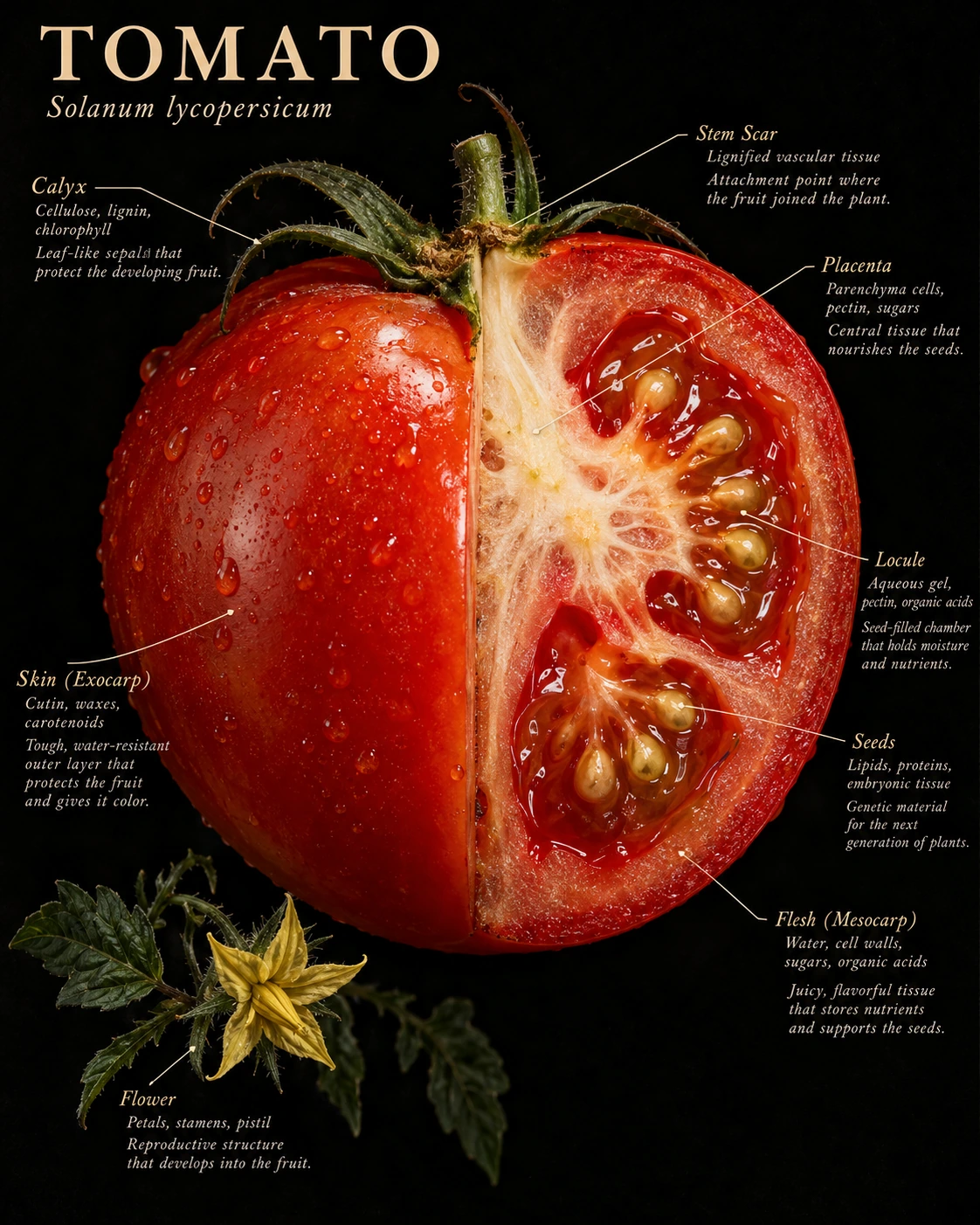
A museum-like food portrait combining a natural exterior and a detailed cut surface against black. The specimen's texture and the annotation layout share the same visual importance.
When to use
Food editorial concepts, ingredient storytelling, and natural-history-inspired packaging visuals. It works best with one specimen whose internal structure is visibly different from its skin.
What the existing example shows
The example features a large tomato, with intact red skin on one side and exposed seed cavities on the other, plus ivory labels around the edge. The image is illustrative rather than a verified anatomical plate.
Suggested setup
- Aspect ratio
- 4:5 · Keep the specimen large and central with a narrow ring of space for labels. Use one directional light so the wet cut surface separates from the dark background.
- Reference images
- Recommended when anatomy matters. Supply a clear real cross-section so the desired skin, flesh, seeds, and core are unambiguous.
What to customize
- SpecimenA ripe green kiwifruit
- Choose one food and specify both the outer texture and the features visible on its cut surface.
- LabelsSkin, flesh, seeds, and core
- Use a few short labels with anchored leader lines. Supply numerical composition data separately if it is required.
- Light and backgroundSoft upper-left specimen light on black velvet
- Preserve detail in dark skin and avoid letting bright wet highlights erase the interior structure.
View a complete adaptation
Kiwifruit naturalist specimen
A complete fruit substitution with qualitative labels and no invented nutritional measurements.
This adaptation has not been generated. The existing image belongs to the original illustration record.
Create a 4:5 vertical naturalist specimen photograph of one ripe green kiwifruit floating against a pure black velvet background. Show the left half with intact brown fuzzy skin and the right half as a clean longitudinal cut, revealing translucent green flesh, small dark seeds, and a pale central core. Use precise, realistic textures and a soft upper-left light that catches moisture without blowing out detail. Place the warm-ivory title "KIWIFRUIT" at the upper left. Add only four small ivory labels: "Skin", "Flesh", "Seeds", and "Core", each connected to the correct visible structure by a fine short leader line. Leave space between labels and avoid crossing lines. No nutritional percentages, invented measurements, extra fruit, or diagram-style flat shading.
Troubleshooting
- The cut surface is attractive but anatomically inconsistent
- Use a real cross-section reference and check each labeled structure; simplify to a few visible parts instead of generating hidden anatomy.
- Annotations float without clear targets
- Limit the label count, require short leader lines, and place the labels around the specimen rather than over its interior.
Editorial notes and generation record
AI-assisted editorial analysis of the source prompt and existing illustration. Settings are starting suggestions; the new adaptation is not a model test.
The existing illustration was generated with the built-in image tool. Its provider model is not disclosed. Actual image size: 1122 × 1402.
Original illustration input
Create one finished image illustrating this image prompt.
Aspect ratio: 4:5.
A food specimen dissected and displayed like a museum naturalist discovery. One half preserves the outer surface with its natural texture and color; the other half is cut to the core, revealing the internal structure in sharp detail. The background is pure black velvet. The food floats in the frame like something precious and dangerous. Annotated labels hug the structural edges in handwritten serif typography, never floating. Each annotation has three lines: structure name, composition data, and a plain-language explanation. Main title in warm ivory uppercase at the top-left. Overall aesthetic: Audubon naturalist illustration meets Caravaggio lighting meets the most beautiful scientific photography ever made. 4K precision, specimen lighting, extreme internal detail. Realistic style, not diagram, not cartoon. Every material has true physical texture: rough, smooth, wet, dry, dense, porous.
Selected food specimen for this example: a ripe tomato.
प्रॉम्प्ट का विवरण
- श्रेणी
- इन्फोग्राफ़िक / शिक्षा
- मॉडल
- GPT IMAGE 2
- प्रति इमेज लागत
- 1K: 43 क्रेडिट · 2K: 86 क्रेडिट · 4K: 143 क्रेडिट
- आस्पेक्ट रेशियो
- 4:5
- निर्माता
- @GeekCatX
- जोड़ा गया
- अपडेट किया गया