
Eine Karte der Emotionen in der Pariser Metro
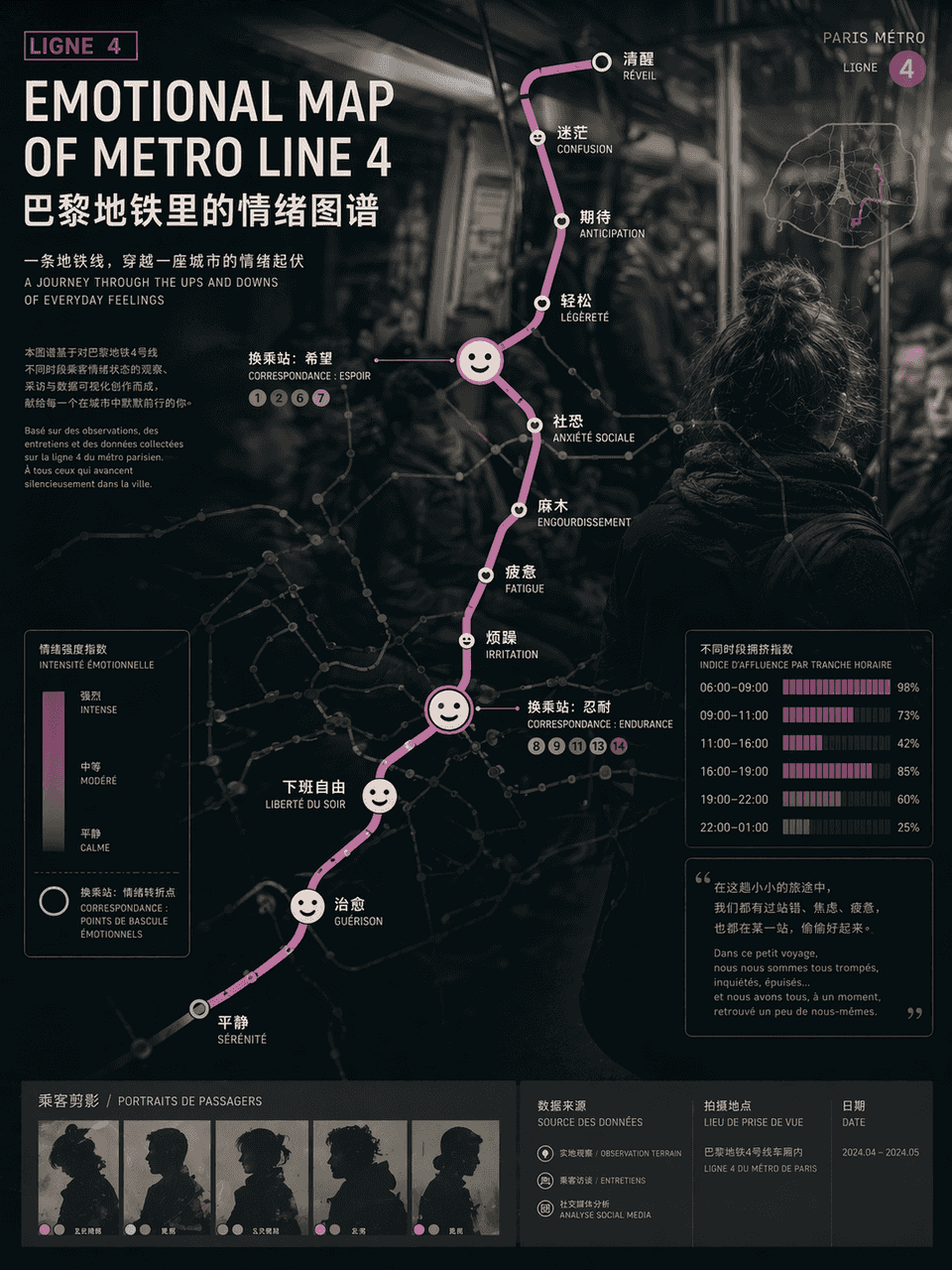
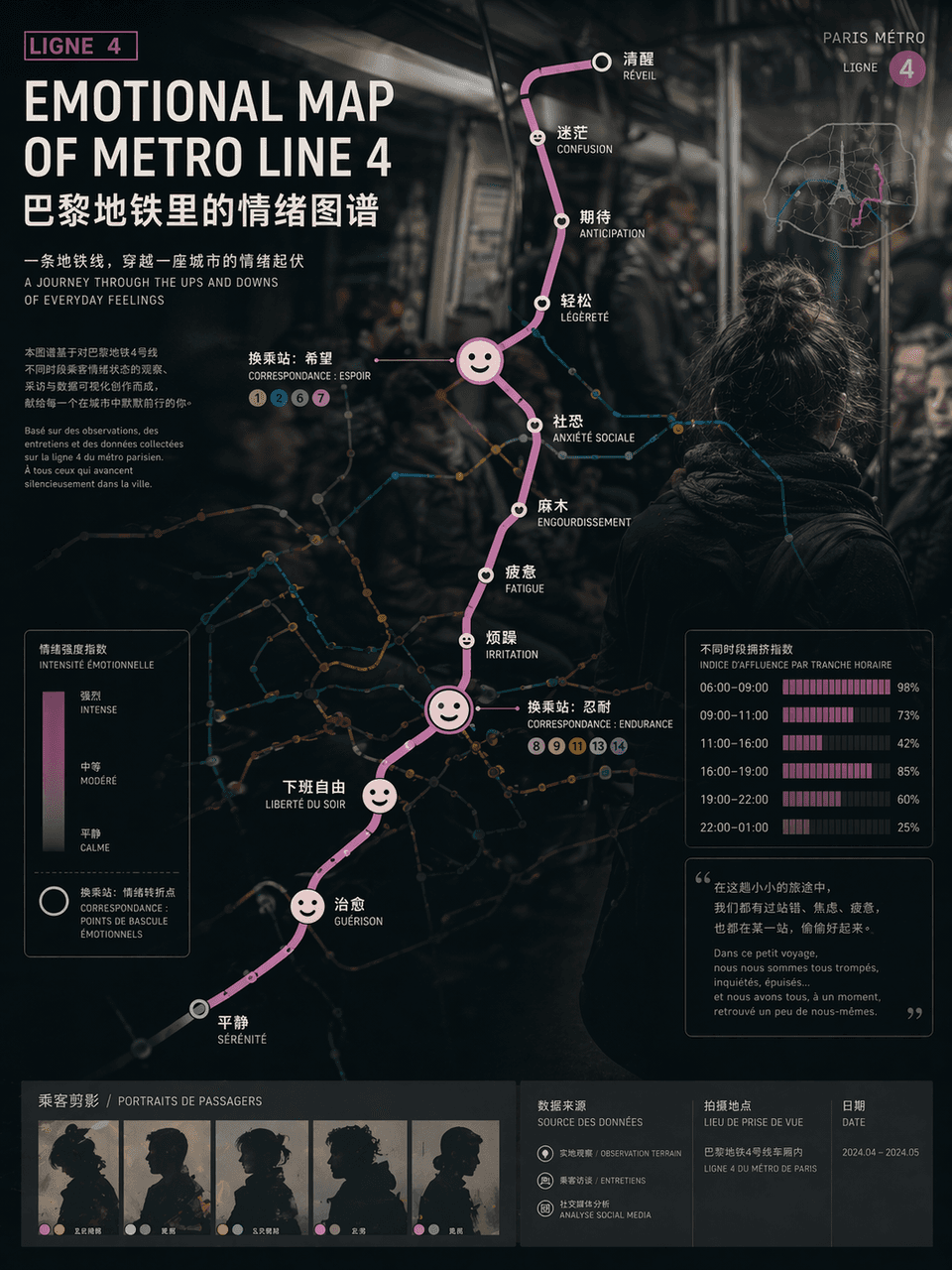
„EMOTIONALE KARTE DER METRO-LINIE“/„EMOTIONALE KARTE DER METRO-LINIE“ 4“, das emotionale Visualisierungsplakat ist in die städtische Verkehrskarte integriert. Die Streckenkarte verwendet die Standard-U-Bahn-Kartensyntax…
Prompt
„EMOTIONALE KARTE DER METRO-LINIE“/„EMOTIONALE KARTE DER METRO-LINIE“ 4“, das emotionale Visualisierungsplakat ist in die städtische Verkehrskarte integriert. Die Streckenkarte verwendet die Standard-U-Bahn-Kartensyntax, aber der Stationsname jeder Station wird durch einen emotionalen Zustand ersetzt, wie zum Beispiel „wach“, „taub“, „Erwartung“, „soziale Angst“ und „frei von der Arbeit“, und die Transferknoten werden zu abstrakten Ausdruckssymbolen vergrößert, der Hintergrund ist im Stil vage verschwommen In den Ecken des Plakats sind dokumentarische Fotografien von überfüllten Waggons und überfüllten Indexbalken angebracht. Der Untertitel ist wie eine Einführung in eine Kunstausstellung. Die Proportionen sind 3:4.
So verwenden Sie diese Eingabeaufforderung
Lesen Sie die vollständige Eine Karte der Emotionen in der Pariser Metro-Eingabeaufforderung und ermitteln Sie die Anforderungen an Thema, Stil, Kamera, Beleuchtung und Komposition, bevor Sie sie erstellen.
Ersetzen Sie Platzhalter in Klammern oder im Argumentstil durch Ihre Anforderungen an Produkt, Charakter, Marke, Szene, Farbpalette oder Seitenverhältnis.
Öffnen Sie https://www.gptimagehub.com/de/generate?promptId=cmogxi7a700gnxt5g8uzsvghb, generieren Sie das Bild und verfeinern Sie die Eingabeaufforderung bei Bedarf mit spezifischeren Betreff-, Text-, Layout- oder negativen Einschränkungen.
Schnelle FAQ
Wofür eignet sich die Eingabeaufforderung Eine Karte der Emotionen in der Pariser Metro am besten?
Diese Eingabeaufforderung eignet sich am besten für sonstiges-Bilder, bei denen Sie eine wiederverwendbare Struktur, eine detaillierte visuelle Ausrichtung und eine konsistente Ausgabequalität wünschen.
Kann ich die Eingabeaufforderung vor dem Generieren bearbeiten?
Ja. Der vollständige Aufforderungstext ist auf dieser Seite sichtbar, sodass Sie Betreff, Produktnamen, Farben, Komposition, Kamerabegriffe, Seitenverhältnis und Stilhinweise vor der Generierung ändern können.
Welches Modell soll ich mit dieser Aufforderung verwenden?
Verwenden Sie das in den Metadaten der Eingabeaufforderung angezeigte Modell als Standardstartpunkt. Wenn ein anderes Bildmodell dasselbe Seitenverhältnis und denselben Anweisungsstil unterstützt, können Sie die Eingabeaufforderung anpassen und die Ergebnisse vergleichen.