
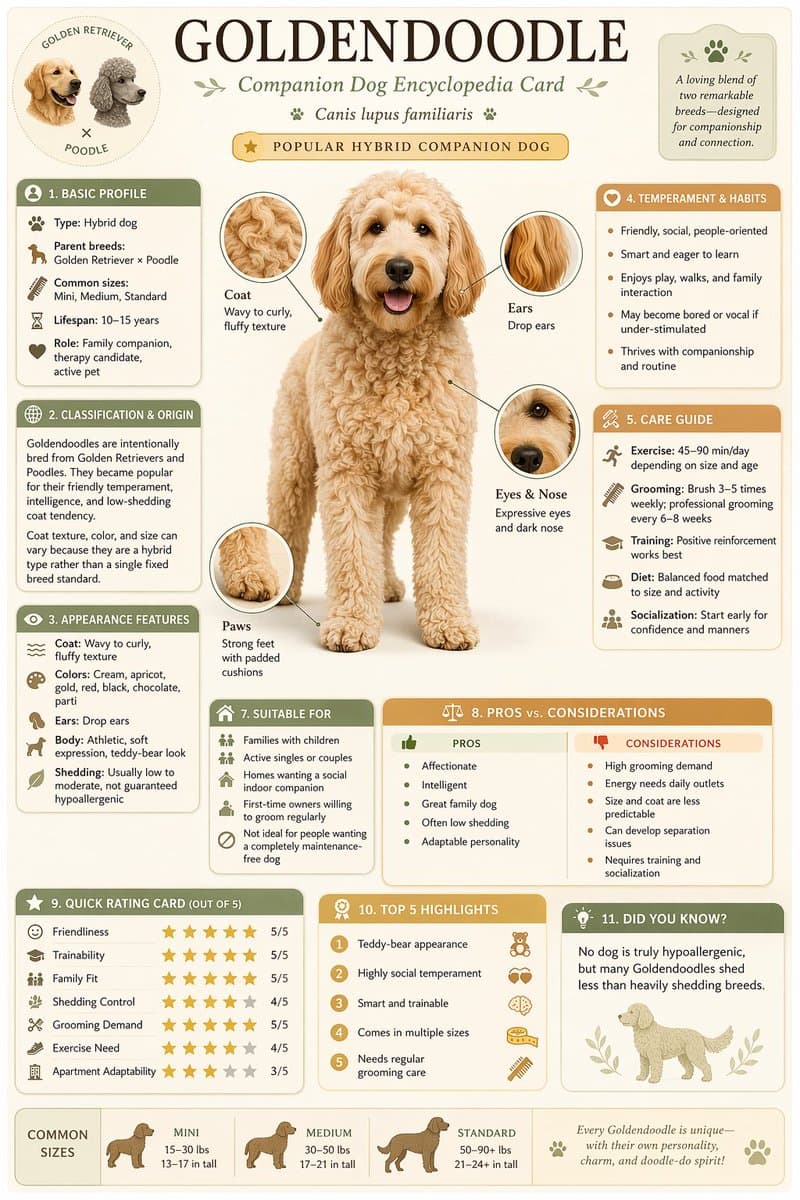
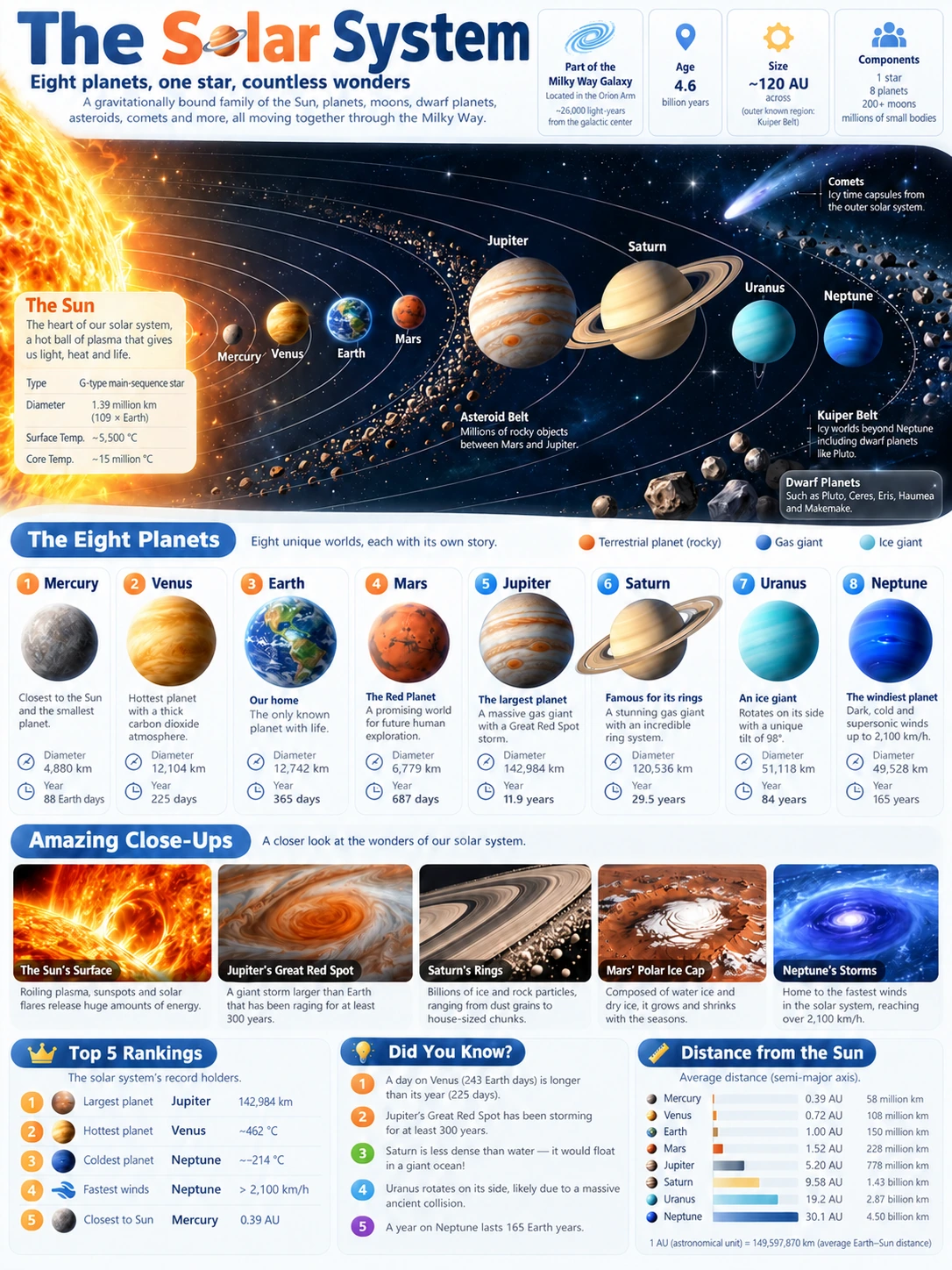
ملصق عمودي لموسوعة علمية
عينة ملصق عمودي لموسوعة علمية لـ GPT Image 2
المطالبة
قم بإنشاء صورة موسوعة علمية عمودية عالية الجودة ومبسطة بناءً على [Theme]. قم بتضمين صورة رئيسية واضحة وجميلة، والعديد من اللقطات التفصيلية المقربة، وأقسام معلومات تركيبية دائرية متعددة، وتسلسل هرمي واضح للعناوين مع ملصقات توكيد، ومحتوى موسوعي موجز ولكن غني، وتقييم مرئي أو وحدات تلخيص Top 5. خلفية فاتحة ونظيفة، ألوان ناعمة، ظلال خفيفة، أيقونات صغيرة محسنة، مربعات معلومات دائرية، تخطيط أنيق. كثيفة المعلومات ولكن غير مزدحمة، مثل بطاقة موسوعة علمية حقيقية قابلة للنشر والاحتفاظ بها، وليست إعلاناً.
أمثلة الصور
أمثلة للتكوين والأسلوب أُنشئت باستخدام أداة الصور المدمجة.
دليل الاستخدام
يتوفر دليل الاستخدام هذا باللغة الإنجليزية حاليًا.
An editorial science poster that organizes one subject into a large overview and a few supporting modules. Clear hierarchy matters more than the number of facts packed into the page.
When to use
Educational poster concepts and classroom handout layouts. The image can establish a visual structure; scientific copy and numbers should come from checked reference material.
What the existing example shows
The existing solar-system example contains a large top title, a central planetary overview, and dense lower information modules. One ranking row was edited after generation; that edit does not validate the other numbers.
Suggested setup
- Aspect ratio
- 3:4 · Reserve the upper quarter for the title and overview, then use a small number of aligned modules. Larger labels survive scaling better than many small cards.
- Reference images
- Optional for the layout. For accurate scientific details, provide a verified fact sheet or diagram as the content reference.
What to customize
- Topic and audienceSolar system introduction for ages 7–10
- Choose the audience before choosing vocabulary, label count, and diagram complexity.
- Information modulesPlanet order, rocky worlds, and giant planets
- Use three focused modules. Avoid rankings whose criteria or numbers have not been supplied.
- Data scopePlanet names without numerical comparisons
- If a numerical value is needed, provide the source and date instead of asking the generator to invent it.
View a complete adaptation
A simpler solar-system classroom poster
A complete, less crowded version using planet names and broad groupings instead of changing rankings.
This adaptation has not been generated. The existing image belongs to the original illustration record.
Design a 3:4 vertical classroom poster for children aged 7–10 titled "OUR SOLAR SYSTEM". Use a clean cream background and one large, clearly spaced planetary overview. Show the Sun, then Mercury, Venus, Earth, Mars, Jupiter, Saturn, Uranus, and Neptune in that order, with short readable name labels. State clearly that the illustration is not to scale. Below the overview, include three aligned modules titled "Rocky planets", "Giant planets", and "Our home: Earth", using simple illustrations and plenty of empty space. Do not add invented measurements, moon counts, scores, or Top 5 rankings. Keep the color palette gentle, module borders subtle, and headings large. The design should be a clear educational layout with room for verified explanatory text to be added later.
Troubleshooting
- The poster invents facts or unstable rankings
- Supply a checked fact list, remove ranking modules, and inspect every scientific label separately from the visual quality.
- Everything becomes tiny
- Cut the number of modules and use larger headings. Make a second poster for additional facts instead of compressing them into one image.
Editorial notes and generation record
AI-assisted editorial analysis of the source prompt and existing illustration. Settings are starting suggestions; the new adaptation is not a model test.
The existing illustration was generated with the built-in image tool. Its provider model is not disclosed. Actual image size: 1086 × 1448.
Original illustration input
Create one finished image illustrating this image prompt.
Aspect ratio: 3:4.
Generate a high-quality vertical science popularization encyclopedia image based on The Solar System. Include a clear beautiful main visual, several detail close-ups, multiple rounded modular information sections, clear title hierarchy with emphasis labels, concise but rich encyclopedia content, and visual scoring or Top 5 summary modules. Light clean background, soft colors, subtle shadows, refined small icons, rounded information boxes, neat layout. Information-dense but not crowded, like a real publishable, collectible science encyclopedia card, not an advertisement.
Subsequent editing instruction
Edit only the fifth row of the bottom-left 'Top 5 Rankings' box in this solar system infographic. Replace 'Most moons | Jupiter | 95+ confirmed' with 'Closest to Sun | Mercury | 0.39 AU'. Use a small Mercury planet icon in this row. Match the row's existing typography, spacing and colors. Preserve every other section, illustration, label, number, and overall layout unchanged.
تفاصيل المطالبة
- النموذج
- GPT IMAGE 2
- التكلفة لكل صورة
- 1K: 43 رصيد · 2K: 86 رصيد · 4K: 143 رصيد
- نسبة العرض إلى الارتفاع
- 3:4
- المنشئ
- @pfanis
- تاريخ الإضافة
- آخر تحديث