
Bản đồ cảm xúc ở Paris Metro
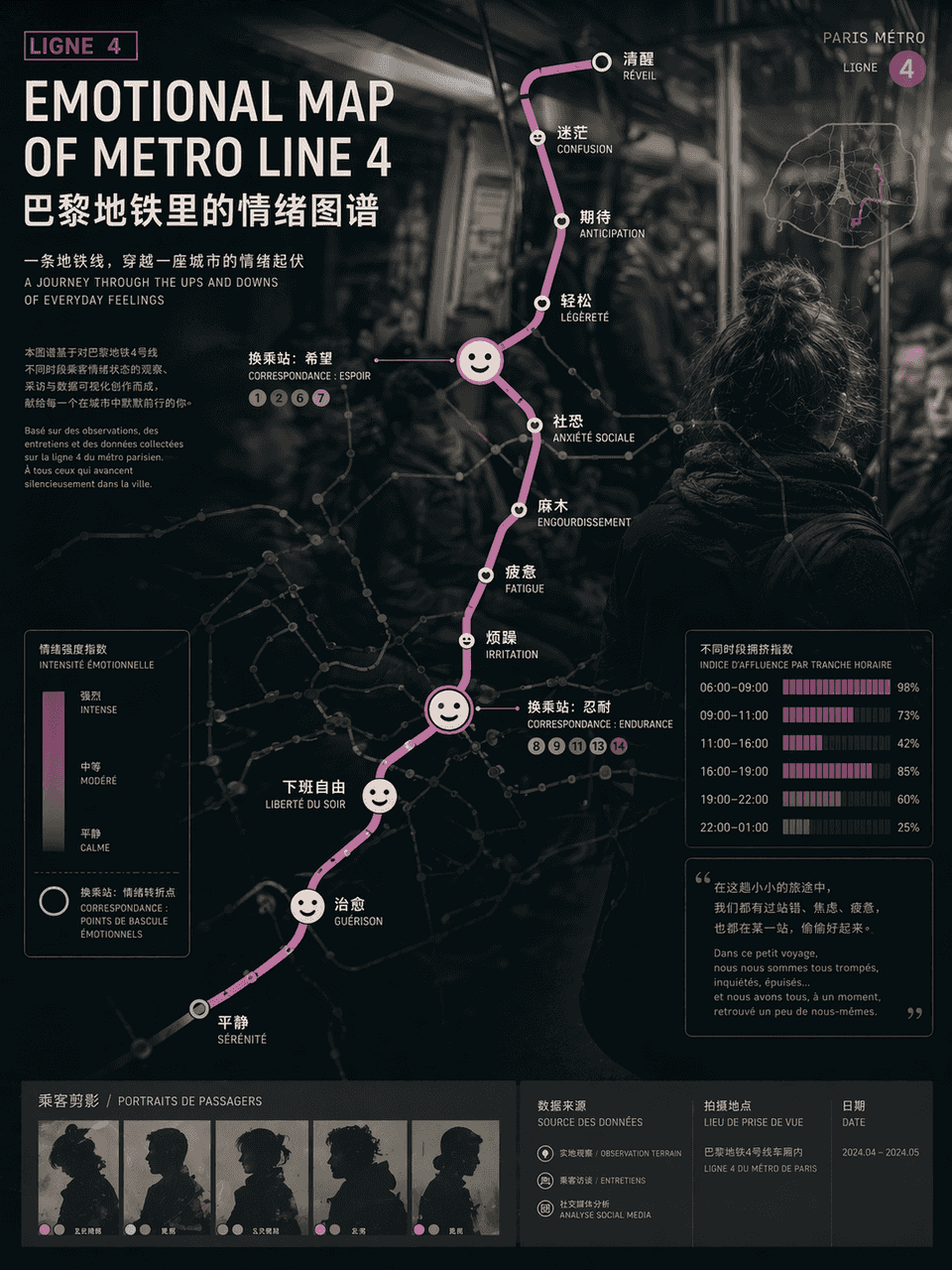
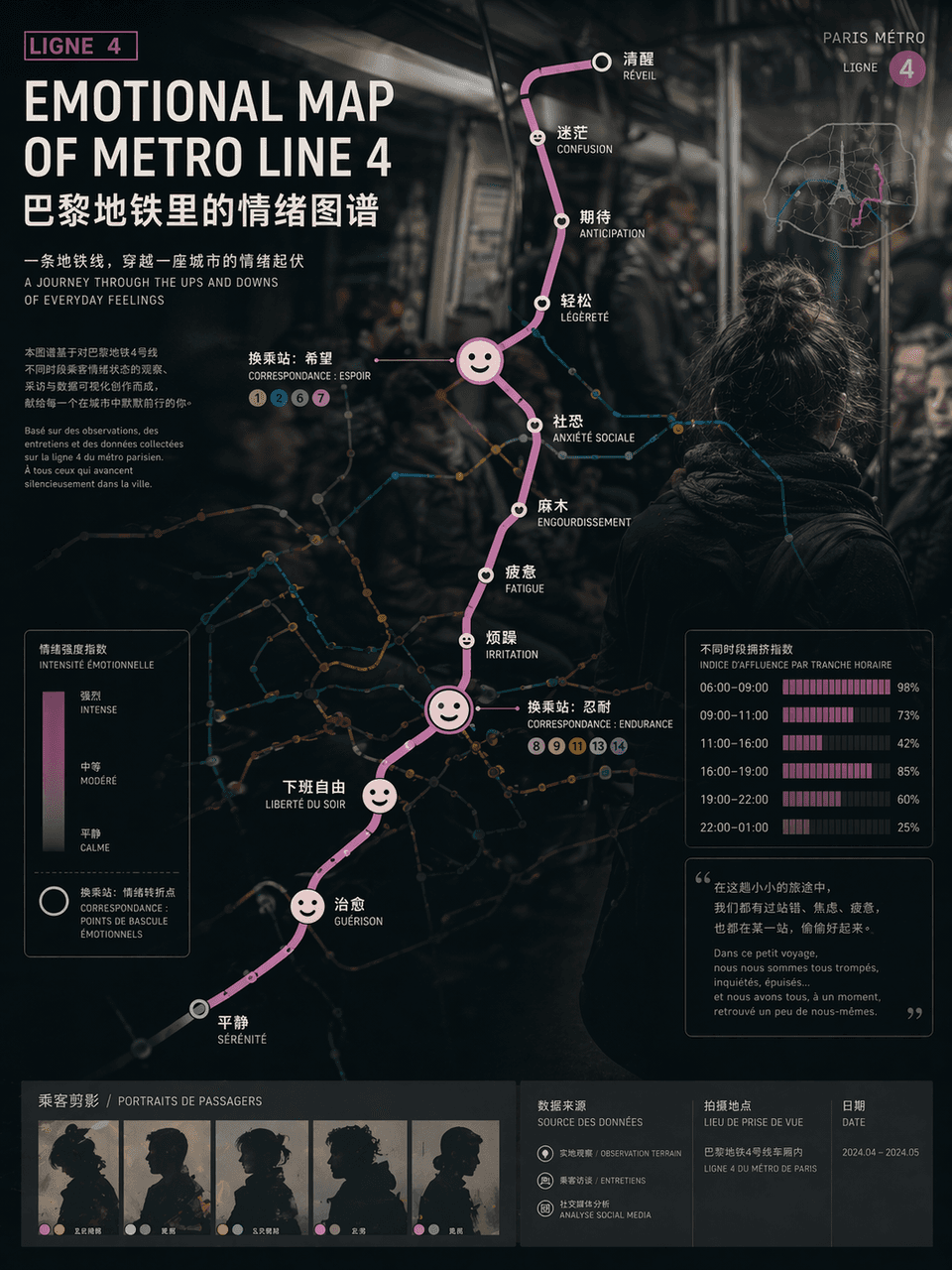
"EMOTIONAL MAP OF METRO LINE"/"EMOTIONAL MAP OF METRO LINE" 4", poster trực quan hóa cảm xúc được tích hợp với bản đồ giao thông đô thị. Bản đồ lộ trình sử dụng cú pháp bản đồ tàu điện ngầm tiêu chuẩn, nhưng tên ga của…
Lời nhắc
"EMOTIONAL MAP OF METRO LINE"/"EMOTIONAL MAP OF METRO LINE" 4", poster trực quan hóa cảm xúc được tích hợp với bản đồ giao thông đô thị. Bản đồ lộ trình sử dụng cú pháp bản đồ tàu điện ngầm tiêu chuẩn, nhưng tên ga của mỗi ga được thay thế bằng trạng thái cảm xúc, chẳng hạn như "tỉnh táo", "tê liệt", "kỳ vọng", "sợ hãi xã hội" và "không nghỉ làm" và các nút chuyển tuyến được phóng to thành các biểu tượng biểu cảm trừu tượng , hậu cảnh được làm mờ một cách mơ hồ theo phong cách chụp ảnh tài liệu bóng của những toa xe đông đúc và biểu đồ thanh chỉ số đông đúc ở các khoảng thời gian khác nhau được gắn vào các góc của áp phích. Tiêu đề sử dụng phông chữ sans serif theo phong cách Thụy Sĩ. Phụ đề giống như phần giới thiệu về một cuộc triển lãm nghệ thuật.
Cách sử dụng lời nhắc này
Đọc lời nhắc Bản đồ cảm xúc ở Paris Metro hoàn chỉnh và xác định các yêu cầu về chủ đề, phong cách, máy ảnh, ánh sáng và bố cục trước khi tạo.
Thay thế phần giữ chỗ trong ngoặc hoặc kiểu đối số bằng các yêu cầu về sản phẩm, nhân vật, thương hiệu, cảnh, bảng màu hoặc tỷ lệ khung hình của bạn.
Mở https://www.gptimagehub.com/vi/generate?promptId=cmogxi7a700gnxt5g8uzsvghb, tạo hình ảnh, sau đó tinh chỉnh lời nhắc với chủ đề, văn bản, bố cục hoặc ràng buộc phủ định cụ thể hơn nếu cần.
Câu hỏi thường gặp
Lời nhắc Bản đồ cảm xúc ở Paris Metro được sử dụng tốt nhất để làm gì?
Lời nhắc này được sử dụng tốt nhất cho các hình ảnh khác mà bạn muốn có cấu trúc có thể sử dụng lại, hướng trực quan chi tiết và chất lượng đầu ra nhất quán.
Tôi có thể chỉnh sửa lời nhắc trước khi tạo không?
Vâng. Văn bản nhắc nhở đầy đủ hiển thị trên trang này để bạn có thể thay đổi chủ đề, tên sản phẩm, màu sắc, bố cục, thuật ngữ máy ảnh, tỷ lệ khung hình và ghi chú kiểu dáng trước khi tạo.
Tôi nên sử dụng mô hình nào với lời nhắc này?
Sử dụng mô hình hiển thị trong siêu dữ liệu lời nhắc làm điểm bắt đầu mặc định. Nếu một mô hình hình ảnh khác hỗ trợ cùng tỷ lệ khung hình và kiểu hướng dẫn, bạn có thể điều chỉnh lời nhắc và so sánh kết quả.